• Skip to primary navigation
  • Skip to main content
  • Skip to primary sidebar

Earth Wise

A look at our changing environment.

  • Home
  • About Earth Wise
  • Where to Listen
  • All Articles
  • Show Search
Hide Search
You are here: Home / Archives for research team

research team

Warming estuaries

September 13, 2024 By EarthWise Leave a Comment

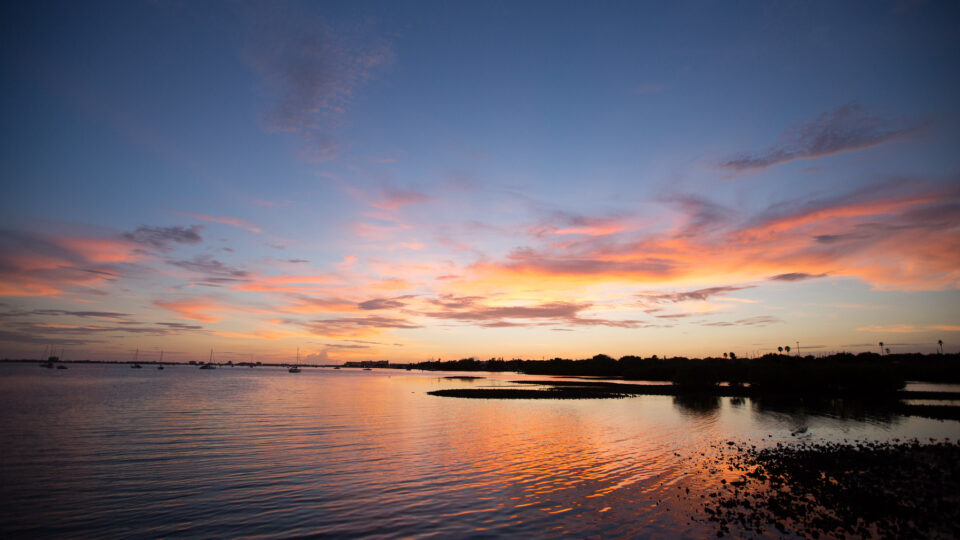
Estuaries in South Florida are rapidly warming

Estuaries and their surrounding wetlands are bodies of water where freshwater from rivers and streams mixes with salt water from the ocean to create brackish water.  These brackish ecosystems support many unique plant and animal communities around the world. 

But ocean water temperature around the world continues to warm.  In fact, from 1901 to 2023, the average sea surface temperature has increased by 0.14°F per decade, and 2023 was the warmest year on record.

While sea surface temperatures are on the rise, the problem is more pronounced in South Florida’s estuaries.  According to a new study by researchers from the University of South Florida College of Marine Science and the National Park Service, estuaries have experienced rapid warming over the past two decades. 

In fact, the research team found that sea surface temperature in four estuaries in South Florida – Florida Bay, Tampa Bay, St. Lucie Estuary and Caloosahatchee River Estuary- has risen around 70% faster than the Gulf of Mexico, and 500% faster than the global oceans. 

Their findings, which were recently published in the journals Environmental Research Letters and Estuaries and Coasts, paint a troubling picture for the marine life that calls South Florida’s estuaries home.

The research team has speculated about the possible causes of the rapid rate of warming, including evaporation, water capacity, and residence time, but no single factor has been revealed as dominant. 

The researchers hope to partner with colleagues at the Florida Fish and Wildlife Conservation Commission and NOAA to explore the potential impacts of water temperatures on seagrass and coral populations in South Florida.

**********

Web Links

Estuaries in South Florida are warming faster than the Gulf of Mexico and global ocean

What is an estuary?

Photo, posted August 18, 2016, courtesy of City of St. Pete via Flickr.

Earth Wise is a production of WAMC Northeast Public Radio

Palm oil and water quality

June 3, 2024 By EarthWise Leave a Comment

Palm oil is the world’s cheapest and most widely used vegetable oil.  In fact, more than 86 million tons of palm oil was consumed last year alone.  Even though few of us cook with it, palm oil can be found in approximately half of all packaged grocery items – everything from ice creams and pizzas to detergents and cosmetics. 

This massive global demand for palm oil is driving tropical deforestation around the world.  While many studies have shown how converting rainforests to oil palm plantations causes biodiversity loss, researchers from UMass Amherst are the first to demonstrate how these plantations also cause wide-ranging disturbances to nearby watersheds.

In the study, which was recently published in the journal Science of the Total Environment, the research team focused on the Kais River watershed of West Papua, a province in the far east of Indonesia.  Approximately 25% of the watershed has been turned into oil palm plantations. The watershed is also one of the oldest continually inhabited homes for different groups of Indigenous Papuans.

The researchers found that the conversion of tropical rainforest to oil palm plantation has increased precipitation, runoff, and soil moisture. Water quality in the watershed has also gotten dramatically worse: sedimentation has increased by 16.9%, nitrogen by 78.1%, and phosphorus by 144%.

The research team hopes regulators will work to limit the use of pesticides, conduct continuous water quality monitoring, and ensure that downstream communities have access to water quality information. 

**********

Web Links

Oil Palm Plantations Are Driving Massive Downstream Impact to Watershed

Photo, posted December 13, 2008, courtesy of Fitri Agung via Flickr.

Earth Wise is a production of WAMC Northeast Public Radio

The Cost Of Heat Waves | Earth Wise

December 7, 2022 By EarthWise Leave a Comment

Heat waves are defined as periods of abnormally hot weather generally lasting more than two days. To be considered a heat wave, the recorded temperatures must be substantially above the historical averages for a given area. According to climate scientists, anthropogenic climate change is likely causing heat waves to increase in both frequency and intensity.  

According to a new study by researchers from Dartmouth University, climate change-driven severe heat waves have cost the world economy trillions of dollars since the early 1990s. 

In the study, which was recently published in the journal Science Advances, researchers combined in-depth economic data for regions worldwide with the average temperature for the hottest five-day period —a commonly used measurement of heat intensity—for each region in each year.  The research team found that between 1992 and 2013, heat waves statistically coincided with variations in economic growth and that an estimated $16 trillion was lost to the effects of high temperatures on human health, productivity and agricultural output.

The results of the study underscore issues of climate justice and inequality.  According to researchers, the economic costs of extreme heat have been and will be disproportionately borne by the world’s poorest nations.  While economic losses due to extreme heat events averaged 1.5% of GDP per capita for the world’s wealthiest regions, the researchers found that low-income regions suffered a loss of 6.7% of GDP per capita.  Most of these low-income nations have contributed the least to climate change. 

According to the research team, immediate action is needed now to protect vulnerable people during the hottest days of the year.

**********

Web Links

Heat Waves Have Cost World Economy Trillions of Dollars

Photo, posted July 23, 2021, courtesy of Martin Fisch (marfis75) via Flickr.

Earth Wise is a production of WAMC Northeast Public Radio
Shipping And The Endangered Whale Shark | Earth Wise

June 9, 2022 By EarthWise Leave a Comment

Whale shark population continues to decline

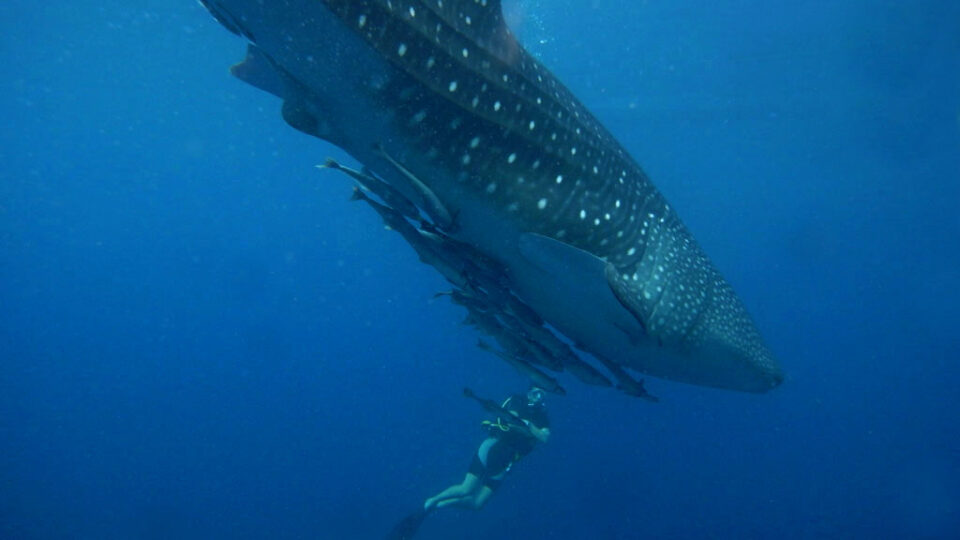
Whale sharks are the largest fish in the world.  While they measure up to 60 feet long and weigh up to 15 tons – larger and heavier than a school bus – whale sharks are actually harmless.  They are a graceful, slow-moving, filter-feeding carpet shark.  They are found in marine environments around the world and play an important role in the marine food web and healthy ocean ecosystems.

Whale sharks are an endangered species.  According to the International Union for Conservation of Nature, growing human pressures are putting whale sharks at an increased risk of extinction.  The numbers of these gentle giants have declined by more than 50% over the last 75 years despite many international protections.  Fishing bycatch, poaching, and collisions with ships are the main drivers of the population decline. 

According to new research from marine biologists from the Marine Biological Association and the University of Southampton in the U.K., lethal collisions between whale sharks and large ships are vastly underestimated, and could be the reason why populations are continuing to fall.  Whale sharks spend a large amount of time in surface waters in coastal regions, and the research team theorized that collisions with ships could be causing significant whale shark deaths. 

In the study, researchers tracked the global movements of both ships and whale sharks, and then mapped so-called hotspots where their movements overlapped.  The research team found that more than 90% of whale shark movements fell under the footprint of shipping activity.

While many conservation measures have been taken to protect whale sharks, no international regulations currently exist to protect them from ship collisions.  The researchers say it’s time for that to change. 

********** 

Web Links

Shipping poses significant threat to the endangered whale shark

Whale sharks (Rhincodon typus)

Global collision-risk hotspots of marine traffic and the world’s largest fish

Photo, posted July 8, 2010, courtesy of Marcel Ekker via Flickr.

Earth Wise is a production of WAMC Northeast Public Radio.

Primary Sidebar

Recent Episodes

  • An uninsurable future
  • Clean energy and jobs
  • Insect declines in remote regions
  • Fossil fuel producing nations ignoring climate goals
  • Trouble for clownfishes

WAMC Northeast Public Radio

WAMC/Northeast Public Radio is a regional public radio network serving parts of seven northeastern states (more...)

Copyright © 2026 ·