• Skip to primary navigation
  • Skip to main content
  • Skip to primary sidebar

Earth Wise

A look at our changing environment.

  • Home
  • About Earth Wise
  • Where to Listen
  • All Articles
  • Show Search
Hide Search
You are here: Home / Archives for regulatory approval

regulatory approval

Making Cotton More Sustainable | Earth Wise

August 16, 2022 By EarthWise Leave a Comment

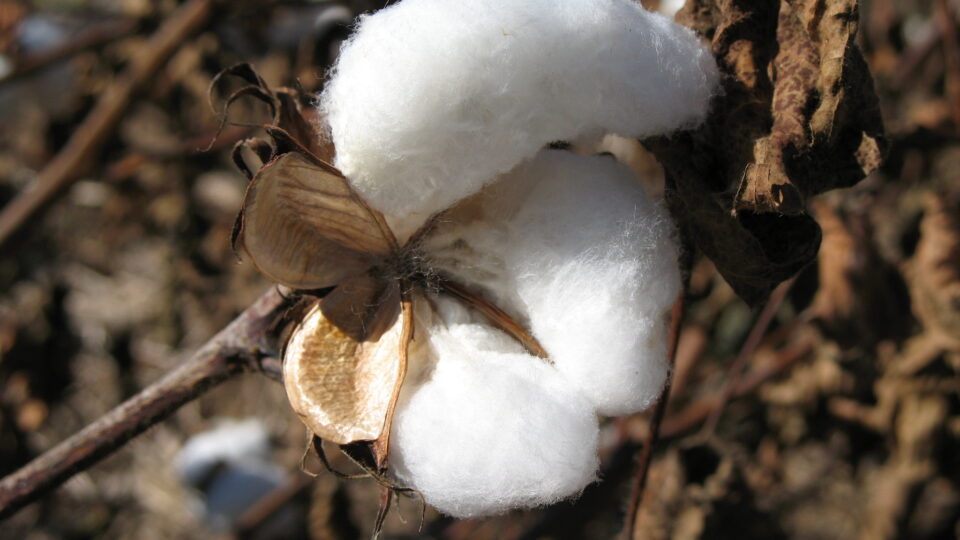
Producing cotton more sustainably

In the United States, cotton is a $7 billion annual crop grown in 17 states.  Cotton plants in the largest producing countries in the world – India, China, and the U.S. – are genetically very similar and, like other crops that lack diversity, can be at risk.

Cultivated cotton around the world has been bred to look and act very similar.  It is high yielding and easy to harvest using machines.  But it is also wildly unprepared to fight disease, drought, or insect-borne pathogens.

Researchers are looking beyond breeding for ways to combat the low genetic diversity of cultivated cotton.  There are new approaches that combine breeding with elements of genetic modification.  Most cotton in the U.S. has already been genetically modified to resist caterpillar pests.  But as new problems emerge, new solutions will be needed that may require complicated changes to the cotton genome.  Getting regulatory approval for a genetically modified crop is a long and expensive process.

However, ordinary genetic modification is not the only possibility.  Modern genetic sequencing technology can allow researchers to examine various wild cotton varieties and identify the genetic markers for desirable traits.  Once valuable genes in wild species have been identified, traditional plant breeding techniques could be used to produce cultivated cotton varieties that are more resistant to disease and drought.

Climate change is raising average global temperatures and some important cotton-producing regions such as the U.S. Southwest are becoming drier.  Researchers are hoping to produce cultivated cotton that can tolerate drought at the seedling stage.  The ultimate goal is to create more sustainable and genetically diverse cotton that can thrive in a changing world.

**********

Web Links

Cotton Breeders Are Using Genetic Insights To Make This Global Crop More Sustainable

Photo, posted November 9, 2008, courtesy of BP Takoma via Flickr.

Earth Wise is a production of WAMC Northeast Public Radio.

Cell-Based Meat And Seafood | Earth Wise

February 8, 2021 By EarthWise Leave a Comment

Reimagining meats and seafood

We have heard about laboratory meat for a number of years, generally in terms of something that may happen at some point in the indeterminate future. But at least for a couple of California companies, that future is now.

These high-tech companies are producing products – real meat and seafood – that are originally cultured from animal cells but are made without the actual animal.

San Francisco-based Eat Just makes chicken nuggets that have recently gained regulatory approval in Singapore and are now available to order at a downtown restaurant.  San Diego’s BlueNalu creates cell-based seafood fillets including yellowtail, mahi-mahi, red snapper, and tuna.

The companies use stem cells obtained from actual animals and cultivate them in steel tanks with the same nutrients that living animals consume.  The original cell donor is not sacrificed.  The harvested cells multiply and are eventually shaped to form meat or fish that cooks, looks, and tastes just like its natural counterpart.

The “mouth feel” of conventional meat or fish can be mimicked by recreating the same proportions of muscle, fat, and connective tissue in the cell-based product.  Eat Just says their product cooks, looks, and tastes like chicken because it is chicken.  BlueNalu says their product has all the same characteristics as fish because it is fish.

These products have major environmental, safety, and ethical advantages.  The big question is whether people will eat them.  Is there an “ick factor” to overcome?  Ultimately, the key thing is how they taste.  If they pass muster on that score and cell-based meats and seafood are scaled up and accepted, we can have the nutritional and sensory advantages of meat proteins without the environmental, ethical and safety disadvantages.

**********

Web Links

Can We Enjoy Meat and Seafood and Save the Planet?

Photo, posted February 1, 2012, courtesy of Andrea Parrish-Geyer via Flickr.

Earth Wise is a production of WAMC Northeast Public Radio.
The Largest Community Solar Program

November 22, 2019 By EarthWise Leave a Comment

Community solar projects allow customers to benefit from the economic and environmental attributes of solar energy when they don’t have the ability to invest in their own system for any number of reasons.

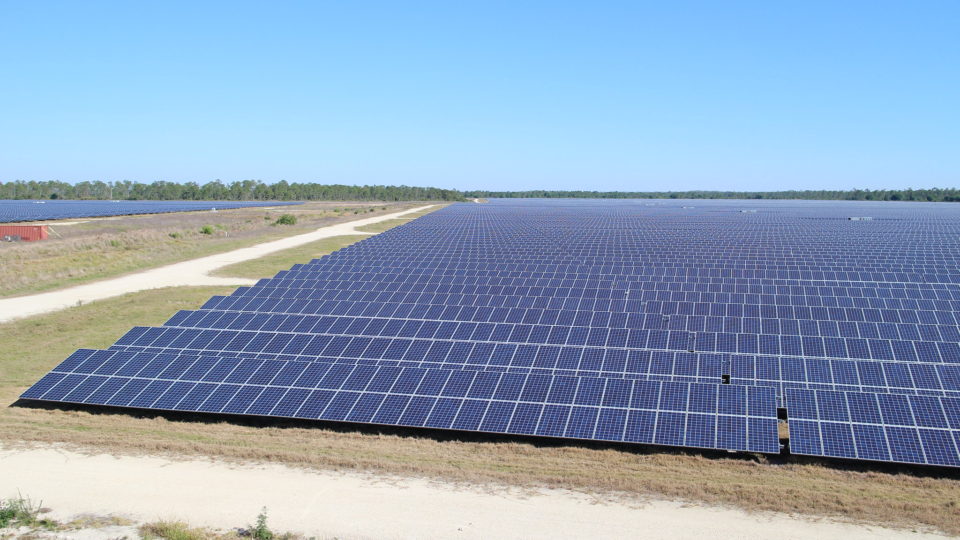
Florida Power & Light company is proposing to build the largest community solar program in the United States, pending regulatory review.  The planned installation of 1,490 MW of new solar capacity at 20 new power plants distributed across FPL’s service territory is expected to generate an estimated $249 million in net savings for all FPL customers over the long term.

In addition to becoming the largest community solar program in the country, the new program would also be the largest voluntary low-income solar offering in the country.  Low-income households are typically unable to benefit from solar energy because of not having the means to invest in the technology.  The new SolarTogether program will have more than 35 megawatts of capacity dedicated to low-income Florida families.  Solar energy is a critical tool for enabling low-income families to tap into energy savings. 

The SolarTogether program would provide direct savings in the form of bill credits, making solar an affordable option for any customer.  The Southern Alliance for Clean Energy and Vote Solar joined with FPL to help design the program to include a low-income component and request Florida Public Service Commission approval. There is broad support for the program from universities, county and city governments, and private companies.  In addition, more than 90,000 residential and small business customers have already signed up to receive more information.  The utility hopes to receive regulatory approval in time to launch during the first quarter of 2020.

**********

Web Links

FPL plans nation’s largest community solar program; includes low-income focus

Photo, posted March 8, 2018, courtesy of Babcock Ranch via Flickr.

Earth Wise is a production of WAMC Northeast Public Radio.

Primary Sidebar

Recent Episodes

  • An uninsurable future
  • Clean energy and jobs
  • Insect declines in remote regions
  • Fossil fuel producing nations ignoring climate goals
  • Trouble for clownfishes

WAMC Northeast Public Radio

WAMC/Northeast Public Radio is a regional public radio network serving parts of seven northeastern states (more...)

Copyright © 2026 ·