• Skip to primary navigation
  • Skip to main content
  • Skip to primary sidebar

Earth Wise

A look at our changing environment.

  • Home
  • About Earth Wise
  • Where to Listen
  • All Articles
  • Show Search
Hide Search
You are here: Home / Archives for recipe

recipe

Seaweed and concrete

August 29, 2025 By EarthWise Leave a Comment

Developing more sustainable and environmentally-friendly concrete using seaweed

Modern civilization is pretty much made of concrete.  People use more concrete than any other substance apart from water.  But concrete is made from cement, and cement is the source of 10% of all carbon dioxide emissions worldwide.

Researchers at the University of Washington and Microsoft have developed a new kind of concrete made by mixing dried, powdered seaweed with cement.  By fortifying cement with seaweed, the global warming potential of the concrete is reduced by 21% without weakening it. 

This novel recipe for concrete was developed using machine learning models, arriving upon it in a fraction of the time it would have taken by traditional experimentation.

Producing cement leads to carbon emissions from the fossil fuels used to heat raw materials and from a chemical reaction called calcination that occurs during the production process.  Seaweed is a carbon sink that pulls carbon dioxide out of the air and stores it while it grows.  By replacing some of cement in concrete, the resultant product has a much smaller carbon footprint.

Machine learning was used to predict the ideal mixture of cement and seaweed to yield concrete with a reduced carbon footprint that still passed mechanical strength tests.  Finding the right mixture would have taken 5 years ordinarily, but the machine learning process took only 28 days.

The researchers plan to generalize their work to different kinds of algae and even to food waste or other natural materials in order to create local, sustainable cement alternatives around the world. 

**********

Web Links

Seaweed-infused cement could cut concrete’s carbon footprint

Photo, posted June 29, 2009, courtesy of Peter Castleton via Flickr.

Earth Wise is a production of WAMC Northeast Public Radio

AI and greener cement

July 28, 2025 By EarthWise Leave a Comment

Cement pretty much holds the modern world together.  The amount of cement required to create our infrastructure is almost incomprehensible.   By weight, humanity consumes more cement than food, about 3 pounds per person per day.  The cement industry produces around eight percent of global CO2 emissions, which is more than the aviation industry.  So, if the amount of emissions produced making concrete could be reduced by even a few percent, it would make a significant impact.

Cement plants utilize rotary kilns heated to 2,500 degrees Fahrenheit to burn ground limestone down to a substance called clinker.  That energy-intensive combustion process emits large amounts of carbon dioxide.  However, the combustion process accounts for much less than half of the emissions associated with making concrete.  The majority comes from the raw materials needed to produce clinker.

One strategy to reduce concrete emissions is to modify the cement recipe itself, replacing some of the clinker with alternative materials.  Some producers already make use of materials like slag from iron production and fly ash from coal-fired power plants.   

A team of researchers at the Paul Scherrer Institute in Switzerland is making use of machine learning to simulate and optimize cement formulations that would emit significantly less CO2 while maintaining the same high level of mechanical performance.  This AI-based approach eliminates time-consuming experiments and conventional complex simulations.

The Scherrer Institute seeks to discover new materials and the effort has already yielded some promising candidates.  The next steps will be testing some of these recipes in the laboratory. 

**********

Web Links

AI paves the way towards green cement

Photo, posted July 3, 2007, courtesy of Tim Shortt via Flickr.

Earth Wise is a production of WAMC Northeast Public Radio

Hidden hydrogen

July 15, 2025 By EarthWise Leave a Comment

The idea of using hydrogen as a fuel or an energy source has been around for a long time.  Hydrogen is the most common element in the universe, but most of it is locked up in various chemical compounds, such as water.  Hydrogen is a clean fuel; burning it or using it to generate electricity in a fuel cell produces no greenhouse gas emissions.  But more than 99% of the hydrogen that people current produce is obtained by methods that result in greenhouse gas emissions.

A new study by scientists at the University of Oxford, the University of Durham in the UK, and the University of Toronto looks at geological environments in which naturally occurring hydrogen could be hiding.  According to the study, over the last billion years, the Earth’s continental crust is likely to have produced enough hydrogen to satisfy the energy needs of modern society for 170,000 years.

Much of that hydrogen is likely to have been lost or is inaccessible; most of it is not economically feasible to extract.  But even the relatively small amount of hydrogen left could provide thousands of years of energy for us.  We just have to be able to find it.

The researchers have developed what they call an “exploration recipe” which identifies where natural hydrogen might be located as well as where it could be commercially feasible to extract.  These places with hydrogen have so-called reservoir rocks and geologic formations that prevent the gas from leaking into the atmosphere.

A few such places have already been identified such as one in Albania.  There are various candidates to explore, even including an area in Kansas.  The study’s authors have founded a company whose mission is to find these natural sources of hydrogen.

**********

Web Links

Scientists Say Hidden Hydrogen Could Power the World for 170,000 Years

Photo, posted October 4, 2019, courtesy of Tony Sprezzatura via Flickr.

Earth Wise is a production of WAMC Northeast Public Radio

How to reduce pollution from food production

January 17, 2024 By EarthWise Leave a Comment

Present in animal manure and synthetic fertilizers, nitrogen is an essential nutrient for plant growth and is a critical input to enhance agricultural productivity on farms around the world.  But excessive and inefficient use of this nutrient is widespread.  In fact, up to 80% of it leaks into the environment, mostly in various polluting forms of nitrogen: ammonia and nitrogen oxides (which are harmful air pollutants), nitrous oxide (a potent greenhouse gas), and nitrate (which affects water quality).

A new report prepared for the United Nations has put forth some solutions to greatly reduce nitrogen pollution from agriculture in Europe.  A group of researchers coordinated by the U.K. Centre for Ecology & Hydrology, the European Commission, the Copenhagen Business School, and the National Institute for Public Health and the Environment of The Netherlands produced the report.

In it, the research team puts forth its recipe to reduce nitrogen pollution in Europe.  The report’s ingredients include:

  • Reducing by 50% the average European meat and dairy consumption
  • More efficient fertilizer application and manure storage
  • Reducing food production demand by reducing food waste by retailers and consumers
  • Better wastewater treatment to capture nitrogen from sewage
  • Adopting policies addressing food production and consumption to transition them towards more sustainable systems

Taking action to reduce nitrogen pollution will require a holistic approach involving farmers, policymakers, retailers, water companies, and individuals. 

Do Europeans have an appetite for change?

**********

Web Links

Scientists provide recipe to halve pollution from food production

Photo, posted March 10, 2022, courtesy of USDA NRCS Montana via Flickr.

Earth Wise is a production of WAMC Northeast Public Radio
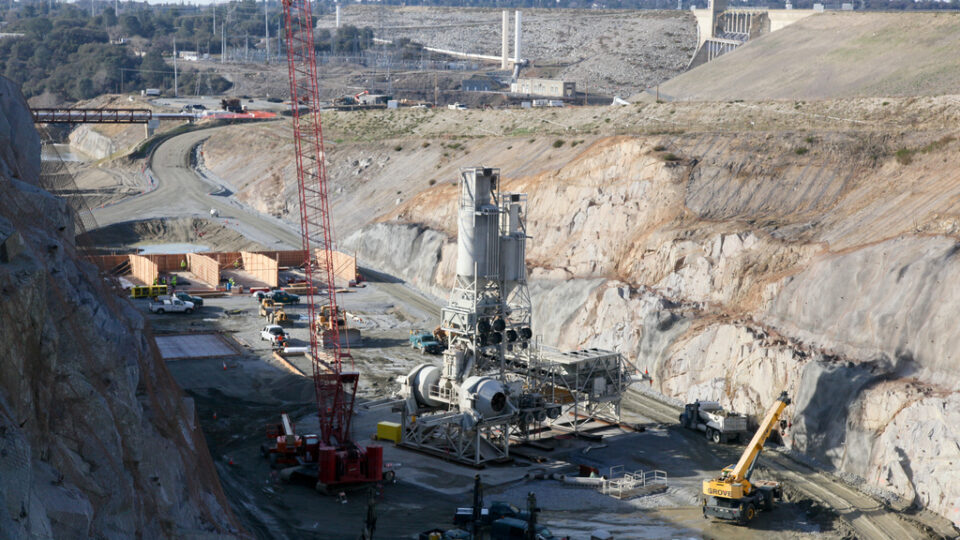
Carbon-Negative Concrete | Earth Wise

June 6, 2023 By EarthWise Leave a Comment

Researchers exploring a carbon-negative concrete

Concrete is a mainstay of modern civilization.  The world produces more than 4 billion tons of it each year and the process requires high temperatures, mostly obtained by burning fossil fuels.  The chemical reactions that produce concrete also produce large amounts of carbon dioxide.  In all, cement production is responsible for about 8% of total global carbon emissions by human activities.

This situation is the impetus for a wide range of research activities aimed at reducing the environmental impact of concrete production.  Researchers at Washington State University have recently developed a way of making carbon-negative concrete: a recipe for concrete that absorbs large amounts of carbon dioxide.

There have been attempts in the past to add biochar to concrete.  Biochar is a type of charcoal made from organic waste that sucks up carbon dioxide from the air.  In earlier attempts, even adding 3% of biochar would dramatically reduce the strength of the concrete.

The WSU researchers found that treating biochar with concrete washout wastewater makes it possible to add much more biochar to concrete without reducing its strength.  Mixing it with biochar adds calcium, which induces the formation of the mineral calcite, which in turn strengthens the concrete.

The researchers were able to add up to 30% biochar to their cement mixture.  Within a month, the resultant concrete was comparable in strength to ordinary concrete.  But at the same time, the biochar was able to absorb up to 23% of its weight in carbon dioxide from the air.  The new concrete is potentially the most environmentally friendly concrete ever developed.

**********

Web Links

Researchers develop carbon-negative concrete

Photo, posted January 31, 2012, courtesy of Michael J. Nevins / U.S. Army Corps of Engineers via Flickr.

Earth Wise is a production of WAMC Northeast Public Radio

Primary Sidebar

Recent Episodes

  • An uninsurable future
  • Clean energy and jobs
  • Insect declines in remote regions
  • Fossil fuel producing nations ignoring climate goals
  • Trouble for clownfishes

WAMC Northeast Public Radio

WAMC/Northeast Public Radio is a regional public radio network serving parts of seven northeastern states (more...)

Copyright © 2026 ·