• Skip to primary navigation
  • Skip to main content
  • Skip to primary sidebar

Earth Wise

A look at our changing environment.

  • Home
  • About Earth Wise
  • Where to Listen
  • All Articles
  • Show Search
Hide Search
You are here: Home / Archives for rainfall patterns

rainfall patterns

The U.N. meets about geoengineering

October 9, 2025 By EarthWise Leave a Comment

Geoengineering refers to a wide range of mechanical or chemical methods aimed at deliberately changing the global climate system.  It includes a number of unproven concepts, one of which is intentionally polluting the upper atmosphere with thousands of tons of artificial particles such as chemical sprays or mineral dust.  This is referred to as solar radiation management or SRM.  The idea is to dim sunlight, thereby slowing the rise of global temperatures by deflecting solar energy away from the Earth’s surface before it can be trapped as heat by greenhouse gases in the atmosphere.

The United Nations Environmental Program held workshops in May and September to address the issue of such strategies.  This official position of the UN is that strategies such as SRM are not a climate solution given that they do not actually address the underlying causes of climate change.  Recent research has shown that SRM efforts could potentially shift rainfall patterns, intensify heat waves or cold snaps, lead to overall drying, and have other unpredictable consequences.

Many participants expressed concern that the discussion focused too much on engineering aspects and not on the potential risks of such efforts.  The prevailing opinion among scientists is that SRM deployment is too dangerous and ungovernable and therefore should not be pursued.

Current geopolitical trends make the possibility of geoengineering efforts by authoritarian states disturbingly likely.  While there are international guidelines on geoengineering activities, the potential threat of unilateral efforts by rogue nations is growing.

**********

Web Links

UN Sessions on Solar Geoengineering Trigger Unease

Photo, posted May 12, 2016, courtesy of Susanne Nilsson via Flickr.

Earth Wise is a production of WAMC Northeast Public Radio

A hidden cost of climate change

August 25, 2025 By EarthWise Leave a Comment

Climate change is dramatically impacting food production by altering rainfall patterns, increasing temperatures, and triggering more frequent extreme weather events.  These changes make crops more vulnerable to droughts, floods, heatwaves, pests, and diseases, leading to lower yields and greater uncertainty for farmers worldwide.

But climate change isn’t just reshaping our planet.  It’s also changing what’s on our plates.  According to a new study by researchers from Liverpool John Moores University in the UK, rising carbon dioxide levels and warmer temperatures may be making food less nutritious.

The research team focused on popular leafy vegetables, including kale, rocket, and spinach.  The researchers simulated future UK climate conditions in growth chambers to study how the crops responded to hotter, CO2-rich environments.

The research team found that elevated CO2 levels help crops grow faster and bigger, but not healthier.  Over time, the crops showed a reduction in key minerals like calcium and certain antioxidant compounds.  These changes were exacerbated by increases in temperature.  In fact, the combination had complex effects.  The crops did not grow as big or fast, and the decline in nutritional quality intensified.

This nutritional imbalance poses serious human health implications.  Rising CO2 levels can increase sugar in crops while reducing essential nutrients, leading to calorie-rich but nutrient-poor diets. This shift may raise the risk of obesity, diabetes, and nutrient deficiencies, especially in vulnerable populations.

The challenge ahead isn’t just to grow enough food to feed a growing population, but to preserve the quality of that food in a changing climate.

*********

Web Links

Bigger crops, fewer nutrients: The hidden cost of climate change

Photo, posted May 25, 2010, courtesy of Jason Bachman via Flickr.

Earth Wise is a production of WAMC Northeast Public Radio
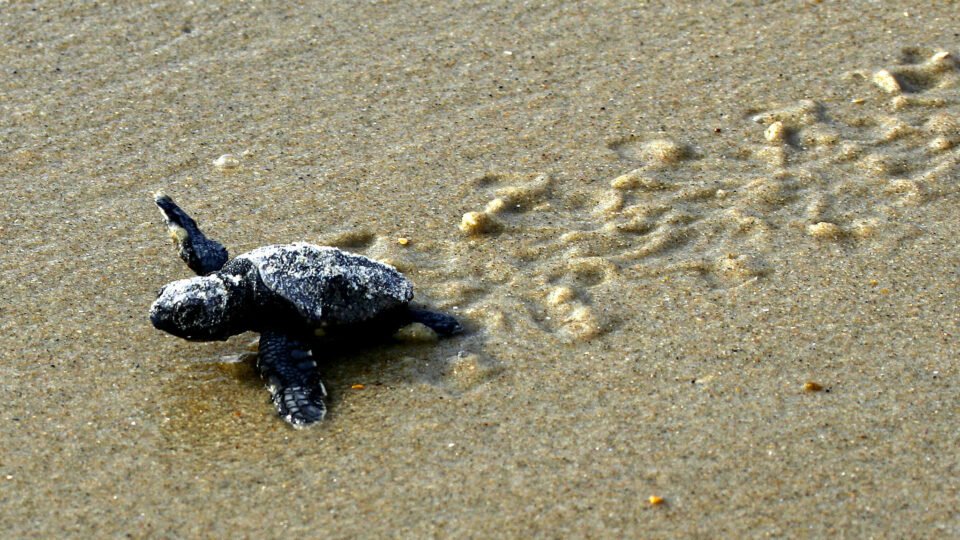
Rainfall and sea turtles

October 4, 2024 By EarthWise Leave a Comment

Rainfall has a major impact on sea turtles

There are seven species of sea turtles that inhabit the world’s oceans. Six of the seven sea turtle species – all of them except the flatback – are present in U.S. waters, and are listed as threatened or endangered under the Endangered Species Act. 

Sea turtles, which have been around for more than 100 million years, spend the majority of their lives in the ocean, but they do periodically come ashore to nest.  Female sea turtles lay their eggs in the sand and then return to the ocean.  Survival odds for sea turtle hatchlings are quite bleak.  In fact, only one out of every 1,000 makes it to adulthood. 

Research shows that both air and sand temperatures are critical for sea turtle hatchling development.  Cooler temperatures produce larger, heavier hatchlings with more males.  Hatchling size matters because larger hatchlings, which can move faster, are more likely to survive because they spend less time on risky beaches.  But rising temperatures might shorten incubation periods, and erratic rainfall can disrupt growth, potentially affecting survival.

A new international study by researchers from Florida Atlantic University and the University of Tübingen in Germany found that fluctuating rainfall patterns have a greater impact than changes in air temperature on sea turtle hatchling development. 

The results, which were recently published in the journal BMC Ecology and Evolution, reveal that the impact of rainfall varies between species.  As climate change shifts rainfall patterns, the impact on sea turtle nesting sites suggests that global conservation strategies for some species – like loggerhead and green sea turtles – likely need to be updated.

**********

Web Links

Rain or Shine? How Rainfall Impacts Size of Sea Turtle Hatchlings

Sea Turtle

Photo, posted August 27, 2015, courtesy of USFWS/Orsulak via Flickr.

Earth Wise is a production of WAMC Northeast Public Radio

Primary Sidebar

Recent Episodes

  • An uninsurable future
  • Clean energy and jobs
  • Insect declines in remote regions
  • Fossil fuel producing nations ignoring climate goals
  • Trouble for clownfishes

WAMC Northeast Public Radio

WAMC/Northeast Public Radio is a regional public radio network serving parts of seven northeastern states (more...)

Copyright © 2025 ·