
• Skip to primary navigation
  • Skip to main content
  • Skip to primary sidebar

Earth Wise

A look at our changing environment.

  • Home
  • About Earth Wise
  • Where to Listen
  • All Articles
  • Show Search
Hide Search
You are here: Home / Archives for pumps

pumps

The Scourge Of Salt | Earth Wise

June 10, 2022 By EarthWise Leave a Comment

Salt will plague many communities and countries in the future

Rising seas are increasing saltwater intrusion on land and rising temperatures are causing greater evaporation.   The result is mounting levels of salt in waters and in soils.

Rising sea levels cause salty ocean water to push further into river deltas.  There is already a surge in saltiness across all inhabited continents.   Seawater works its way further upstream when dams hold back water.  Pumps that remove fresh water from underground sources for irrigation and drinking supplies add to the problem.  In dry regions, irrigation systems delivering water to crops increasingly bring salt onto fields.

People add to the problem by pouring saline drainage water from mines into rivers and by using salt to de-ice roads in the winter.

A modeling study pinpointed hotspots for climate change-induced salinization in numerous locations including the U.S. Southwest, wide areas of Australia, Mexico, South Africa, Brazil, central India, northern China, and more.

Some ecosystems are adapted to saline environments but major alterations in the balance between saline and fresh water is creating growing problems for ecosystems, lake fisheries, crop growing, and even human health.

The damage caused by salt is likely to be so severe that salinization will become a major cause of environmental refugees when the land they live on can no longer sustain them. 

Salt will be a growing threat to the world’s food supplies, especially where farmers depend on artificial irrigation.  About a third of the world’s food is grown in irrigated fields, and a fifth of those fields are deemed to already be salt-contaminated.  Ultimately, only a halt to climate change will be capable of combatting the scourge of salt.

**********

Web Links

Salt Scourge: The Dual Threat of Warming and Rising Salinity

Photo, posted June 3, 2017, courtesy of Jason Jacobs via Flickr.

Earth Wise is a production of WAMC Northeast Public Radio.

Iron Flow Batteries | Earth Wise

November 15, 2021 By EarthWise Leave a Comment

Lithium-ion batteries power computers, cell phones, and increasingly, automobiles.  They started out being rather expensive but have become dramatically cheaper over the last decade, with prices dropping about 90%.  Batteries are needed to store clean power from wind and solar generation and lithium-ion batteries are increasingly being used for that purpose as well.

Utility-scale energy storage requires substantial battery installations and battery cost is still very much an inhibiting factor in the widespread adoption of the technology.  Lithium-ion battery costs continue to drop but because they require expensive materials like lithium and cobalt, there are limits to how low their prices are likely to get.

As a result, researchers have continued to seek ways to produce batteries made out of cheaper materials.  Among the more promising technologies are flow batteries, which are rechargeable batteries in which electrolyte flows through electrochemical cells from tanks. 

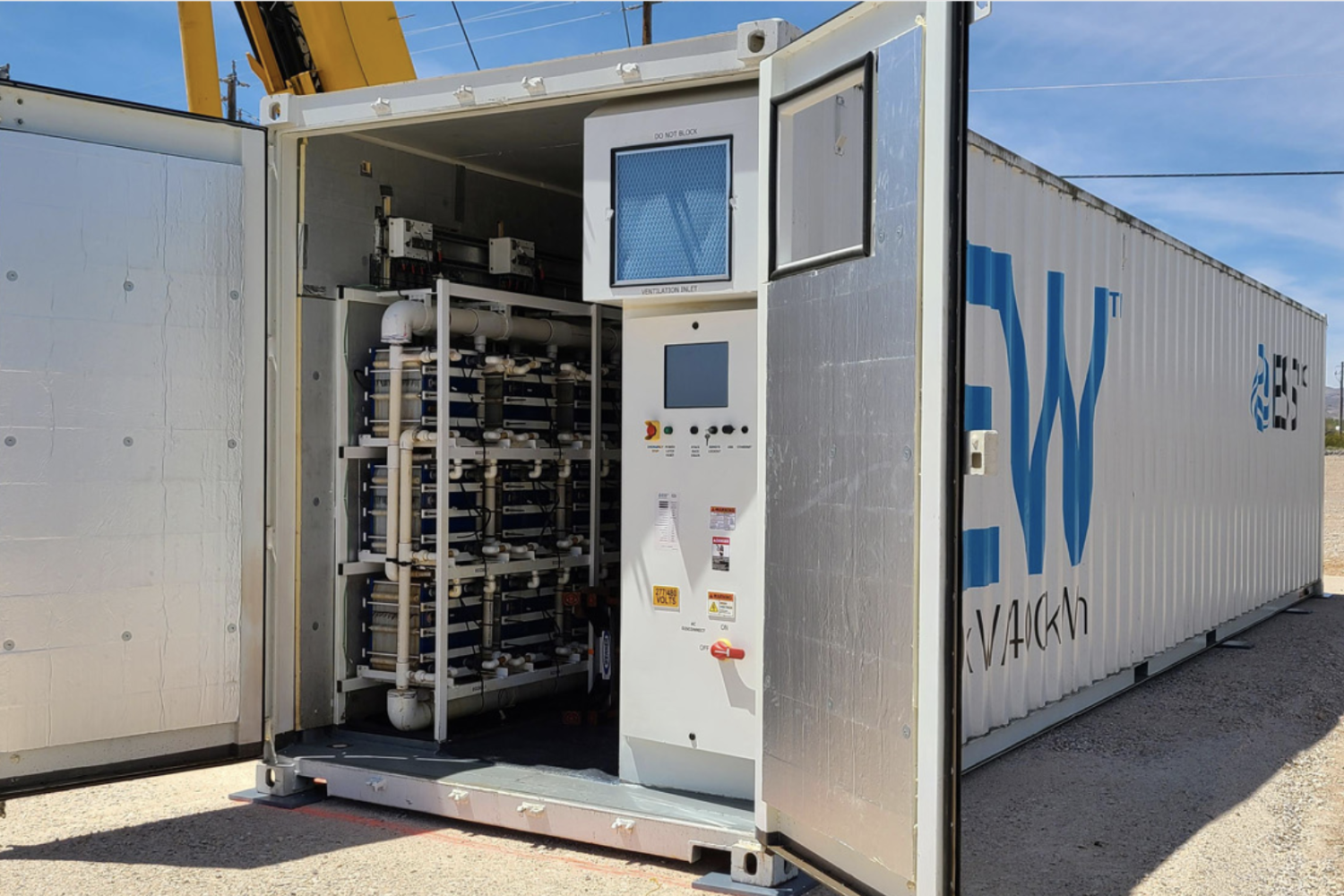
Flow batteries are much larger than lithium-ion batteries and include physical pumps to move electrolytes.  They typically are sold inside shipping containers.  Clearly, such batteries are not suitable for use in vehicles, much less in consumer electronics.  Nevertheless, they represent a practical option for grid storage.

A company called ESS has developed an iron flow battery suitable for utility energy storage.  Clean energy firm CSB Energy plans to install iron flow batteries at several solar projects across the U.S. that will store enough energy to provide power 50,000 homes for a day.  According to ESS, the iron-based batteries should sell for about half the price of lithium-ion batteries by 2025 and be able to store energy for longer periods.

**********

Web Links

New Iron-Based Batteries Offer an Alternative to Lithium

Photo, posted March 21, 2021, courtesy of Nenad Stojkovic via Flickr.

Earth Wise is a production of WAMC Northeast Public Radio.
Solar-Powered Desalination

October 4, 2019 By EarthWise Leave a Comment

Turning seawater into drinking water is an energy-intensive process and is therefore pretty expensive.  Worldwide, one third of people don’t have reliable access to safe drinking water and they are the least able to afford expensive ways to get it.   By 2025, half of the world’s population is expected to live in water-stressed areas.

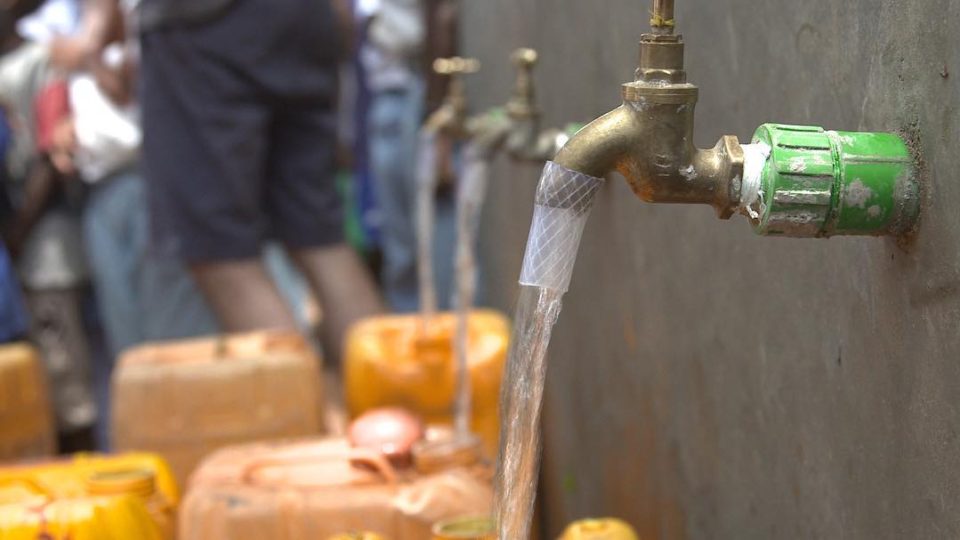
At a newly-constructed facility in Kenya, a nonprofit company called GivePower has built a desalination system that runs on solar power.  The system started operating in the coastal area of Kiunga in July 2018 and can create nearly 20,000 gallons of fresh drinking water each day – enough for 25,000 people.

GivePower started in 2013 as a nonprofit branch of SolarCity, the solar-panel company that ultimately merged with Tesla in 2016.  However, GivePower spun off as a separate enterprise shortly before that.

GivePower mostly focuses on building solar-energy systems to provide electricity across the developing world. 

Desalination technology is not new, but it is notoriously energy-intensive because it requires high-power pumps.  The GivePower system is integrated with a solar microgrid that makes use of Tesla batteries to store energy for when the sun is not shining. 

Local residents pay about a quarter of one cent for every quart of water from the system.  The Kiunga community has faced ongoing drought and before the GivePower system was installed, was forced to drink from salt water wells, which present serious health risks.

The GivePower system cost $500,000 to build and is expected to generate $100,000 a year, to be eventually used to fund similar facilities in other places.

**********

Web Links

A solar-powered system can turn salt water into fresh drinking water for 25,000 people per day. It could help address the world’s looming water crisis.

Photo courtesy of GivePower.

Earth Wise is a production of WAMC Northeast Public Radio.
Primary Sidebar

Recent Episodes

  • An uninsurable future
  • Clean energy and jobs
  • Insect declines in remote regions
  • Fossil fuel producing nations ignoring climate goals
  • Trouble for clownfishes

WAMC Northeast Public Radio

WAMC/Northeast Public Radio is a regional public radio network serving parts of seven northeastern states (more...)

Copyright © 2026 ·