• Skip to primary navigation
  • Skip to main content
  • Skip to primary sidebar

Earth Wise

A look at our changing environment.

  • Home
  • About Earth Wise
  • Where to Listen
  • All Articles
  • Show Search
Hide Search
You are here: Home / Archives for protected areas

protected areas

Migratory bison in Yellowstone

September 30, 2025 By EarthWise Leave a Comment

How bison impact the environment inside Yellowstone National Park

Tens of millions of bison once migrated across the United States in enormous herds; tribal oral histories speak of it taking days for an entire herd to pass by.  These herds shaped the landscape and performed many ecosystem functions.  By the 1890s, the bison population had plummeted to fewer than 1,000 individuals.  Since then, dedicated conservation efforts – establishing protected areas and breeding programs – have led to the recovery of the species.  There are now about 400,000 bison, mostly existing in small, privately owned herds.

Yellowstone National Park is home to the last significant migratory bison herd.  Yellowstone was established as a national park in 1872 providing scientists with a unique opportunity to study how large grazing herbivores affect the landscape.  More than 5,000 bison live in the 3,500 square miles of the park. 

A 7-year study by researchers examined how bison change the soil and vegetation along their migratory route.  What looked like overgrazing turns out to allow plants to keep growing.  The bison graze and move on, increasing the density of microbes and nitrogen in the soil and significantly improving the nutrition for other herbivores.

The research validated what Indigenous peoples have known for many generations:  that bison helped shape this continent and having large numbers of them improve ecosystems for other animals as well.  Native American tribes would like to restore bison to their lands.  Whether some of the park fences might be removed to permit migration beyond official borders is under consideration.

**********

Web Links

In Yellowstone, Migratory Bison Reawaken a Landscape

Photo, posted August 17, 2017, courtesy of Jacob W. Frank / NPS via Flickr.

Earth Wise is a production of WAMC Northeast Public Radio
Elephants and protected areas

February 6, 2024 By EarthWise Leave a Comment

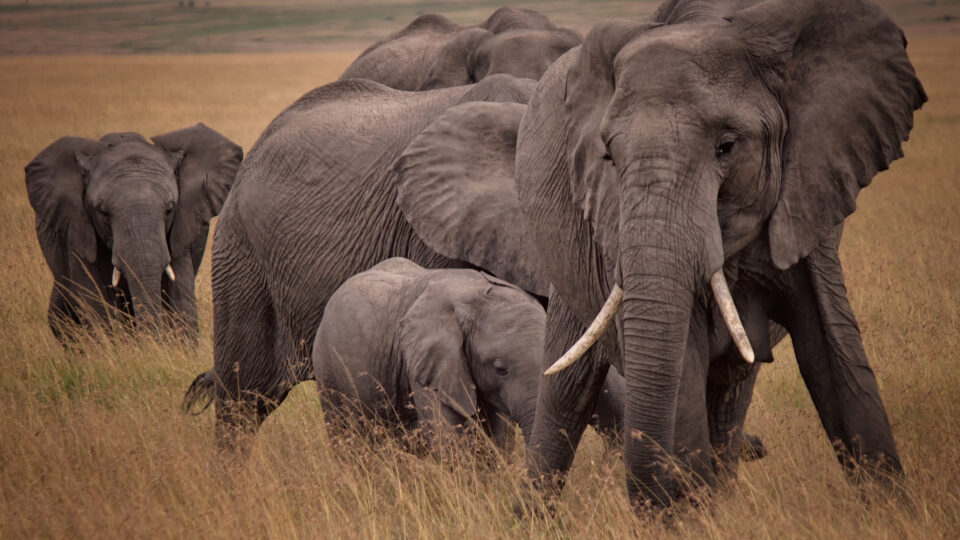
Standing up to 13 feet tall and weighing up to 7 tons, African savanna elephants are the largest species of elephant and the biggest terrestrial animal on Earth.  According to the World Wildlife Fund, African savanna elephants can be found in 23 countries and live in a variety of habitats, including savannas, forests, and deserts.  The largest populations are in Southern and Eastern African countries.

According to assessments from the International Union for Conservation of Nature, the population of African savanna elephants has decreased by at least 60% over the last 50 years.  Poaching and habitat loss are the two main drivers of the population decline.  In 2021, the status of the African savanna elephant was changed from vulnerable to endangered on the IUCN’s Red List of Threatened Species. 

However, according to a new study recently published in the journal Science Advances, conservation measures have successfully stopped African savanna elephant population declines across southern Africa.  The international team of researchers found that the pattern varies regionally, with some elephant populations soaring while others are still facing large declines.

Overall, the study found that there are the same number of elephants now as there were 25 years ago. According to researchers, the key to long-term elephant population growth and sustainability isn’t where a protected area is, but rather how connected it is to other protected or neutral areas around it. 

This isn’t a new concept; in fact, many parks have been connected to one another.  But this study helps prove that the method is effective for elephant conservation.  

**********

Web Links

Protected Areas for Elephants Work Best if They Are Connected

African elephant species now Endangered and Critically Endangered – IUCN Red List

African savanna elephant

Photo, posted October 20, 2018, courtesy of Ray via Flickr.

Earth Wise is a production of WAMC Northeast Public Radio
Canada Lynx And Climate Change | Earth Wise

April 19, 2023 By EarthWise Leave a Comment

Glacier National Park may be a climate refuge for Canada Lynx

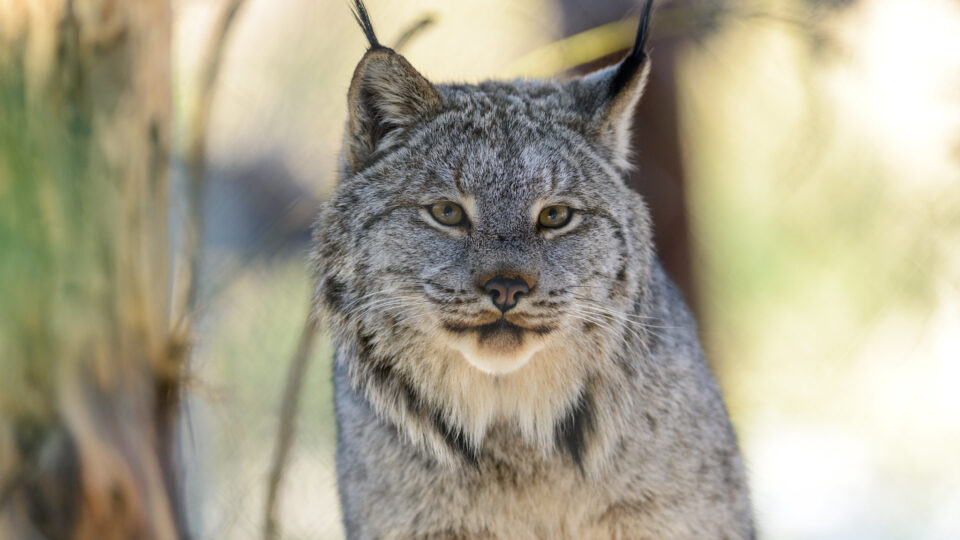
Canada lynx are medium-sized North American big cats known for their long, black ear tufts, and their ability to hunt across the surface of deep snow.  Historically, the predator’s habitat ranged across Alaska, Canada, and much of the Northern United States.  But in the contiguous U.S. today, the Canada lynx exists only in several disjunct populations in Maine, Minnesota, Colorado, Idaho, Washington and Montana. 

While Glacier National Park in Montana is famous for its grizzly bears and mountain goats, the park also holds a surprising number of Canada lynx, and could serve as a much-needed climate refuge for the big cats in the future.

Glacier National Park is one of the few, large, protected areas located within the Canada lynx range in the Lower 48.  Using an array of 300 motion-sensitive cameras on hiking trails throughout Glacier, researchers from Washington State University conducted the first parkwide occupancy survey for Canada lynx inside the park.  They were surprised to find that Glacier is home to roughly 50 Canada Lynx.  In fact, the researchers found that the iconic predator resides across most of the park’s 1,600 square-mile landscape, although at lower densities than in the core of its range further north.

The researchers also found that Canada lynx are distributed at lower elevations inside Glacier.  Since the cats are a cold-adapted species that need the deep snow, within Glacier, they have a lot of room to climb in elevation as the climate warms.      

The researchers hope their survey can serve as a baseline population estimate to help their collaborators with the National Park Service keep tabs on the numbers of Canada lynx in Glacier.

**********

Web Links

Glacier National Park could be climate haven for Canada lynx

Photo, posted February 22, 2014, courtesy of Eric Kilby via Flickr.

Earth Wise is a production of WAMC Northeast Public Radio
Protected Areas Are Not Protecting Insects | Earth Wise

March 24, 2023 By EarthWise Leave a Comment

Insects are not being protected by protected areas

Insects can be found in every environment on Earth and play crucial roles in the planet’s ecosystems.  In fact, Biologist E. O. Wilson once said that “if all mankind were to disappear, the world would regenerate back to the rich state of equilibrium that existed ten thousand years ago.  If insects were to vanish, the environment would collapse into chaos.”

While his statement may sound extreme, it’s really not an exaggeration.  Insects are critical to most ecosystems.  They pollinate more than 80% of plants – both those we eat and those that provide food and habitat for other species.  Insects are also a food source themselves, eaten by other insects, birds, fish, and mammals. Without insects, we wouldn’t have the rich biodiversity that supports life on earth today. 

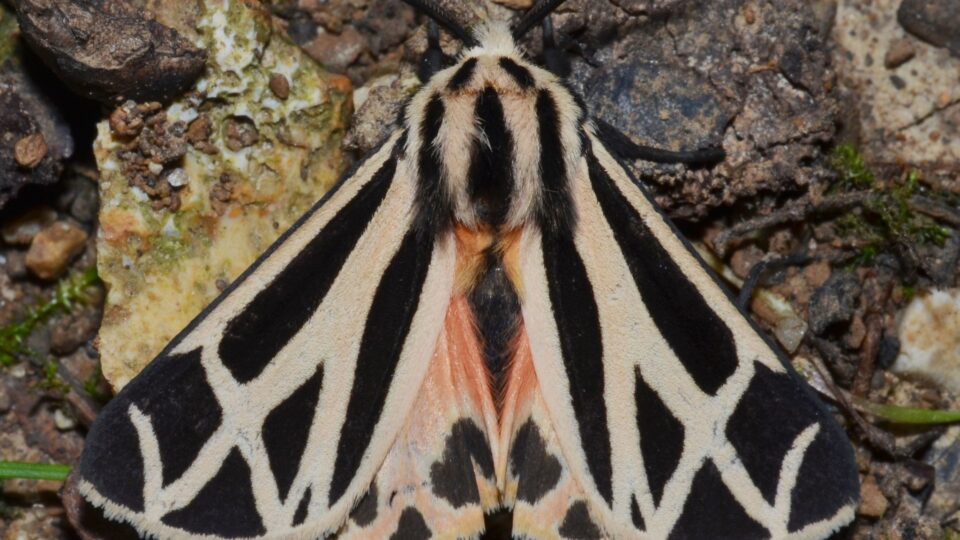
But insect populations are collapsing around the globe, and they continue to be overlooked by conservation efforts.  Protected areas, like national parks, refuges, and sanctuaries, can safeguard threatened species, but only if those threatened species actually live within the protected areas. 

According to a new study recently published in the journal One Earth, 76% of insect species are not adequately covered by protected areas, including several critically endangered insects such as the dinosaur ant, crimson Hawaiian damselfly, and harnessed tiger moth. Alarmingly, the populations of 1,876 species do not overlap with protected areas at all.

Insects have been historically overlooked by conservation programs and need to be included in future conservation assessments. 

**********

Web Links

Protected areas fail to safeguard more than 75% of global insect species

Photo, posted August 21, 2014, courtesy of Andy Reago & Chrissy McClarren via Flickr.

Earth Wise is a production of WAMC Northeast Public Radio

Better Marine Protected Areas | Earth Wise

August 17, 2022 By EarthWise Leave a Comment

Marine protected areas are regions of seas, oceans, estuaries, and in the US, the Great Lakes, that are afforded special protections.  MPAs restrict human activity for conservation purposes, generally in order to protect natural or possibly cultural resources.   MPAs may limit such things as development, fishing practices, fishing seasons, catch limits, moorings, and removal or disruption of marine life.

A new study by the University of Plymouth in the UK looked at the effectiveness of MPAs in increasing the total abundance of reef species.  It looked at the MPAs in Lyme Bay, off the south coast of England, where two of them are co-located but governed by different constraints.

The study found that whole-site management of an MPA can increase the total abundance of reef species within its borders by up to 95%.  This is in contrast to the MPA where only known features are conserved and human activity is otherwise allowed to continue unchecked.  In that place, species abundance increased by only 15%.

The whole-site MPAs were observed to have other benefits as well.   They show higher levels of functional redundancy, meaning that when there are species losses, they are compensated by other species.  Whole-site MPAs also exhibit higher levels of species diversity.

MPAs are increasingly being recognized as a sustainable way to enhance the marine environment even while supporting coastal communities.  The Global Ocean Alliance, a 72-country alliance led by the UK, has set a target of protecting 30% of all marine areas by 2030.  The new study shows that even more important than simply establishing marine protected areas, it is essential that they are effectively implemented.

**********

Web Links

Whole-site management of Marine Protected Areas can lead to a 95% increase in reef species

Photo, posted October 28, 2011, courtesy of Benjamin Evans via Flickr.

Earth Wise is a production of WAMC Northeast Public Radio.

Primary Sidebar

Recent Episodes

  • An uninsurable future
  • Clean energy and jobs
  • Insect declines in remote regions
  • Fossil fuel producing nations ignoring climate goals
  • Trouble for clownfishes

WAMC Northeast Public Radio

WAMC/Northeast Public Radio is a regional public radio network serving parts of seven northeastern states (more...)

Copyright © 2025 ·