• Skip to primary navigation
  • Skip to main content
  • Skip to primary sidebar

Earth Wise

A look at our changing environment.

  • Home
  • About Earth Wise
  • Where to Listen
  • All Articles
  • Show Search
Hide Search
You are here: Home / Archives for prohibited

prohibited

It’s only getting warmer

July 2, 2025 By EarthWise Leave a Comment

Global warming continues and the planet cannot withdraw from its consequences

Climate science is not popular with the current administration.  Phrases like “climate crisis”, “clean energy”, and “climate science” itself are prohibited from websites, reports, regulations, and other communications by government employees and federal funding recipients.  Once again, the United States is turning away from climate mitigation efforts and will have a drastically reduced ability to forecast disasters and head off their worst consequences.

Meanwhile, global warming continues, and the planet can’t withdraw from its consequences.

The hottest year in nearly two centuries was recorded in 2024.  According to a new report by the World Meteorological Organization, there is an 80% chance that at least one year over the next four will surpass 2024 as the warmest year on record. 

The consequences of warming will probably vary widely across the world.  But likely occurrences include rapid thawing of Arctic Sea ice, drier seasons in the Amazon, excess rain in places like Alaska, northern Europe, and the Sahel in north-central Africa.  Hotter temperatures lead to more evaporation of water from plants and soil, leading to droughts and failed crop seasons.  The warmer atmosphere holds more moisture, which increases the chance of flooding from downpours and stronger hurricanes.

Ignoring what is going on with the climate or thinking that it will only impact other people in other places is nothing short of foolhardy.  The planet does not care about politics.  What is happening to the climate will be in just about everyone’s backyard soon enough.

**********

Web Links

‘It’s pretty bleak’: A warming planet is poised to get even hotter, forecasters warn

Photo, posted December 1, 2015, courtesy of Adam Matsumoto via Flickr.

Earth Wise is a production of WAMC Northeast Public Radio

The U.S. Ratifies A Climate Treaty | Earth Wise

October 14, 2022 By EarthWise Leave a Comment

The United States ratifies a climate treaty

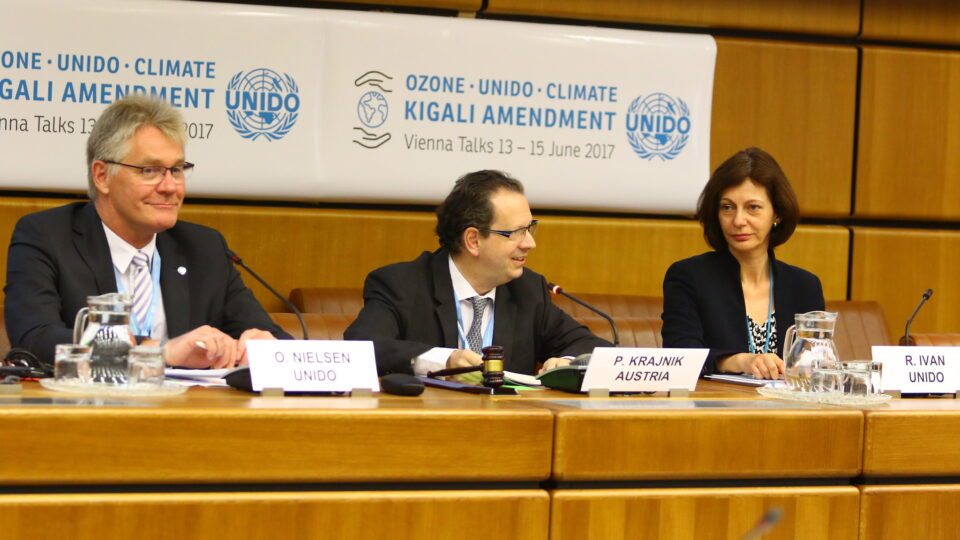
In a rare display of bipartisanship, the U.S. Senate voted 69-27 in favor of ratifying a key international climate agreement aimed at curbing global warming.  The Kigali Amendment to the Montreal Protocol, which has been ratified by 137 other countries so far, ends the use of climate-warming hydrofluorocarbons that are 1,000 times more potent than carbon dioxide in warming the atmosphere.   This is the first international climate treaty that the U.S. has joined in 30 years.

The Kigali Agreement was established in Kigali, Rwanda in 2016 to phase out HFCs, which have been the replacements for CFCs (chlorofluorocarbons) in air conditioners and refrigerators.  CFCs were found to be depleting the ozone layers that protects the earth from harmful ultraviolet rays.  HFCs do not deplete the ozone layer, but they have been a significant contributor to global warming.

The U.S. ratification of the treaty is largely symbolic.  The American Innovation and Manufacturing Act, passed by Congress in 2020, gave the EPA authority to regulate HFCs and the agency has already been doing so.  However, the Senate action shows that the U.S. is back on the international climate bandwagon. 

Failure to ratify the Kigali Amendment would have closed segments of the chemical and manufacturing industries to U.S. producers after 2023 because the Montreal Protocol prohibits trade with countries not party to it or its amendments.

Environmental advocates are hopeful that the U.S. can move forward on other climate actions.  A next step would be to focus on methane, the second leading driver of climate change after carbon dioxide.

**********

Web Links

Senate Votes to Ratify the Kigali Amendment, Joining 137 Nations in an Effort to Curb Global Warming

Photo, posted June 13, 2017, courtesy of UNIDO via Flickr.

Earth Wise is a production of WAMC Northeast Public Radio
Environmental DNA | Earth Wise

August 5, 2022 By EarthWise Leave a Comment

Marine protected areas are sections of the ocean where governments place limits on human activity.  They are intended to provide long-term protection to important marine and coastal ecosystems.  MPAs are important because they can protect depleted, threatened, rare, and endangered species and populations.

In January 2020, the Republic of Palau in the western Pacific Ocean created one of the world’s largest marine protected areas.  The Palau National Marine Sanctuary covers 80% of the country’s economic zone and prohibits all extractive activity like fishing and mining over a 183,000 square mile area in order for the island nation to ensure its food security and grow its economy in the face of climate change.

The Marine Sanctuary is an ambitious enterprise.  The question is how Palau can evaluate whether and how well it is working?

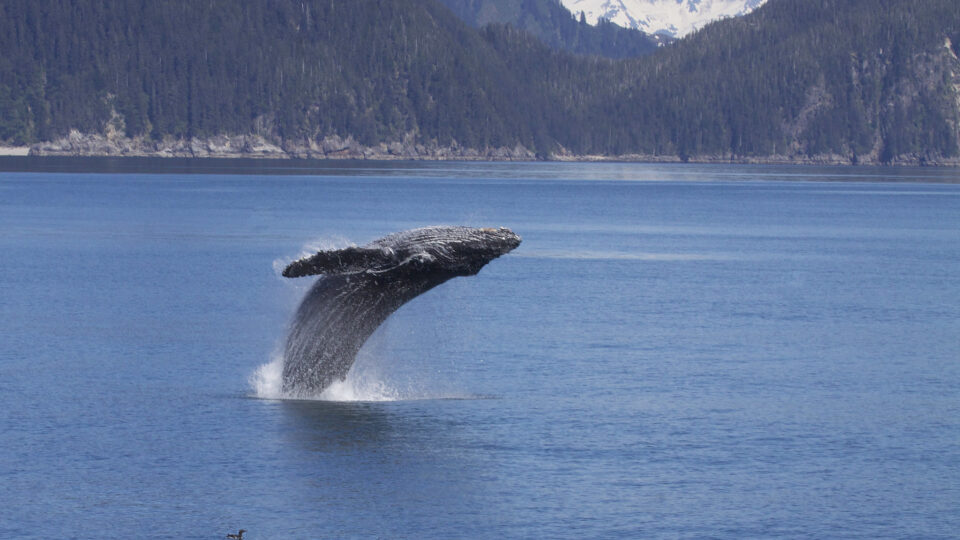
A team of scientists from Stanford University and Palau-based colleagues are making use of Environmental DNA – or eDNA – technology to monitor the large-scale marine protected area.  eDNA is the cells, waste, viruses, and microorganisms that plants and animals leave behind.  Samples of marine eDNA effectively provide a fingerprint of the organisms that have recently passed through the water in a given area.  This gives scientists a way to assess an ecosystem’s biodiversity and keep track of the types of species inhabiting a specific area.  Using eDNA, it is possible to keep track of all the  organisms that live below the surface and learn about things we can’t even see.

The team has embarked on a program of periodic sampling of the waters off Palau and hope to be able to monitor the results of establishing the Marine Sanctuary.

**********

Web Links

eDNA: Bringing biodiversity to the surface

Photo, posted June 12, 2013, courtesy of Gregory Smith via Flickr.

Earth Wise is a production of WAMC Northeast Public Radio.

Bidding ‘Adieu’ To Single-Use Plastics | Earth Wise

July 27, 2022 By EarthWise Leave a Comment

Since the 1950s, more than nine billion tons of plastic have been produced, and 50% of that has been during the past 15 years.  While there are some use cases for plastic that are important, it generally serves as the poster child of our throwaway culture.

Plastic pollution can be found everywhere on earth, from the top of the tallest mountains to the bottom of the deepest oceans.  It’s in our food, water, and air. 

By 2040, researchers predict that there will be nearly 90 million tons of plastic pollution entering the environment each year.  By some estimates, single-use plastics account for half of all our plastic waste.    

Many cities, states, and even countries are limiting or even banning single-use plastics.  Canada recently announced a ban on single-use plastics.  The ban includes things like plastic shopping bags, cups, cutlery, straws, stirrers, and take-out food containers.

The ban will phase in over the next several years, beginning with a ban on the manufacture and import of single-use plastics by the end of this year.  Sales of these items will be prohibited in 2023, and the export of plastics will cease by the end of 2025.  

Canada’s southern neighbor, the United States, leads the world in plastic waste generation.  While some states have approved single-use plastic reforms, most of the effort at the federal level has focused on improving recycling rates.  However, a recent report from several environmental organizations found that plastic recycling rates in the U.S. have actually declined in the last several years, from an already-dismal 8.7% to less than 6%.    

Suggesting the plastic waste problem can be solved with improved recycling rates is greenwashing the issue. 

**********

Web Links

Canada is banning single-use plastics, including grocery bags and straws

Photo, posted October 31, 2011, courtesy of Mara via Flickr.

Earth Wise is a production of WAMC Northeast Public Radio.

Primary Sidebar

Recent Episodes

  • An uninsurable future
  • Clean energy and jobs
  • Insect declines in remote regions
  • Fossil fuel producing nations ignoring climate goals
  • Trouble for clownfishes

WAMC Northeast Public Radio

WAMC/Northeast Public Radio is a regional public radio network serving parts of seven northeastern states (more...)

Copyright © 2026 ·