• Skip to primary navigation
  • Skip to main content
  • Skip to primary sidebar

Earth Wise

A look at our changing environment.

  • Home
  • About Earth Wise
  • Where to Listen
  • All Articles
  • Show Search
Hide Search
You are here: Home / Archives for prevent

prevent

More trouble for bees

August 12, 2025 By EarthWise Leave a Comment

Honeybees are a critical resource for American agriculture.  The western honeybee, Apis mellifera, pollinates more than 130 types of nuts, fruits, and vegetables, adding up to $15 billion worth of crops every year.  Honeybee health has been harmed by a combination of factors:  weather extremes, habitat loss, pesticides, and disease.  One of the biggest problems has been a parasite called varroa destructor, which is a Southeast Asian mite that first entered the United States in the 1980s.  The mites spread viruses to the bees.

The past year has been a particularly bad one for the bees.  Nearly 56% of managed honeybee colonies died off in the past year, the worst rate since annual reporting began in 2011. 

Even while American beekeepers seek solutions to the varroa problem, a potentially worse threat is on the horizon.  Another Southeast Asian mite, tropilaelaps, has been making its way across Asia and into Europe. If these mites arrive in North America, the results would be disastrous, wreaking havoc on honeybees and ravaging the nation’s food supply.

Western honeybees are the only honeybee species that is not native to Southeast Asia.  As the cradle of development of the bees, Southeast Asia has given rise to a bounty of parasites and viruses that are dependent upon them.  In turn, bees native to that region have had time to evolve defenses against these pathogens.  Western honeybees have not.

Beekeepers and authorities are taking measures to delay or prevent the arrival of tropilaelaps mites.  The stakes are very high.

**********

Web Links

After Devastating Winter Losses, Another Threat Looms for U.S. Beekeepers

Photo, posted April 14, 2013, courtesy of Paul Rollings via Flickr.

Earth Wise is a production of WAMC Northeast Public Radio
Antibiotics In Animal Agriculture | Earth Wise

April 13, 2023 By EarthWise Leave a Comment

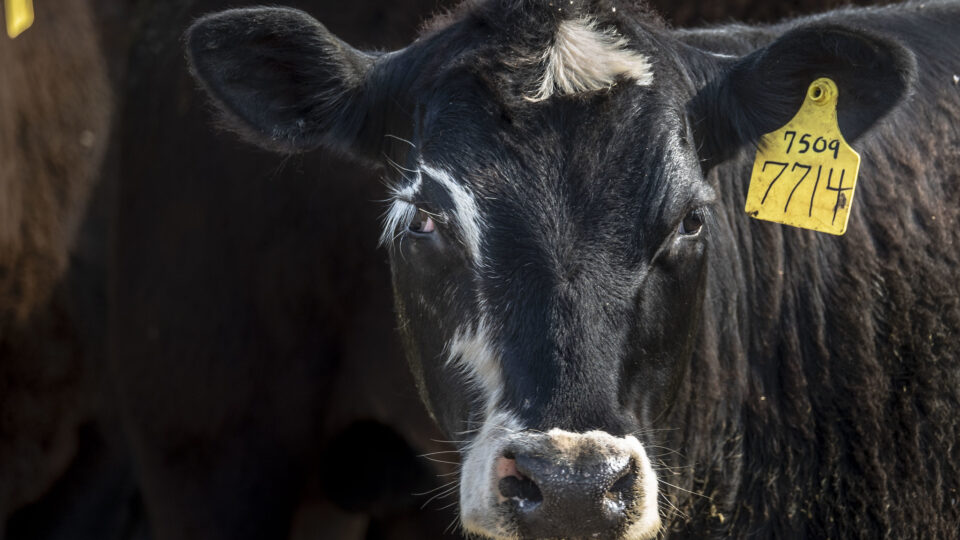
In animal agriculture, farmers use antibiotics to treat, prevent, and control animal diseases, and to increase the productivity of their operations.  According to the FDA, approximately 80% of all antibiotics sold in the U.S. are purchased for use in food-producing animals. 

The routine administration of antibiotics to farm animals for non-therapeutic purposes promotes the development of antibiotic-resistant bacteria, with repercussions for human and animal health.  As antibiotic-resistant bacteria spreads, medicines used to treat human diseases can become less effective. 

According to a new study led by researchers from the University of Washington, a California policy restricting the use of antibiotics in farm animals is associated with a reduction in one type of antibiotic-resistant infection in people in the state.  The findings, recently published in the journal Environmental Health Perspectives, suggest that regulations limiting the use of antibiotics in livestock can significantly impact human health. 

In 2018, California Senate Bill 27 banned routine preventive use of antibiotics in food-animal production and any antibiotic use without a veterinarian’s prescription.  Last year, the European Union passed a law restricting antibiotic use to only sick animals on farms.  And coming this June, most antibiotics – those that are medically important to humans and animals – will be by prescription only in the United States.  

Despite these changes, antibiotic resistance is projected to remain one of the biggest threats to human health over the next 50 years because resistance continues to grow and few new antibiotics are coming online. 

**********

Web Links

Restricting antibiotics for livestock could limit spread of antibiotic-resistant infections in people

Ranchers should prepare now for 2023 animal antibiotic guidelines

Photo, posted May 8, 2018, courtesy of Preston Keres / USDA via Flickr.

Earth Wise is a production of WAMC Northeast Public Radio

Primary Sidebar

Recent Episodes

  • An uninsurable future
  • Clean energy and jobs
  • Insect declines in remote regions
  • Fossil fuel producing nations ignoring climate goals
  • Trouble for clownfishes

WAMC Northeast Public Radio

WAMC/Northeast Public Radio is a regional public radio network serving parts of seven northeastern states (more...)

Copyright © 2026 ·