• Skip to primary navigation
  • Skip to main content
  • Skip to primary sidebar

Earth Wise

A look at our changing environment.

  • Home
  • About Earth Wise
  • Where to Listen
  • All Articles
  • Show Search
Hide Search
You are here: Home / Archives for presence

presence

Manatees are not Florida natives

December 20, 2024 By EarthWise 1 Comment

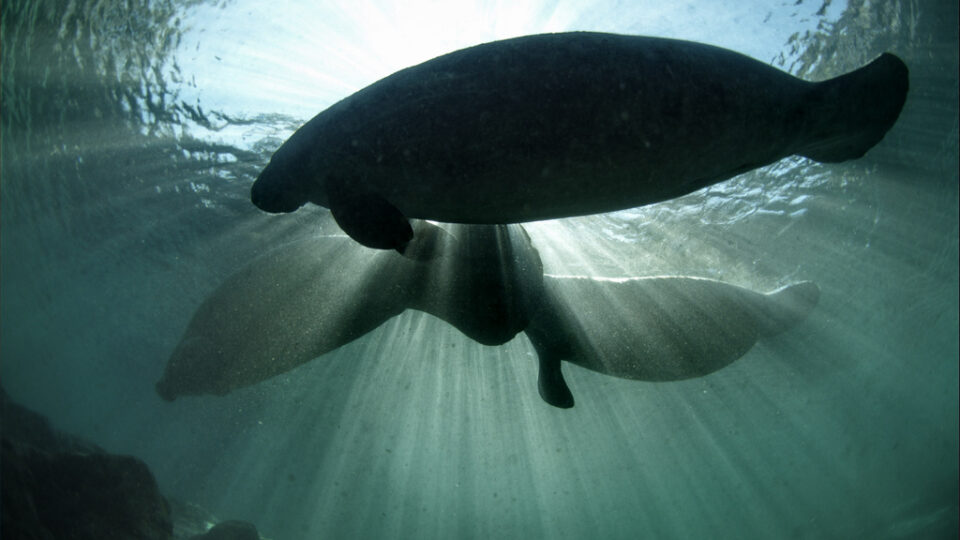
Manatees might not be native to Florida

Florida is very proud of its manatees.  It has a county named after them and has pictures of them on license plates.  These gentle creatures are part of Florida culture.  But recent research indicates that manatees – also known as sea cows – might only be relatively recent residents of the Sunshine State.

Manatees have been spotted in Florida waters for several centuries but might have only been tourists visiting briefly before returning to their home waters in the Caribbean in places like Cuba.

The new research suggests that manatees might not have actually taken up residence in Florida until after Europeans colonized the area in the 1500s.  There is a rarity of manatee bones on archaeological sites that date back further.  It was particularly striking that Crystal River, which is an epicenter for modern manatee populations, had little evidence of their presence in earlier times.

Even into the early 1900s, Florida newspaper reports treated manatee sightings as a spectacle rather than a common occurrence.  In the 1920s and 1930s, there started to be more routine sightings in places like yacht basins and canal harbors.  In the 1950s, manatees became more plentiful in Tampa Bay and Crystal River. The warming waters and human activities creating shallow warm water refuges increased manatee populations, particularly near places like power plants.

The current Florida manatee population is between 8,000 and 12,000 and is classified as threatened under the Endangered Species Act, an improvement over its previous endangered status.  But pollution is killing a lot of the seagrass that they eat, and their safety is by no means assured.

**********

Web Links

Why manatees are likely not Florida natives

Photo, posted March 25, 2012, courtesy of David Hinkel / USFWS via Flickr.

Earth Wise is a production of WAMC Northeast Public Radio
Revolution Wind installs first turbine

September 27, 2024 By EarthWise Leave a Comment

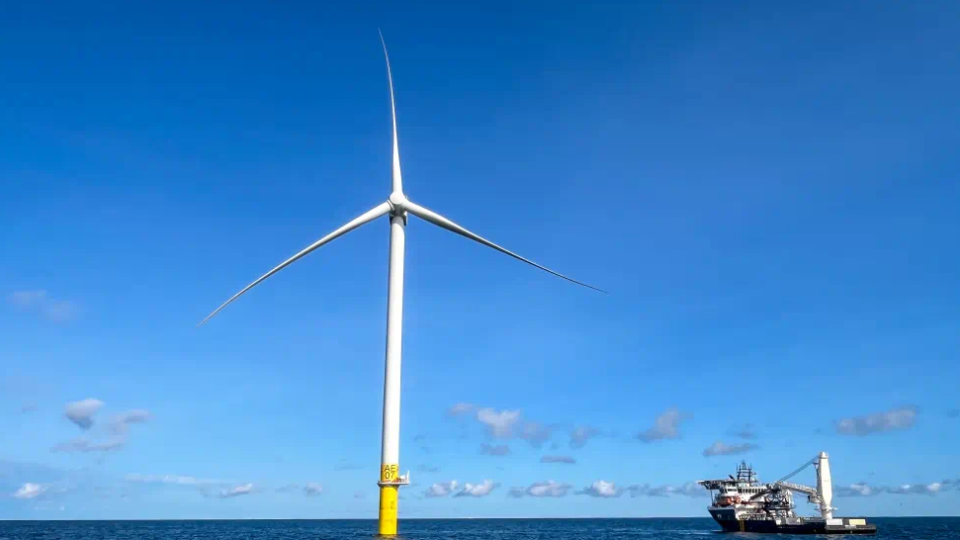
Revolution Wind installs its first wind turbine

Revolution Wind is an offshore wind farm being built by Rhode Island and Connecticut and is the first multi-state offshore wind farm in the United States.  Once completed, it will deliver 400 MW of power to Rhode Island and 304 MW of power to Connecticut.

Revolution Wind is a 50/50 partnership between Ørsted, the Danish multinational energy company, and Eversource, a major New England utility company.  The wind farm is located about 15 miles south of the Rhode Island coast and 32 miles southeast of Connecticut.  It is fairly close to the recently completed South Fork Wind, the first completed utility-scale offshore windfarm in the U.S. and was built by the same partnership.

The first Revolution Wind turbine was installed at the end of August and construction continues with the installation of foundations for the 65 turbines that will comprise the project.  More than three-quarters of the units were in place by the beginning of September.  Ships have also arrived on scene for cable-laying operations for the wind farm.  Onshore construction continues in North Kingstown, Rhode Island, on the project’s transmission system.  The turbines for the project are being assembled by local union labor in New London, Connecticut. 

Commercial operations at Revolution Wind will not begin until 2026.  Construction of the electrical substation necessary to connect the project to the regional electric grid is taking place on the site of a decommissioned naval air station and it is a time-consuming project because of the presence of buried waste and soil contamination.  The construction of the offshore wind farm itself will be completed in 2025.

**********

Web Links

Revolution Wind installs first offshore turbine

Photo courtesy of Kate Ciembronowicz / Orsted via Revolution Wind.

Earth Wise is a production of WAMC Northeast Public Radio
Detecting dangerous chemicals with plants

December 11, 2023 By EarthWise Leave a Comment

Researchers developing a method to detect toxins using plants

Researchers at University of California Riverside have been studying how to enable plants to sense and react to a chemical in the environment without damaging their ability to function in all other respects.  Why do this?  The idea is to be able to use plants as environmental sensors that can detect the presence of harmful substances.

The impetus for the work is presence of a protein in plants that senses a plant hormone called abscisic acid (or ABA) that helps plants acclimate to environmental changes.  During drought, plants produce ABA causing the plant to produce ABA receptor proteins that close pores in its leaves and stems, keeping in moisture.

The UCR researchers demonstrated that these ABA receptor proteins can be trained to bind to chemicals other than ABA.  This ability enabled them to create sensors for many chemicals, including banned pesticides.

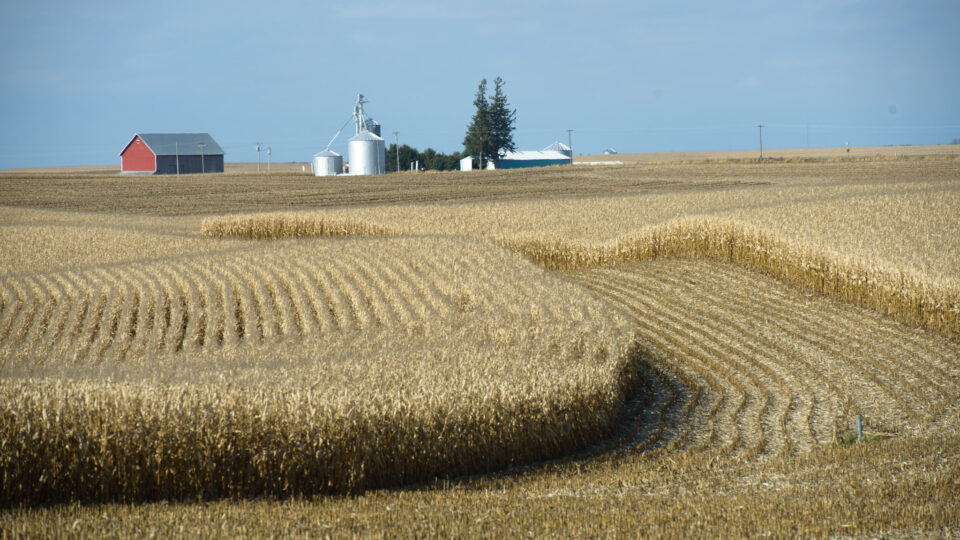
In their recent publication, they demonstrated a green plant that turns bright red in the presence of azinphos-ethyl, a banned pesticide.  The goal is to easily detect chemicals in the environment from a distance.  A field of these plants would provide an obvious visual indicator of the use of a banned pesticide.  The researchers also demonstrated the ability to turn a variety of yeast into a sensor that could respond to two different chemicals at the same time.

Ultimately, it would be extremely valuable to design plants that sense dozens of chemicals to they could be used as living sensors that persist for years and provide environmental information.  The sensor plants are not being grown commercially at this time.  That will require regulatory approvals that are likely to take years.  But the discovery opens up real possibilities.

**********

Web Links

Plants transformed into detectors of dangerous chemicals

Photo, posted August 29, 2013, courtesy of the United Soybean Board via Flickr.

Earth Wise is a production of WAMC Northeast Public Radio
Plastics In The Air | Earth Wise

October 25, 2023 By EarthWise Leave a Comment

Plastic pollution is a growing problem

Plastic pollution is a big deal.  There are plastics clogging up landfills and waterways and accumulating in the oceans, choking turtles and seabirds.  Annual production of plastics has grown from 2 million tons a year in 1950 to more than 450 million tons today.

As if plastic problems weren’t already big enough, it is becoming increasingly clear that there are growing amounts of microplastic particles in the air. Bits of plastic are lofted into the sky from seafoam bubbles and from spinning tires on highways.  The particles are so light that they can travel for thousands of miles, far from where they originate.

Studies in recent years documented the presence of plastic particles even in places like the Pyrenees in Europe and in federally protected areas of the US.  Other studies have measured the quantity of plastic in the air of various locations and have looked at the origins of the particles.

In the western US, over 80% of microplastics came from roads where vehicles kick up particles from tires and brakes.   In remote areas of the Pacific, there is less than a single particle of plastic per cubic meter of air.  In cities like London and Beijing, on the other hand, there can be several thousand particles per cubic meter.

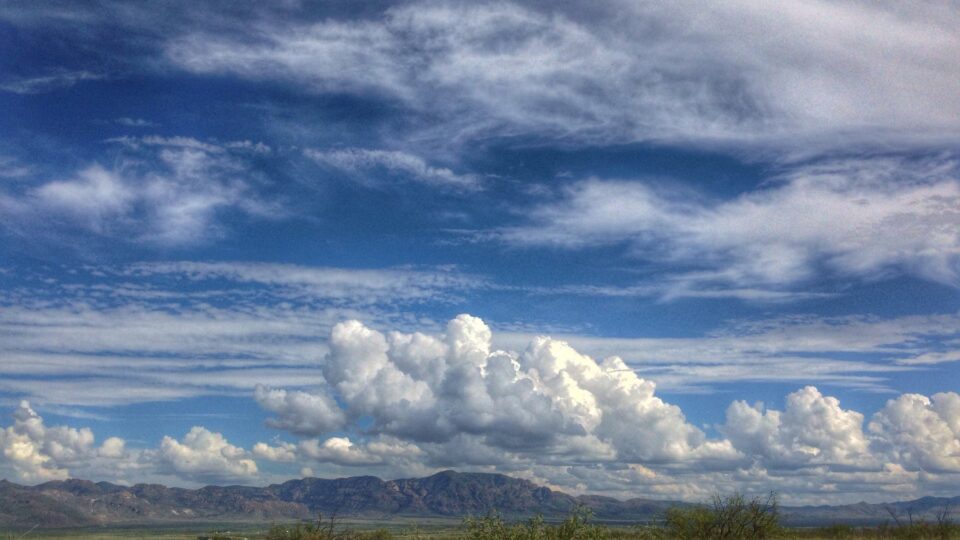
Microplastics can act as airborne aerosols, like dust, salt, soot, volcanic ash, and other particles.  Aerosols play an important role in the formation of clouds and in temperature regulation on the earth.  At low concentrations, such as exist in most places, microplastic aerosols don’t have much of an effect.  But there are more in the atmosphere all the time and, at this point, scientists don’t really know what effect they will have.

**********

Web Links

Microplastics Are Filling the Skies. Will They Affect the Climate?

Photo, posted August 28, 2014, courtesy of Alan Levine via Flickr.

Earth Wise is a production of WAMC Northeast Public Radio
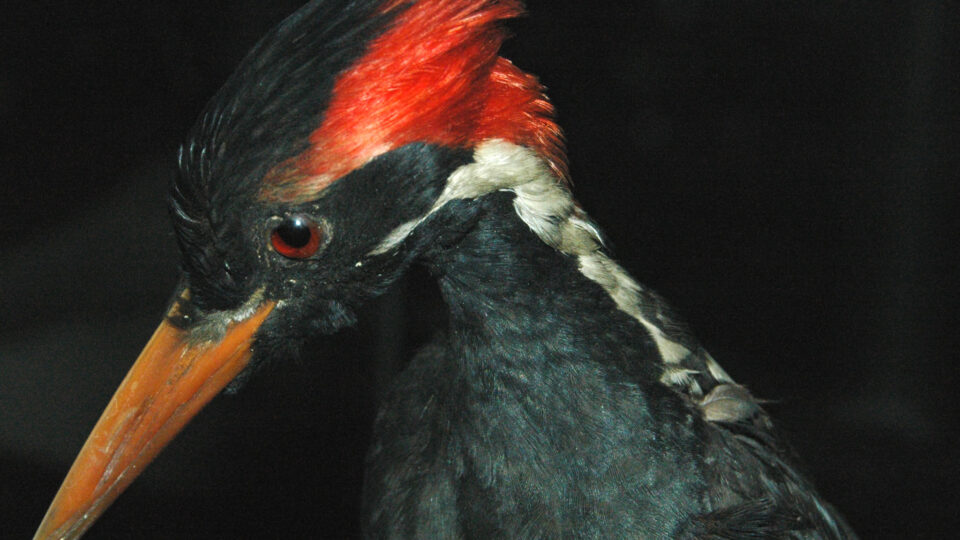
Chasing The Ivory-Billed Woodpecker | Earth Wise

June 13, 2023 By EarthWise Leave a Comment

The ivory-billed woodpecker is or was the largest woodpecker in the United States. The last unassailable sighting of the bird was in 1944.  Since then, there have various reports of glimpses of the bird or of hearing its distinctive sounds.  But there has not been anything resembling proof that the bird still exists.

Despite this, the ivory-billed woodpecker has been legally protected under the Endangered Species Act.  There has been a proposal to end that protection and formally declare the species extinct.  Because of the controversy surrounding the bird, a final ruling on its status has been repeatedly delayed by the US Fish and Wildlife Service.

Very recently, a peer-reviewed study in the journal Ecology and Evolution makes the case that the ivory-billed woodpecker still exists and that it is premature to declare it extinct.  The study cites visual encounters by expert observers, audio recordings, tree-damage, and rather grainy video evidence.  The authors claim that there is intermittent but repeated presence of birds that at least look and behave like ivory-billed woodpeckers.

One might ask:  why does it matter whether this bird is declared extinct or not?  The answer is that there are limited federal funds for conservation efforts, and they should be spent on saving genuinely endangered species and habitats.  The authors of the new study say that removing federal protection would be bad for any remaining ivory bills, which may be living in some swampy old-growth forests in Louisiana.  Other scientists consider conservation resources expended on the ivory-billed woodpecker to be chasing a ghost.

As is the case for several other notorious objects, one really clear photograph of an ivory-billed woodpecker could solve a long-standing mystery.

**********

Web Links

A Vanished Bird Might Live On, or Not. The Video Is Grainy

Photo, posted October 19, 2014, courtesy of James St. John via Flickr.

Earth Wise is a production of WAMC Northeast Public Radio
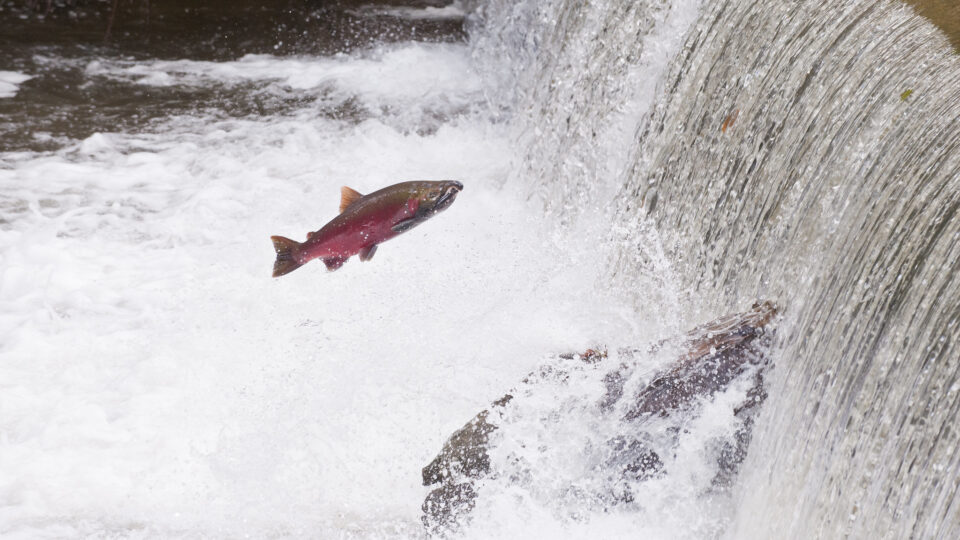
What’s Been Killing Salmon? | Earth Wise

January 5, 2021 By EarthWise Leave a Comment

the mysterious deaths of Coho salmon

For decades, there have been mysterious deaths of Coho salmon.  The salmon return from the Pacific Ocean each year to spawn along the West Coast.   They can be found from Alaska all the way down into California.  After heavy rain events each fall, fish have been turning up dead in huge numbers before they spawn.  Normally, less than 1% of adult Coho die before spawning. In these mass death events, anywhere from 40% to 90% of fish can perish in affected streams.  The mysterious phenomenon has been the subject of intense research for years.

Recently, scientists announced that they may have solved the mystery.  There is a chemical antioxidant known as 6PPD that is used in the manufacture of tires around the world to make them last longer.  As tire treads break down over time, they leave behind bits of microplastics on roads.  The 6PPD in the plastic bits reacts with ozone to become another chemical:  a previously unreported substance called 6PPD-quinone.

That chemical turns out to be toxic to Coho salmon.  Researchers have found the presence of 6PPD-quinone in roadway water runoff samples taken from across the West Coast.  Based on these observations, they believe it is likely that exposure to this chemical is the main cause of the Coho salmon population decline.

Coho salmon are a favorite of sport fishermen and have great cultural significance to many Native American tribes on the West Coast.  The central California Coho population is classified as endangered and three other Coho populations are listed as threatened.

Tire industry representatives call the study results “preliminary” but say the industry is deeply committed to protecting the environment.  A safe chemical substitute for 6PPD is clearly needed.

**********

Web Links

Salmon have been dying mysteriously on the West Coast for years. Scientists think a chemical in tires may be responsible

Photo, posted November 17, 2011, courtesy of Lynn Ketchum/Oregon State University via Flickr.

Earth Wise is a production of WAMC Northeast Public Radio.

Primary Sidebar

Recent Episodes

  • An uninsurable future
  • Clean energy and jobs
  • Insect declines in remote regions
  • Fossil fuel producing nations ignoring climate goals
  • Trouble for clownfishes

WAMC Northeast Public Radio

WAMC/Northeast Public Radio is a regional public radio network serving parts of seven northeastern states (more...)

Copyright © 2026 ·