
• Skip to primary navigation
  • Skip to main content
  • Skip to primary sidebar

Earth Wise

A look at our changing environment.

  • Home
  • About Earth Wise
  • Where to Listen
  • All Articles
  • Show Search
Hide Search
You are here: Home / Archives for population growth

population growth

Climate change and the global food supply

January 8, 2025 By EarthWise Leave a Comment

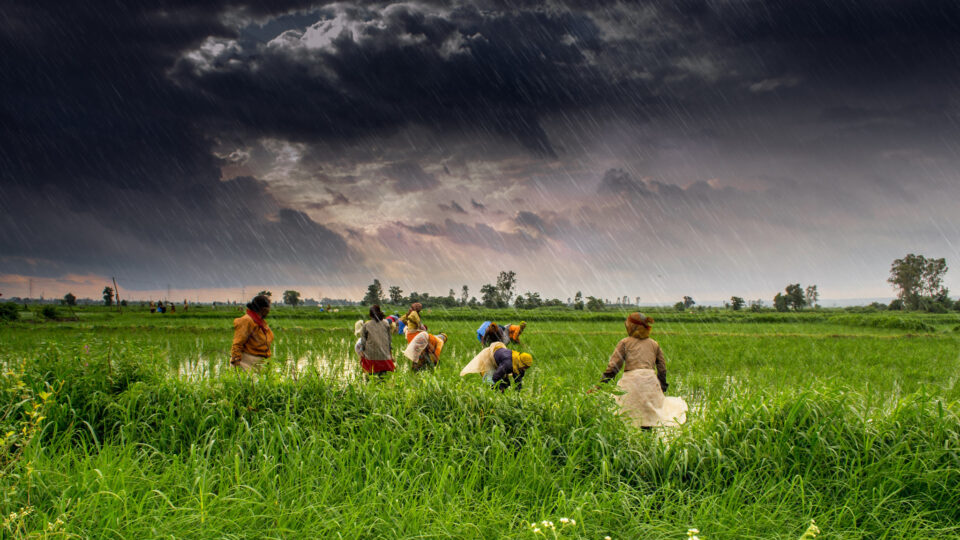
One of the most troubling aspects of global climate change is its potential to severely disrupt the production, distribution, and quality of food. While food security is already challenged by many factors, including population growth, poverty, and changing eating habits, climate change intensifies these issues by altering weather patterns, causing more frequent droughts, floods, and extreme temperatures that damage crops and reduce yields. 

These shifts not only threaten agricultural productivity and increase food prices, but they also impact water resources, pests, and disease dynamics, further destabilizing food systems and exacerbating vulnerabilities, particularly in regions already facing food insecurity.

According to a new paper, which was co-authored by 21 scientists from 9 different countries, climate change will cause widespread food shortages, leading to famine, mass migration, and global instability, unless swift action is taken to develop climate-resilient crops.

Adding to the urgency is the fact that agriculture itself also contributes approximately 30% of global greenhouse gas emissions, creating a vicious feedback loop that threatens to further accelerate global climate change.

The research, which was recently published in the journal Trends in Plant Science, outlines five key recommendations to address this crisis: Study plants in real-world conditions, strengthen partnerships with farmers, streamline regulations for faster innovation, build public trust in new technologies, and create global research initiatives that unite scientists from developed and developing nations to share resources and expertise.

**********

Web Links

Climate Change Threatens Global Food Supply: Scientists Call for Urgent Action

Photo, posted September 21, 2014, courtesy of Peter via Flickr.

Earth Wise is a production of WAMC Northeast Public Radio
Groundwater and climate change

February 22, 2024 By EarthWise Leave a Comment

Groundwater is the vast reserve of water beneath Earth’s surface.  It’s an essential resource for humans, plants, animals, and other living organisms.  According to the United States Geological Survey, about 30% of all readily available freshwater in the world is groundwater.  In areas lacking sufficient surface water supply from rivers and reservoirs,  groundwater is critical for meeting the region’s drinking water and food production needs.

But climate change, as well as global population growth, is stressing groundwater resources.  As precipitation becomes less reliable due to climate change, surface water bodies can drop too low to provide the needed water.  As a result, people turn to groundwater. Depletion of groundwater is already a significant problem, and over-pumping will only increase further as climate change makes traditional sources of water less reliable.

According to a new study led by researchers from the University of Michigan, farmers in India have adapted to warming temperatures by intensifying the withdrawal of groundwater used for irrigation.  The study, which was published in the journal Science Advances, found that the rate of groundwater loss could triple by 2080 if this trend continues, further threatening India’s food and water security. 

India is the second-largest global producer of common cereal grains such as rice and wheat, and recently passed China as the world’s most populous nation. Without interventions to conserve groundwater, the research team finds that warming temperatures will likely amplify India’s groundwater depletion problem, further threatening the country’s food and water security.  

********** 

Web Links

Groundwater depletion rates in India could triple in coming decades as climate warms, study shows

Where is Earth’s Water?

Photo, posted August 2, 2013, courtesy of Rajarshi MITRA via Flickr.

Earth Wise is a production of WAMC Northeast Public Radio
Keeping The Colorado River Flowing | Earth Wise

July 5, 2023 By EarthWise Leave a Comment

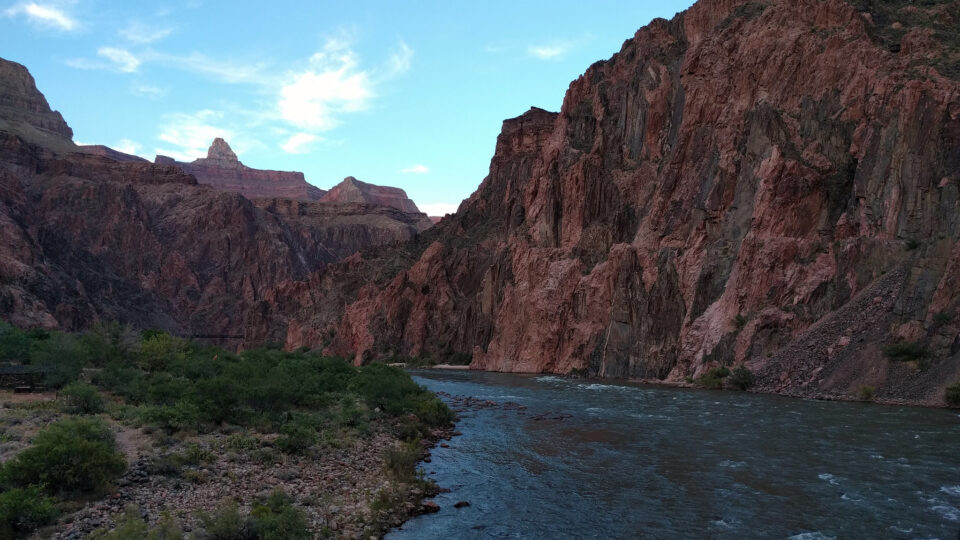
The Colorado River supplies drinking water to 40 million Americans in seven states as well as to many Mexicans and provides irrigation to 5.5 million acres of farmland.  Electricity generated by dams on the Colorado powers millions of homes and businesses in the West.

A combination of drought, population growth, and climate change has reduced the river’s flows by a third in recent years compared with historical averages.  Further reductions could trigger a water and power catastrophe across the Western states.

California, Arizona, and Nevada all get water from Lake Mead, the reservoir formed by the Colorado at Hoover Dam.  The Interior Department determines how much water each of these three states receives.  The other states that use Colorado River water get it directly from the river and its tributaries.  Last summer, water levels in Lake Mead and Lake Powell fell enough that officials feared that the hydroelectric turbines at the Colorado’s dams would soon cease functioning.

The three states have recently struck an agreement with the federal government to take less water from the Colorado.  The reductions amount to about 13% of the total water use in the lower Colorado.  The government will pay about $1.2 billion to irrigation districts, cities, and Native American tribes for temporarily using less water.  The states have also agreed to make additional cuts to generate the total reductions needed to prevent the collapse of the river.

The agreement runs only through the end of 2026.  At that point, all seven states that rely on the river – which includes Colorado, New Mexico, Utah, and Wyoming – may well be facing a deeper reckoning.  The forces driving the decline of the Colorado are not going away.

**********

Web Links

A Breakthrough Deal to Keep the Colorado River From Going Dry, for Now

Photo, posted June 16, 2017, courtesy Karen and Brad Emerson via Flickr.

Earth Wise is a production of WAMC Northeast Public Radio
Coastal Land Reclamation | Earth Wise

April 3, 2023 By EarthWise Leave a Comment

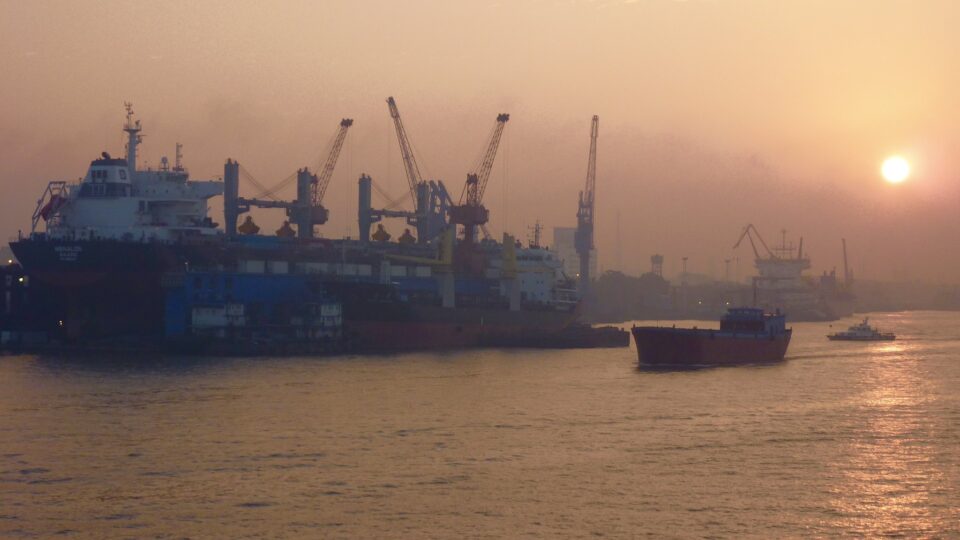
People are artificially expanding the coastlines of cities by extending industrial ports and creating luxury residential waterfronts.  Major cities have added 900 square miles to their coastlines just since 2000. 

A recent study published in the journal Earth’s Future made use of satellite imagery to analyze land changes in 135 cities with populations of at least 1 million.  But population growth is not the only driver of coastal land reclamation.  It is popular in places that are eager to enhance their reputation and promote revenue growth.

At present, coastal land reclamation is most common in the Global South, where many economies are growing. In the past, the Global North dominated the use of coastal land construction.

The largest additions to land area occurred in China, Indonesia, and the United Arab Emirates.  Port extension is the most common reason for development.  Shanghai alone has added 135 square miles of land.

New land is typically created by piling sediments in the ocean, building cement sea walls and structures to contain sediments or cement, or sometimes filling in wetlands and other shallow areas of water near the coast.  The ecological impacts of reclamation are immense and, unfortunately, are not always considered.  Projects affect both the local ecosystems as well as those of the places where fill materials are obtained.

Industrialization and the need for urban space have driven much coastal reclamation.  Some projects, such as the palm-tree-shaped artificial islands of Dubai, are essentially for prestige.  Some cities, including Shanghai, are building new land in consideration of future sea level rise.

**********

Web Links

New Land Creation on Waterfronts Increasing, Study Finds

Photo, posted October 15, 2010, courtesy of Werner Bayer via Flickr.

Earth Wise is a production of WAMC Northeast Public Radio

City Greenery And Carbon Emissions | Earth Wise

February 15, 2023 By EarthWise Leave a Comment

According to the United Nations, more than half of the world’s population currently lives in cities.  Projections show that the combination of urbanization and global population growth could add another 2.5 billion people to cities by 2050. 

Unsurprisingly, cities are a major contributor to climate change.  According to U.N. estimates, cities are responsible for 75% of global carbon dioxide emissions, with transportation and buildings being among the largest contributors. 

According to a new study of vegetation across New York City and some adjoining urban areas, photosynthesis by trees and grasses on many summer days absorbs all the carbon emissions produced by cars, trucks and buses, and then some.  In fact, on many summer days, the total carbon uptake in the region equaled up to 40% of a summer afternoon’s total emissions from all sources in the City. The results, which were recently published in the journal Environmental Research Letters, further highlights the critical importance of urban greenery.

Most previous studies have analyzed the carbon uptake of vegetation by looking at the contiguous tracts of green spaces, but this only comprises about 10% of metro areas.  Using detailed aerial radar imagery of New York City that mapped vegetation in unprecedented 6-inch grids, the researchers were able to include the other 90% of the metro area typically left out in most models. 

Since carbon uptake by vegetation only occurs during the growing season, green spaces in cities situated in warmer climates likely play a larger role in carbon uptake. 

As city populations swell around the world, every bit of urban greenery is critical in the fight against climate change. 

**********

Web Links

New York City’s greenery absorbs a surprising amount of its carbon emissions

68% of the world population projected to live in urban areas by 2050, says UN

Photo, posted October 5, 2009, courtesy of David Orban via Flickr.

Earth Wise is a production of WAMC Northeast Public Radio

Deadly Urban Heat On The Rise | Earth Wise

November 9, 2021 By EarthWise Leave a Comment

Exposure to deadly urban heat is on the rise

According to a new study by the Columbia Climate School, exposure to deadly urban heat has tripled since the 1980s.  The increase is the combined result of both rising global temperatures and booming urban population growth.

The study looked at more than 13,000 cities worldwide and found that incidents of extreme heat and humidity have increased dramatically.   It defined extreme heat as 30 degrees Celsius on the wet-bulb temperature scale that takes into account the effect of high humidity.  In 1983, there were 40 billion person-days under such conditions.  By 2016, the number was 119 billion.  More specifically, in 2016 1.7 billion people were subjected to such conditions on multiple days.

Sheer urban population growth accounted for two-thirds of the increase, while actual warming contributed a third.  Over recent decades, hundreds of millions of people have moved from rural areas to cities, which now hold more than half the world’s population.  And because of the urban heat island effect, temperatures in cities are generally higher than in the countryside.

In the United States, about 40 sizable cities have seen rapidly growing exposure to extreme heat, mainly clustered in Texas and the Gulf Coast.  Globally, nearly a quarter of the world’s population is affected by the increased incidence of extreme temperatures.

A study last year showed that combinations of heat and humidity literally beyond the limits of outdoor human survival have been popping up around the world.  A wet-bulb temperature reading of 30 – equivalent to 106 degrees Fahrenheit on the “real feel” heat index – is the point at which even most healthy people find it hard to function outside for long, and the unhealthy might become very ill or even die.

**********

Web Links

Exposure to Deadly Urban Heat Worldwide Has Tripled in Recent Decades, Says Study

Photo, posted March 5, 2007, courtesy of Michael Phillips via Flickr.

Earth Wise is a production of WAMC Northeast Public Radio.

A Better Solar Evaporator | Earth Wise

May 21, 2021 By EarthWise Leave a Comment

Technology breakthrough to help reduce water stress

Water security is a serious global problem.  Nearly 1.5 billion people – including almost half a billion children – live in areas of high or extremely high water vulnerability.  Less than 3% of the world’s water is fresh and demand for it is rising with increasing population growth, urbanization, and growing water needs from a range of sectors.

Researchers at the University of South Australia have developed a promising new technique that could help reduce or eliminate water stress for millions of people.  The technique uses highly efficient solar evaporation to obtain fresh water from seawater, brackish water, or even contaminated water.   According to the researchers, their technique can deliver enough daily fresh drinking water for a family of four from just one square meter of source water.

Solar evaporation has been the focus of a great deal of effort in recent years, but it has generally been found to be too inefficient to be practically useful.  The new technique overcomes those inefficiencies and can deliver fresh water at a fraction of the cost of existing technologies like reverse osmosis.

The system utilizes a highly efficient photothermal structure that sits on the surface of a water source and converts sunlight to heat, focusing energy precisely on the surface to rapidly evaporate the uppermost portion of the liquid.  The technique prevents any loss of solar energy and even draws additional energy from the bulk water and surrounding environment.

The system is built entirely from simple, everyday materials that are low cost, sustainable, and easily obtainable.

The technology has the potential to provide a long-term clean water solution to people who can’t afford other systems, and these are the places where such solutions are most needed.

**********

Web Links

Sunlight to solve the world’s clean water crisis

Photo, posted November 13, 2016, courtesy of Steve Austin via Flickr.

Earth Wise is a production of WAMC Northeast Public Radio.

Primary Sidebar

Recent Episodes

  • An uninsurable future
  • Clean energy and jobs
  • Insect declines in remote regions
  • Fossil fuel producing nations ignoring climate goals
  • Trouble for clownfishes

WAMC Northeast Public Radio

WAMC/Northeast Public Radio is a regional public radio network serving parts of seven northeastern states (more...)

Copyright © 2026 ·