• Skip to primary navigation
  • Skip to main content
  • Skip to primary sidebar

Earth Wise

A look at our changing environment.

  • Home
  • About Earth Wise
  • Where to Listen
  • All Articles
  • Show Search
Hide Search
You are here: Home / Archives for pollinator gardens

pollinator gardens

Perennials To Attract Pollinators | Earth Wise

November 26, 2021 By EarthWise Leave a Comment

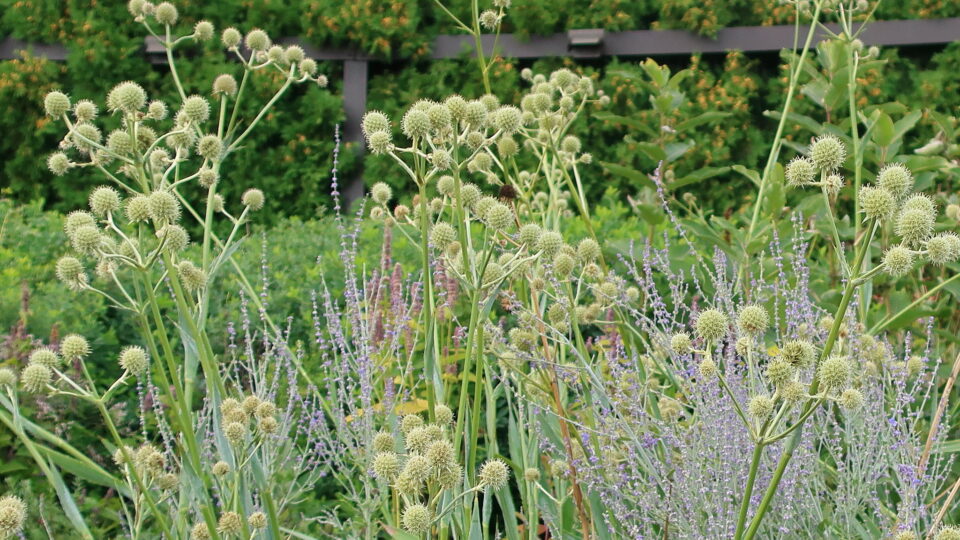
Perennial plants to help support insects and pollinators

There has been a decline in the abundance of insect and other animal pollinators in many ecosystems worldwide that began being observed at the end of the 20th century.  Pollinators and their health have become growing concerns for the public and many states have enacted legislation related to pollinator decline.

In many places, the pollinator decline has largely been driven by a loss of flowering plants in the landscape, the primary source of food for the pollinators.  A new study by Penn State researchers looked at the attractiveness to pollinators of various species of perennial flowering plants that people can plant in their gardens and other landscapes.

It turns out that there is considerable variation in how attractive different flowering plants are to pollinators.  Greenspaces such as parks and gardens have the potential to support very rich pollinator communities, even including rare or vulnerable species.

People generally select ornamental plants because of their appearance and growth habit, not because of their pollinator attraction.

The Penn State study looked at a variety of perennials and identified the most attractive plant cultivars, which can attract 4 times the number of pollinator species than the least attractive plants studied.

The most appealing plant is the ‘Blue Fortune’ giant hyssop.  Other highly attractive plants are the anise hyssop, the ‘Black Adder’ Agastache, the Cat’s Meow and Walker’s Low Nepetas, and the Triloba and Herbstonne Rudbeckias.

Many of these plants produce large floral displays and the researchers suggest that they should be prioritized when planting a pollinator garden amongst other species with comparably small floral displays and lower attractiveness to pollinators.

**********

Web Links

Popular perennial flowering plants can attract diverse mix of pollinators

Photo, posted September 7, 2019, courtesy of KM via Flickr.

Earth Wise is a production of WAMC Northeast Public Radio.
More Trouble For Monarchs | Earth Wise

April 14, 2020 By EarthWise Leave a Comment

the decline of monarch butterflies

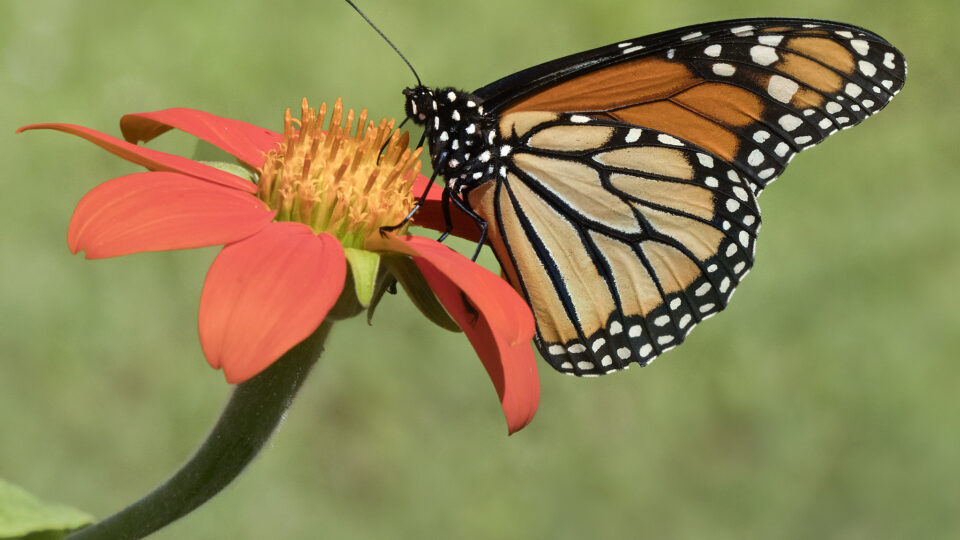
Monarch butterflies have been in trouble for quite a while and now it seems like their prospects are worse than ever.  Multiple surveys of butterfly populations are reporting plummeting numbers.

Western monarch butterflies spend their winters on the central California coast.  Months later, they breed in California’s Central Valley and as far north and east as Idaho.  But in recent years, it has become harder and harder to find them in their breeding sites.

The Western monarch population was in the millions in the 1980s.  In 2017, an annual survey found 200,000 butterflies.  In 2018 and 2019, only about 30,000 butterflies were tallied.  The loss of Western butterflies in general has come about from a variety of factors, including development, climate change, farming practices and the widespread use of pesticides by farmers and on home and business lawns.

Scientists use the area of land that migrating Monarchs occupy in Mexico to gauge populations.  This year, they covered about 7 acres, down from 15 acres in 2019.

Meanwhile, there are also far fewer Eastern monarch butterflies on the opposite side of the country.  According to a new population survey, the Eastern monarch has passed the extinction threshold.  Its population in 2020 dropped 53% from its already low 2019 numbers.  Scientists were expecting lower numbers this year, but they were staggered by their findings.

Butterfly populations are quite variable, so it is possible that the drastic declines this year are not necessarily irreversible, but the news is not good.   Researchers and environmental advocates continue to point out that mitigating the climate crisis, reducing pesticide use and planting pollinator gardens could help the butterflies to recover.

**********

Web Links

Monarch Butterfly Populations Are Plummeting

Photo, posted September 7, 2017, courtesy of C. Watts via Flickr.

Earth Wise is a production of WAMC Northeast Public Radio.

Primary Sidebar

Recent Episodes

  • An uninsurable future
  • Clean energy and jobs
  • Insect declines in remote regions
  • Fossil fuel producing nations ignoring climate goals
  • Trouble for clownfishes

WAMC Northeast Public Radio

WAMC/Northeast Public Radio is a regional public radio network serving parts of seven northeastern states (more...)

Copyright © 2026 ·