• Skip to primary navigation
  • Skip to main content
  • Skip to primary sidebar

Earth Wise

A look at our changing environment.

  • Home
  • About Earth Wise
  • Where to Listen
  • All Articles
  • Show Search
Hide Search
You are here: Home / Archives for polar regions

polar regions

The last days of a giant iceberg

October 23, 2025 By EarthWise Leave a Comment

A-23A

A colossal iceberg known as A-23A broke off from the Filchner Iceshelf in Antarctica in 1986.  At that time, it was 1,418 square miles in area, slightly larger than the state of Rhode Island, or roughly twice the size of greater London.  It weighed about a trillion tons.  It was the largest iceberg ever observed.

After breaking off from the iceshelf, it lodged on the seafloor of the southern Weddell Sea for decades.  It finally broke free in the early 2020s and began drifting northward.  Last year, it got caught up in a rotating ocean vortex in the Drake Passage, and then became lodged on a shallow coastal shelf south of South Georgia Island.  More recently, satellite imagery has shown A-23A to be on the move again.

Like other large icebergs that have found their way into the so-called “iceberg alley”, it is gradually succumbing to the effects of warmer air and water.  Two large fragments of A-23A have already calved from it.  These are huge in their own right:  A-23G and A-23I are each over 125 square miles in area.  The remaining main body of A-23A is still 580 square miles in area, making it the second largest freely floating iceberg in the world as of September.  It had already lost much of its area since it began drifting north.

As it continues to drift northward, A-23A will continue to break apart.  Many smaller pieces are littering the sea in its vicinity, but even these are large enough to threaten ships.  The 40-year saga of iceberg A-23A is coming to an end.

**********

Web Links

A Giant Iceberg’s Final Drift

Photo courtesy of the Earth Observatory at NASA.

Earth Wise is a production of WAMC Northeast Public Radio

The human impact on oceans

October 21, 2025 By EarthWise Leave a Comment

Vast and powerful, the oceans have sustained human life around the world for millennia. They provide food, natural resources, and livelihoods, supporting countless communities and economies. But despite their size and resilience, the oceans are under increasing pressure from climate change and human activity, pushing them toward a dangerous threshold.

According to a new study led by researchers from UC Santa Barbara, the cumulative human impact on the oceans is forecasted to double by 2050, which is just 25 years from now.  These impacts include ocean warming, fisheries losses, sea level rise, acidification, and pollution.

The research team, which includes collaborators from Nelson Mandela University in South Africa, found that the tropics and poles will experience the fastest rate of change.  And coastal regions, where most human activity takes place, will bear the heaviest consequences of those changes. 

The research team calls the findings sobering – not only because the impacts are increasing, but because they’re increasing so quickly. 

The study, which was recently published in the journal Science, shows that ocean warming from climate change and reductions in marine biomass from overfishing are expected to be the two largest contributors to future ocean impacts.  If ecosystems cannot cope with these pressures, human societies will also feel the consequences.

But the research team stresses that it’s not too late. Stronger climate policies, better fisheries management, and protections for vulnerable habitats like salt marshes and mangroves could help slow or even reduce human impacts.

The research serves as both a warning, and a chance to act before it’s too late.

**********

Web Links

Human impact on the ocean will double by 2050, UCSB scientists warn

Photo, posted July 11, 2018, courtesy of Ed Dunens via Flickr.

Earth Wise is a production of WAMC Northeast Public Radio
Shrinking polar ice

November 12, 2024 By EarthWise Leave a Comment

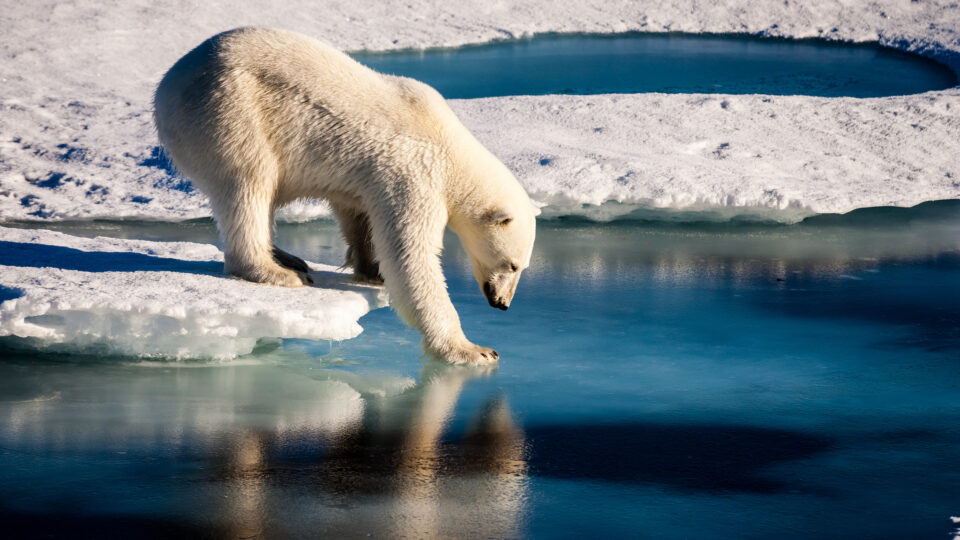
Arctic sea ice has shrunk to near-historic lows during this Northern Hemisphere summer.  The minimum extent for the year occurred on September 11th.  Ice cover in the Arctic Ocean has been shrinking and thinning for more than 40 years.  The amount of frozen seawater in the Arctic goes up and down during the year as sea ice thaws and regrows between seasons.

This year, the minimal extent of sea ice shrank to 1.65 million square miles.  That’s about 750,000 square miles less than the average for late summer over the years between 1981 and 2010, representing a decrease of more than 30%.  The all-time low of 1.31 million square miles was actually set in 2012.  Sea ice coverage can fluctuate from year to year, but it has trended downward since it has started being tracked in the late 1970s.  The loss of sea ice has averaged about 30,000 square miles per year.

Sea ice extent has not only been shrinking; the ice has been getting younger and thinner.  Presently, the overwhelming majority of ice in the Arctic Ocean is first-year ice, which is thinner and less able to survive the warmer months.  There is far less ice that is three years or older.

Meanwhile, sea ice in the southern polar regions was also low this year.  In the sea around Antarctica, scientists are tracking near record-low sea ice at a time when it should have been growing extensively during the darkest and coldest months in the Southern Hemisphere.

Polar ice loss compounds polar ice loss.  The loss of sea ice increases heat in the polar regions, where temperatures have risen about four times more than the global average.

**********

Web Links

Arctic Sea Ice Near Historic Low; Antarctic Ice Continues Decline

Photo, posted September 15, 2016, courtesy of Mario Hoppmann via Flickr.

Earth Wise is a production of WAMC Northeast Public Radio
Ocean Oxygen Levels And The Future Of Fish | Earth Wise

June 23, 2023 By EarthWise Leave a Comment

How oxygen levels in the ocean will impact the future of fish

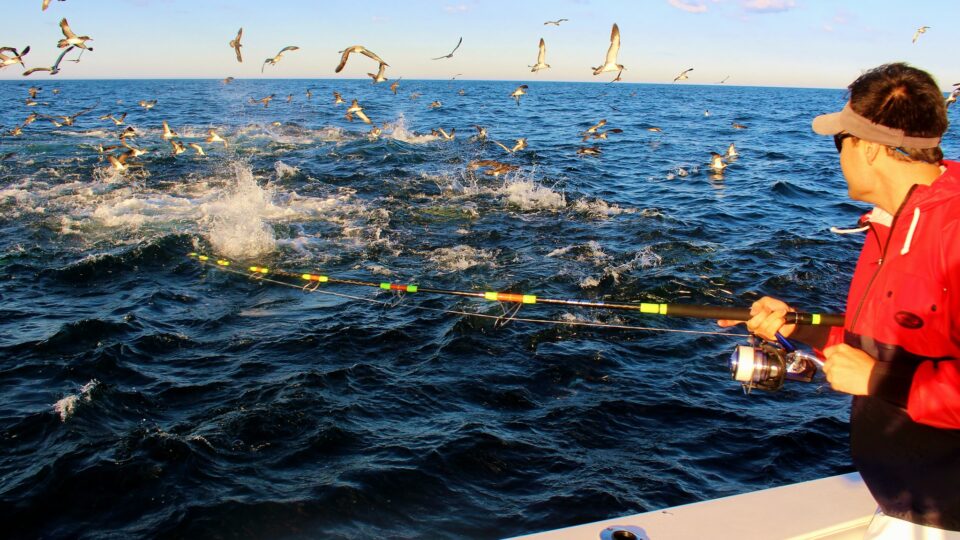
Climate change is creating a cascade of effects in the world’s oceans.  Not only are ocean temperatures on the rise, but oceans are becoming more acidic, and oxygen deprived.  The warming temperatures and acidification have grabbed headlines and prompted academic research. Declining oxygen levels have not garnered as much attention.  But they spell bad news for fish.

Oxygen levels in the world’s oceans have dropped over 2% between 1960 and 2010 and are expected to decline up to 7% over the next century.  There are places in the northeast Pacific that have lost more than 15% of their oxygen.  There are a growing number of “oxygen minimum zones” where big fish cannot survive but jellyfish can.

Oceans are losing oxygen for several reasons.  First, warmer water can hold less dissolved gas than colder water.  (This is why warm soda is flatter than cold soda.)  Deeper in the ocean, oxygen levels are governed by currents that mix oxygen-rich surface water from above.  Melting ice in the warming polar regions add fresh, less-dense water that resists downward mixing in key regions.  Finally, increasing amounts of ocean bacteria in warming waters gobble up oxygen creating dead zones in the ocean.

In many places, fish species that cannot cope with lower oxygen levels are migrating from their usual homes, resulting in a decline in species diversity.  Our future oceans – warmer and oxygen-deprived – will not only hold fewer kinds of fish, but also smaller fish and even more greenhouse-gas producing bacteria.   

Climate change is bad news for fish and for the more than 3 billion people in the world who depend on seafood as a significant source of protein.

**********

Web Links

As Ocean Oxygen Levels Dip, Fish Face an Uncertain Future

Photo, posted January 10, 2022, courtesy of Willy Goldsmith via Flickr.

Earth Wise is a production of WAMC Northeast Public Radio
Sinking Cities | Earth Wise

October 24, 2022 By EarthWise Leave a Comment

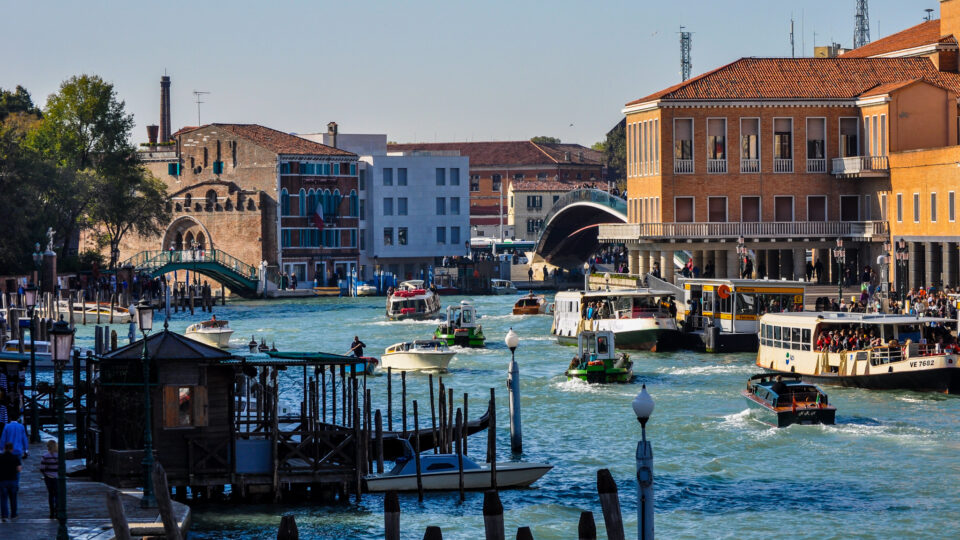
Coastal cities are sinking

Sea levels across the globe are rising as a result of the changing climate.  Two factors are largely responsible: the melting of ice sheets in the polar regions and the fact that as the oceans get warmer, the water in them expands.  

Estimates are that by 2050, there will be over 800 million people living in 570 cities that will be at risk from rising sea levels.   The rising waters can drown neighborhoods, put people’s lives at risk, and wreck entire economies.  Unless global emissions can be reduced sufficiently, sea levels will continue to rise.

A new study, published in the journal Nature Sustainability by Nanyang Technical University in Singapore in collaboration with the University of New Mexico, ETH Zurich, and NASA’s Jet Propulsion Lab, has focused on yet another aspect of the threat to coastal cities.  They have found that many densely populated coastal cities worldwide are even more vulnerable to sea level rise because much of their land is sinking. 

The researchers processed satellite images of 48 cities from 2014 to 2020 using a system called Interferometric Synthetic Aperture Radar.  They found that land subsidence varied on a neighborhood and even individual block level but across all the cities studied, there was a median sinking speed of 6/10” a year.  Some places had land that is sinking at 1.7” per year.  Meanwhile, the global mean sea-level rise is about .15” per year.

The increasing prevalence of industrial processes such as the extraction of groundwater, and oil and gas, along with the rapid construction of buildings and other urban infrastructure are leading to the sinking of the urban areas. 

**********

Web Links

Rapid land sinking leaves global cities vulnerable to rising seas

Photo, posted October 24, 2015, courtesy of Jeffrey via Flickr.

Earth Wise is a production of WAMC Northeast Public Radio

Primary Sidebar

Recent Episodes

  • An uninsurable future
  • Clean energy and jobs
  • Insect declines in remote regions
  • Fossil fuel producing nations ignoring climate goals
  • Trouble for clownfishes

WAMC Northeast Public Radio

WAMC/Northeast Public Radio is a regional public radio network serving parts of seven northeastern states (more...)

Copyright © 2025 ·