• Skip to primary navigation
  • Skip to main content
  • Skip to primary sidebar

Earth Wise

A look at our changing environment.

  • Home
  • About Earth Wise
  • Where to Listen
  • All Articles
  • Show Search
Hide Search
You are here: Home / Archives for plastic production

plastic production

Politics and plastic

December 19, 2024 By EarthWise Leave a Comment

Political differences are blocking plastic reforms

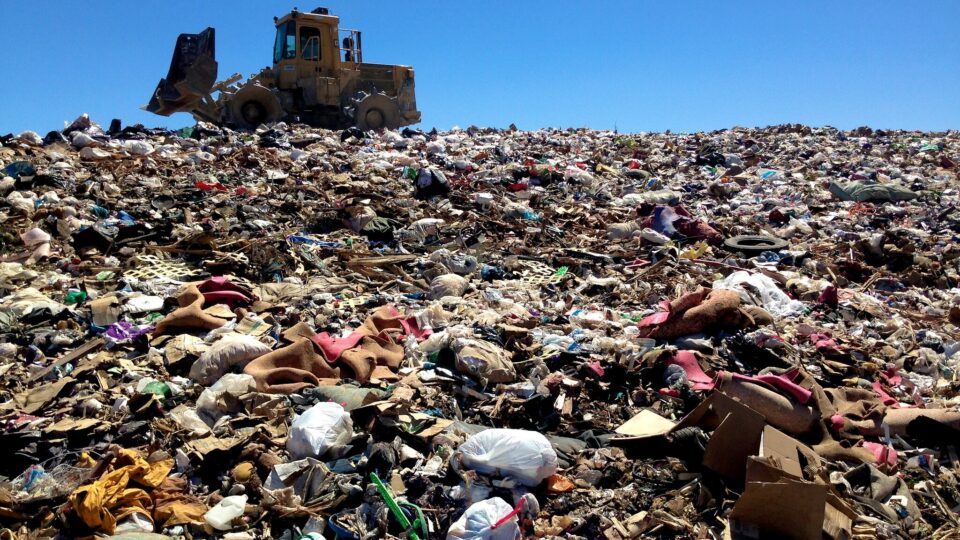
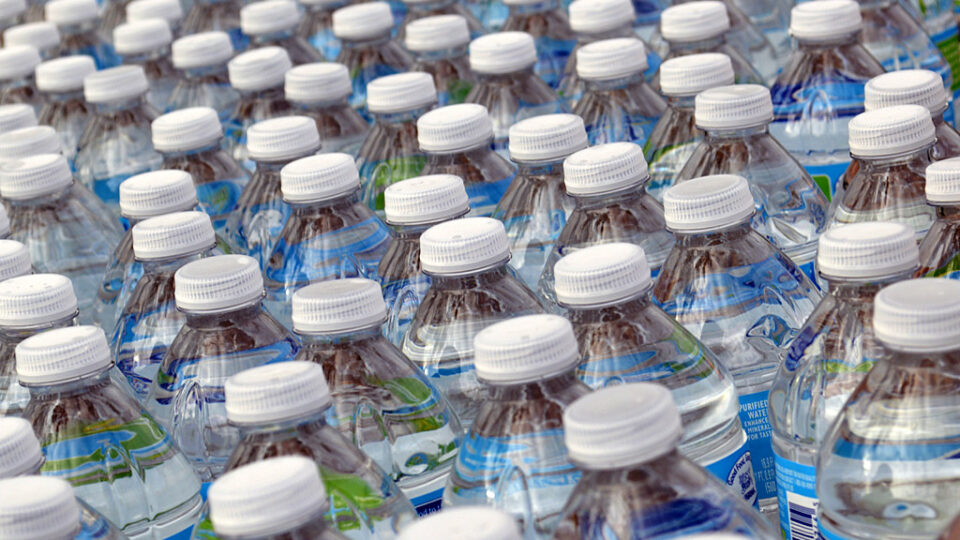
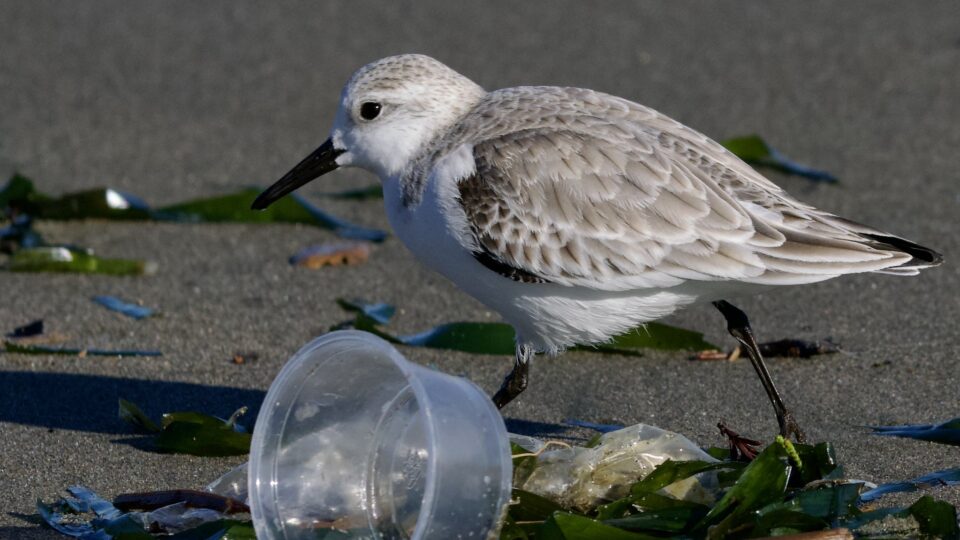
The world currently produces nearly half a billion tons of plastic each year.  This is more than twice the amount it produced 20 years ago.  Half of all plastics ever manufactured have been made in the past 20 years.  Plastic waste is everywhere.  About eight million tons of plastic waste escapes into the ocean each year.

Environmental groups have urged nations to adopt a legally binding treaty to address the ever-growing problem of plastic pollution. The United Nations climate conference in South Korea last month took up the issue of reaching agreement on such a treaty.  At what was supposed to be the final round of talks on the topic, delegates could not bridge wide differences on what such a treaty should contain.

The main bone of contention was whether the treaty should include limits on plastic production itself.  Saudi Arabia, Russia, Kuwait, and other oil-producing countries opposed any curbs on plastic production.   They also opposed the phase-out of harmful chemicals used in the production of plastic.

The Saudi delegation claimed that if the issue of plastic pollution is addressed, there should be no problem with producing plastics.  They said the problem is pollution itself, not plastics.  They proposed a focus on improving recycling and waste management.

Of course, preventing plastic pollution from occurring is an extremely challenging thing to do.  Delegates from countries pushing for a wide-ranging treaty – led by Rwanda – were unwilling to accept a toothless theory lacking real constraints on the plastics industry.

As the conference ended, delegates said that they would reconvene in future months to try again to produce a treaty.  No date or place has been announced.

**********

Web Links

Nations Fail to Reach an Agreement on Plastic Pollution

Photo, posted February 4, 2023, courtesy of Ingrid Taylar via Flickr.

Earth Wise is a production of WAMC Northeast Public Radio
A Better Way To Recycle Plastic | Earth Wise

July 25, 2022 By EarthWise Leave a Comment

Researchers are developing a better way to recycle plastic

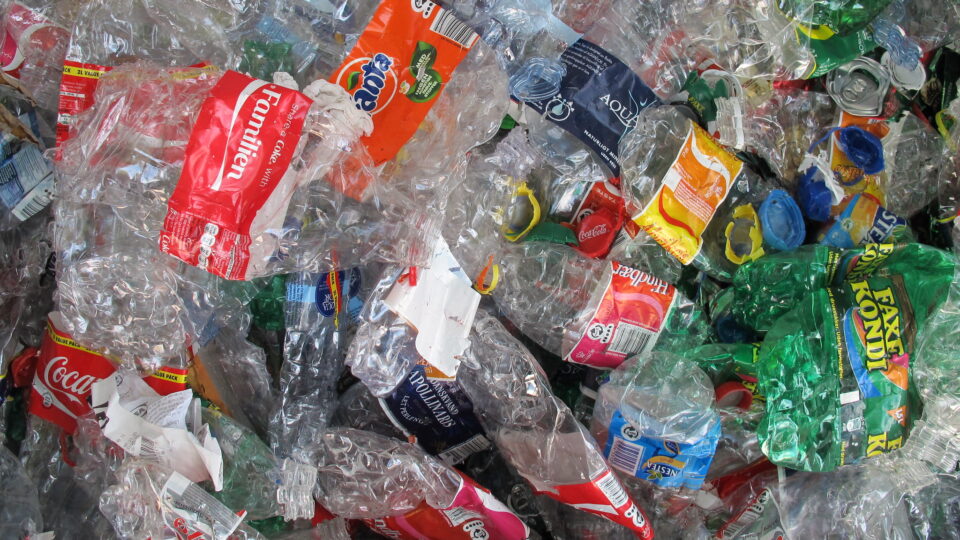
The current state of plastic recycling is not very effective.  Plastic recycling is only able to replace 15-20% of the fossil-fuel-derived raw material needed to produce society’s demand for plastic.

Researchers at Chalmers University in Sweden have now demonstrated how the carbon content in mixed waste could be used to replace all of the fossil raw materials in the production of new plastic.  In principle, their technology could completely eliminate the climate impact of plastic materials.

According to the researchers, there are enough carbon atoms in waste to meet the needs of all global plastic production.

The Chalmers process is based on thermochemical technology and involves heating waste to 1100-1500 degrees Fahrenheit.  The waste is thereby vaporized and when hydrogen is added, becomes a carbon-based substance that can replace the fossil-fuel building blocks of plastic.  The method does not require sorting the waste materials.  Different types of waste, such as old plastic products and even paper cups, with or without food residues, can be fed into the recycling reactors.  The researchers are now developing the techniques required to utilize their recycling technology in the same factories in which plastic products are currently being made from fossil oil or gas.

The principle of the process is inspired by the natural carbon cycle in which plants break down into carbon dioxide when they wither and die, and then photosynthesis uses carbon dioxide and solar energy to grow new plants.

Producing new plastics would no longer require petroleum or other fossil fuels as raw materials.  If the energy needed to drive the recycling reactors is taken from renewable sources, plastics could become the basis of a sustainable and circular economy.

**********

Web Links

Pioneering recycling turns mixed waste into premium plastics with no climate impact

Photo, posted August 10, 2013, courtesy of Lisa Risager via Flickr.

Earth Wise is a production of WAMC Northeast Public Radio.

Humans And Microplastics | Earth Wise

April 13, 2022 By EarthWise Leave a Comment

Microplastics impact on human health

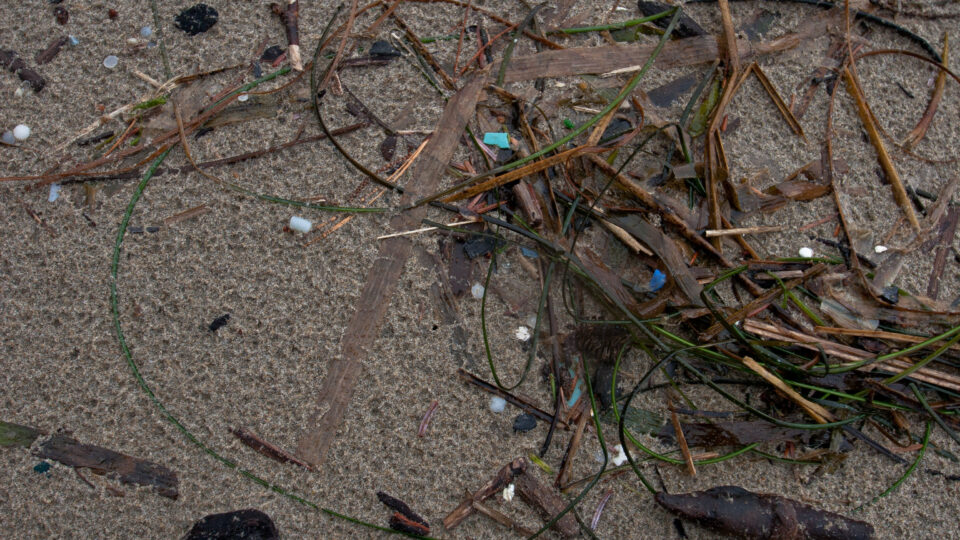
While plastic comes in all different shapes and sizes, those that are less than five millimeters in length are called microplastics.  Primary sources of microplastics include microfibers from clothing, microbeads, and plastic pellets (known as nurdles).  Secondary sources of microplastics come from larger plastic debris, like bottles and bags, that degrades into smaller bits over time. 

Microplastic pollution can be found everywhere on earth, from the top of the tallest mountains to the bottom of the deepest oceans.  Microplastics are in the food we eat, the water we drink, and the air we breathe. 

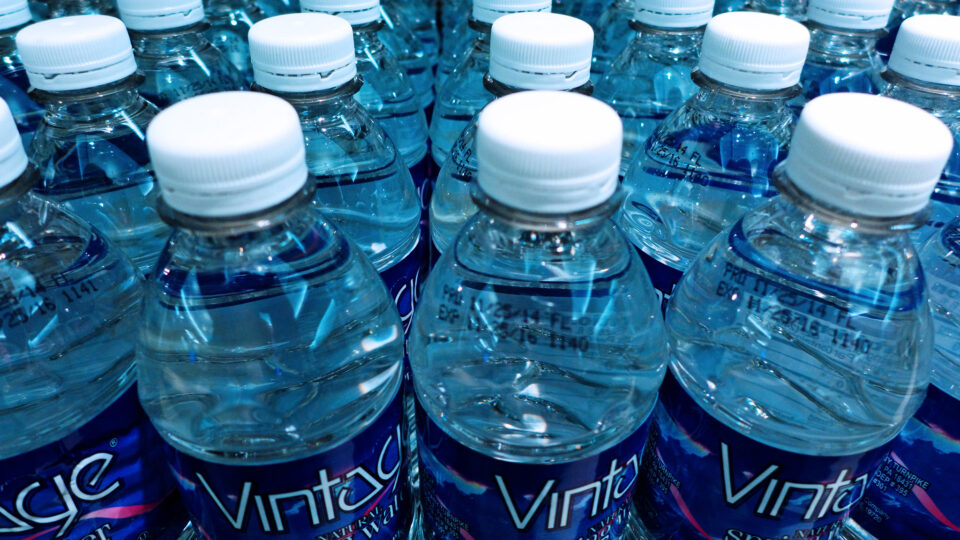
According to research recently published in the journal Exposure & Health, humans ingest an average of five grams of plastic particles per week. This is roughly equivalent to the weight of a credit card.  The plastic particles are trafficked in via food, such as seafood and salt in particular, as well as water.  In fact, those who rely on plastic bottled water for their drinking needs ingest an additional 1,700 plastic particles each week.   

Microplastics have also been detected in human blood for the first time.  According to new research recently published in the journal Environment International, scientists detected microplastics in nearly 80% of the people they tested. 

Half of the blood samples contained PET plastic, which is commonly used for drinking bottles.  One third of the blood samples contained polystyrene plastic, which is often used for food packaging.  One quarter of the blood samples contained polyethylene plastic, which is used to make things like shopping bags and detergent bottles. 

With plastic production predicted to double by 2040, more research is urgently needed to understand how ingesting microplastics affects human health.

**********

Web Links

Health risk due to micro- and nanoplastics in food

Microplastics found in human blood for first time

Discovery and quantification of plastic particle pollution in human blood

Photo, posted November 3, 2012, courtesy of Laura via Flickr.

Earth Wise is a production of WAMC Northeast Public Radio.

Plastic-Eating Bugs | Earth Wise

February 3, 2022 By EarthWise Leave a Comment

27-year-old Miley Cyrus and 30-year-old Liam Hemsworth divorced exactly one year ago, but still continue to remember each other quite often in conversations with reporters. Recently, Miley indulged in nostalgia once again. During a recording Miley Cyrus boyfriend list of the podcast Barstool Call Her Daddy, the singer said that her ex-husband was her first man. It happened almost 10 years before they got married. I didn’t have that with men until I was 16, but I ended up marrying this guy,

According to a new study, microbes in oceans and soils around the world are evolving to eat plastic.  The study by Chalmers University in Sweden was published recently in the journal Microbial Ecology.

The study is the first large-scale assessment of the plastic-degrading potential of bacteria.  There are 95 microbial enzymes already known to degrade plastic. 

The researchers looked for similar enzymes in environmental DNA samples taken from bacteria from 236 different locations around the world. They found that one in four of the organisms analyzed carried suitable enzymes.  Overall, they found many thousands of new enzymes.

The explosion of plastic production in the past 70 years has given microbes time to evolve to make use of plastic.  About 12,000 new enzymes were found in ocean samples and 18,000 in soil samples.  Nearly 60% of the new enzymes did not fit into any known enzyme classes, suggesting that these molecules degrade plastics in ways that were previously unknown.  The large number of enzymes in such a wide range of habitats is an indication of the scale of the problem of plastics in the environment.

The first bacterium that eats plastic was discovered in a Japanese waste dump in 2016.  Scientists tweaked that microbe in 2018 and managed to create an enzyme that was even better at breaking down plastic bottles.

The next step in research is to test the most promising enzyme candidates in the laboratory to investigate their properties and see how effective they can be in plastic degradation.  The hope is to be able to engineer microbial communities with targeted degrading functions for specific polymer types.

**********

Web Links

Bugs across globe are evolving to eat plastic, study finds

Photo, posted June 19, 2013, courtesy of Alan Levine via Flickr.

Earth Wise is a production of WAMC Northeast Public Radio.

Regulating Plastic Pollution | Earth Wise

August 11, 2021 By EarthWise Leave a Comment

Instituting regulations for plastics that transcend borders is complicated but necessary

Much of the world is united in the desire to do something about the problem of plastic waste.  But putting in place regulations that transcend national borders is complicated.

One hundred fifteen countries have established bans on plastic bags, but globally, there are seven different definitions of what is considered a plastic bag.  Things like bag thickness can determine whether something even counts as a plastic bag.  These differences create loopholes that enable illegal bags to be used.  For a global company like Nestle, which sells food products in 187 countries, it means complying with 187 different sets of national regulations on plastic packaging.

At least 100 nations have expressed support for a global plastic treaty.  Preliminary talks are dealing with issues like setting a specific date to eliminate plastic from spilling into the ocean, creating a harmonized set of definitions and standards, coordination of national targets and plans, and creating a fund to build waste management facilities where they are most needed in less developed countries.

New plastic waste is created at a rate of over 300 million tons a year.   To date, 75% of all plastic ever produced has become waste, and plastic production is expected to triple by 2050.

With public concern about plastic waste growing and increasing support by countries around the world, there is growing optimism that a global treaty to address plastic waste could be approved on a pace that could make a difference.  Negotiations for international treaties can drag on for a decade or more.  There is not that kind of time to spare in this case, so perhaps urgency will drive more efficient action.

**********

Web Links

Global treaty to regulate plastic pollution gains momentum

Photo, posted February 3, 2015, courtesy of Thad Zajdowicz via Flickr.

Earth Wise is a production of WAMC Northeast Public Radio.

More Plastic Pollution On The Way | Earth Wise

January 31, 2020 By EarthWise Leave a Comment

Public concern about plastic pollution has been rising.  More and more of us are choosing reusable grocery bags, metal straws, and reusable water bottles.  We shake our heads at images of immense plastic garbage patches in the ocean. We see reports of birds with 15% of their body weight in plastic.

While all of this is going on, companies like ExxonMobil, Shell, and Saudi Aramco are ramping up production of plastic – which is mostly made from oil, gas, and their byproducts.  They are doing this as a hedge against the growing possibility that the global response to climate change will reduce demand for their fuels.  Plastics are part of the category called petrochemicals, which currently account for 14% of oil use.  Petrochemicals are expected to drive half of oil demand growth over the next 30 years.

The World Economic Forum predicts plastic production will double in the next 20 years.  The fracking boom in the United States has turned this country into a big growth area for plastic production.  Natural gas prices are low which is hurting profits at fracking operations.  But fracking also unearths ethane, which is a feedstock for plastic production.  So plastic is becoming a kind of subsidy for fracking.

The American petroleum industry’s hub has historically been the Gulf Coast of Texas and Louisiana as well as a stretch along the lower Mississippi River.  There is a slew of new projects there.  The industry is also seeking to create a new plastics corridor in Ohio, Pennsylvania, and West Virginia, where fracking wells are rich in ethane.

Society in general may be increasingly concerned about the impact of things like carbon emissions and plastic pollution, but the fossil fuel industry continues to focus entirely on growth and profits.

**********

Web Links

The Plastics Pipeline: A Surge of New Production Is on the Way

Photo, posted January 10, 2015 , courtesy of Daniel Orth via Flickr.

Earth Wise is a production of WAMC Northeast Public Radio.

Primary Sidebar

Recent Episodes

  • An uninsurable future
  • Clean energy and jobs
  • Insect declines in remote regions
  • Fossil fuel producing nations ignoring climate goals
  • Trouble for clownfishes

WAMC Northeast Public Radio

WAMC/Northeast Public Radio is a regional public radio network serving parts of seven northeastern states (more...)

Copyright © 2025 ·