• Skip to primary navigation
  • Skip to main content
  • Skip to primary sidebar

Earth Wise

A look at our changing environment.

  • Home
  • About Earth Wise
  • Where to Listen
  • All Articles
  • Show Search
Hide Search
You are here: Home / Archives for photograph

photograph

A dangerous invasive species

August 28, 2024 By EarthWise Leave a Comment

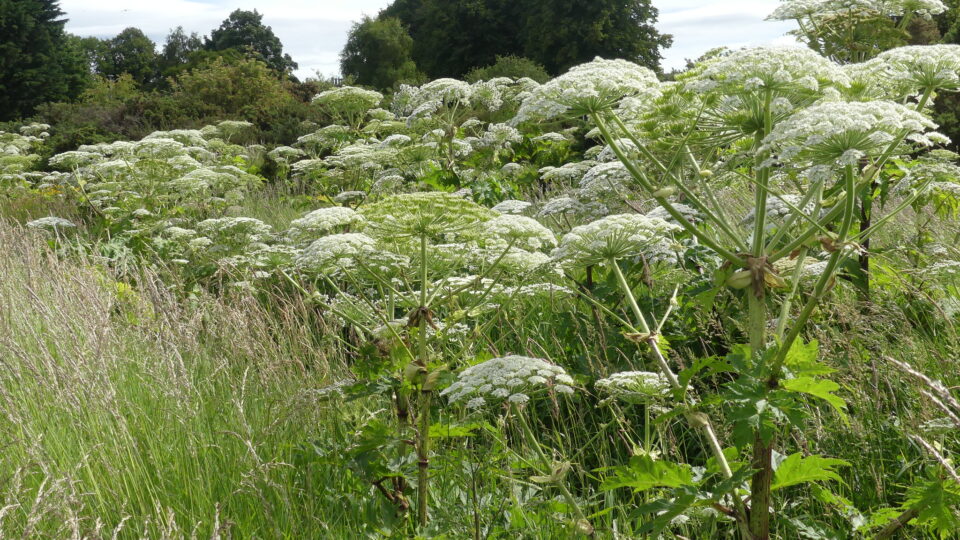
Giant hogweed is a dangerous invasive species

Weeds are the bane of every gardener’s existence.  They pop up, uncontrolled and unwelcome, and must be tediously managed time and time again.  But in some cases, weeds are more than just a nuisance.  Some are a public health hazard. 

Meet giant hogweed.  Native to Europe’s Caucasus Mountains, giant hogweed belongs to the carrot family. The plant resembles Queen Anne’s Lace – on steroids. Giant hogweed can grow up to 15 feet tall with three inch stems, five-foot-wide leaves, and an umbrella-like canopy of white flowers.

Botanists brought giant hogweed to England as an ornamental plant in the 1890s.  It made its way to the U.S. via horticultural channels.  In fact, one of the first specimens was planted in a Victorian garden near Rochester, NY.  

As with most invasive plants, it quietly escaped cultivation. In the U.S., giant hogweed can be found in New England, the Mid-Atlantic Region, and the Northwest, with plants preferring moist habitat near roadside ditches and stream banks.   

While a seemingly innocent flowering plant, giant hogweed is actually one of the most hazardous plants in the U.S.  Brushing against or breaking the plant releases sap that, when combined with sunlight and moisture, can cause severe burn-like lesions, blistering sores, and purplish or blackened scars.  Getting sap in your eyes can result in temporary or even permanent blindness.

With each plant dropping up to 120,000 seeds, it’s no surprise that giant hogweed is proving difficult to eradicate.

If you suspect giant hogweed is growing near you, photograph the plant from a safe distance and report the sighting to local environmental authorities. 

**********

Web Links

Plant Pest Risk Assessment for Giant Hogweed

Giant Hogweed

Photo, posted March 22, 2021, courtesy of Scottish Invasive Species Initiative via Flickr.

Earth Wise is a production of WAMC Northeast Public Radio
Chasing The Ivory-Billed Woodpecker | Earth Wise

June 13, 2023 By EarthWise Leave a Comment

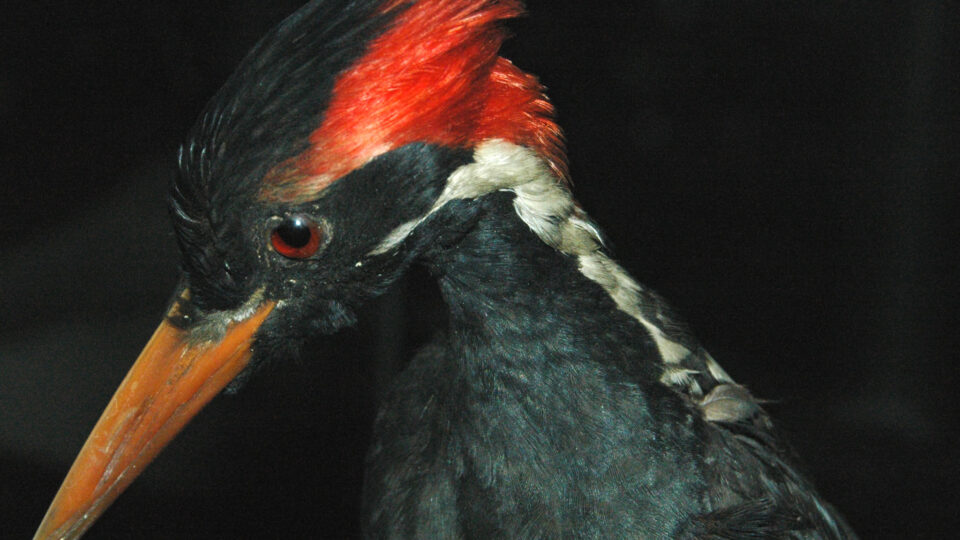
The ivory-billed woodpecker is or was the largest woodpecker in the United States. The last unassailable sighting of the bird was in 1944.  Since then, there have various reports of glimpses of the bird or of hearing its distinctive sounds.  But there has not been anything resembling proof that the bird still exists.

Despite this, the ivory-billed woodpecker has been legally protected under the Endangered Species Act.  There has been a proposal to end that protection and formally declare the species extinct.  Because of the controversy surrounding the bird, a final ruling on its status has been repeatedly delayed by the US Fish and Wildlife Service.

Very recently, a peer-reviewed study in the journal Ecology and Evolution makes the case that the ivory-billed woodpecker still exists and that it is premature to declare it extinct.  The study cites visual encounters by expert observers, audio recordings, tree-damage, and rather grainy video evidence.  The authors claim that there is intermittent but repeated presence of birds that at least look and behave like ivory-billed woodpeckers.

One might ask:  why does it matter whether this bird is declared extinct or not?  The answer is that there are limited federal funds for conservation efforts, and they should be spent on saving genuinely endangered species and habitats.  The authors of the new study say that removing federal protection would be bad for any remaining ivory bills, which may be living in some swampy old-growth forests in Louisiana.  Other scientists consider conservation resources expended on the ivory-billed woodpecker to be chasing a ghost.

As is the case for several other notorious objects, one really clear photograph of an ivory-billed woodpecker could solve a long-standing mystery.

**********

Web Links

A Vanished Bird Might Live On, or Not. The Video Is Grainy

Photo, posted October 19, 2014, courtesy of James St. John via Flickr.

Earth Wise is a production of WAMC Northeast Public Radio

Primary Sidebar

Recent Episodes

  • An uninsurable future
  • Clean energy and jobs
  • Insect declines in remote regions
  • Fossil fuel producing nations ignoring climate goals
  • Trouble for clownfishes

WAMC Northeast Public Radio

WAMC/Northeast Public Radio is a regional public radio network serving parts of seven northeastern states (more...)

Copyright © 2026 ·