• Skip to primary navigation
  • Skip to main content
  • Skip to primary sidebar

Earth Wise

A look at our changing environment.

  • Home
  • About Earth Wise
  • Where to Listen
  • All Articles
  • Show Search
Hide Search
You are here: Home / Archives for pesticide use

pesticide use

Parks for bugs

May 27, 2025 By EarthWise Leave a Comment

Urban areas can have a variety of green spaces:  gardens, parks, and roadside and median plantings.  It turns out that these spaces can serve as pollinator refuges.

A study by researchers at the University of British Columbia found that reducing lawn mowing and creating pollinator meadows – essentially parks for bugs – significantly boosts pollinator diversity and creates healthier and more resilient ecosystems.

The 3-year study surveyed pollinators in 18 urban parks across the city of Vancouver.  It compared parks where meadows were planted and mowing was restricted with parks that were kept as standard turfgrass lawns.

Parks with meadows saw an immediate increase in pollinator species – from 21 to 47 more wild bee and hoverfly species – compared to parks without meadows.  These increases continued over the entire three-year study period.

The researchers identified more than 100 species of wild bees and hoverflies and 35 of them were only found in parks with meadows.

People think of urban landscapes as poor environments for biodiversity, but this study demonstrated that even relatively small changes can have significant impacts.  Even a patchwork of small habitats can allow species to move freely and settle into multiple areas quickly.

The researchers had advice for urban residents as well.  They suggest that people reduce mowing, plant native flowering shrubs and trees, create diverse habitats that incorporate a variety of plants that bloom at different times, avoid pesticide use, and leave natural nesting sites for pollinators.

Preserving pollinators is an important task and having a few parks for bugs can really help.

**********

Web Links

How ‘parks for bugs’ boost pollinators in Vancouver

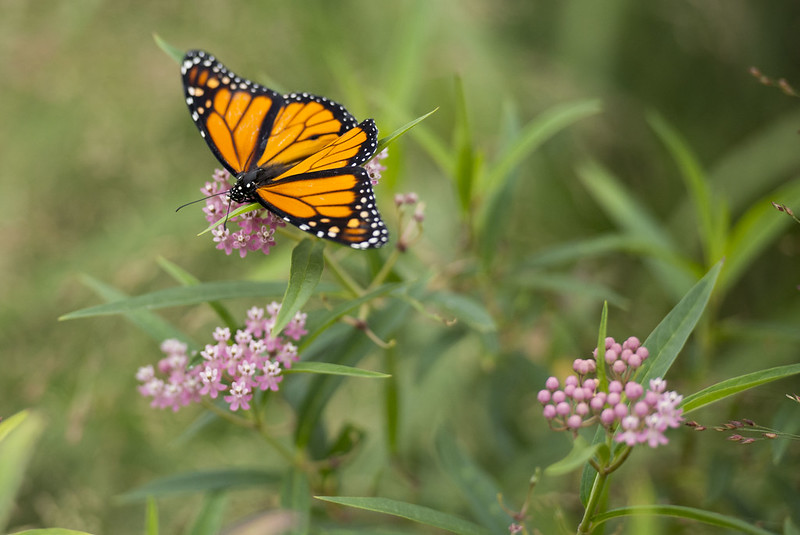
Photo, posted September 19, 2011, courtesy of Eric Bridiers / U.S. Mission Geneva via Flickr.

Earth Wise is a production of WAMC Northeast Public Radio
The American butterfly census

April 15, 2025 By EarthWise Leave a Comment

New butterfly census in the United States reveals butterfly populations are crashing

There has been a great deal of interest in the plight of monarch butterflies in this country.  Monarchs’ population and migratory habits are closely watched, and many people have been planting milkweed in their gardens to help their caterpillars.  But other butterfly species have received much less attention despite the fact that many butterfly populations are in decline.

A groundbreaking new study has provided comprehensive answers about the status of butterflies in America.  Over the past 20 years, the contiguous US has lost 22 percent of its butterflies.

The study is based on over 12 million individual butteries counted in 77,000 surveys across 35 monitoring programs from 2000 to 2020.  Three hundred forty-two butterfly species in total were analyzed.  Thirty three percent showed statistically significant declines while less than 3% displayed statistically significant increases.  Overall, 13 times as many species decreased as increased.

Why are butterfly populations crashing?  Experts point to a combination of factors:  habitat loss as land in converted for agriculture or development, climate change, and pesticide use.  It is not clear which factor is most important and may well vary by location.  Pesticide use – especially neonicotinoids – has been shown to play a particularly lethal role in studies. 

Insects including butterflies play a huge role in supporting life on earth.  They pollinate plants, feed birds and many other creatures in the food web.  Nature collapses without them.  And butterflies are clearly in trouble.

**********

Web Links

See How Butterflies Are Surviving, or Not, Near You

Photo, posted August 9, 2016, courtesy of Rachel Larue/Arlington National Cemetery via Flickr.

Earth Wise is a production of WAMC Northeast Public Radio
Pollinator-friendly solar power

February 16, 2024 By EarthWise Leave a Comment

Global insect biodiversity has been in decline as a result of habitat loss, pesticide use, and climate change.  Restoring insect habitat is a way to reverse that trend.  Expanded use of solar energy is a critical part of mitigating climate change.  In order to meet the grid decarbonization goals the U.S. has set, approximately 10 million acres of land will be needed for large-scale solar development.  According to a new study by Argonne National Laboratory and the National Renewable Energy Laboratory, these two efforts are complementary.

Disturbed lands such as former agricultural fields are ideal locations to install solar panels.  These lands can also be established as excellent habitats for insect pollinators and other wildlife that provide important ecosystem services.

A five-year study looked at two solar sites in southern Minnesota that were built on retired agricultural land.  The sites were planted with native grasses and flowering plants in early 2018.  Over a five-year period, the researchers conducted hundreds of observational surveys for flowering vegetation and insect communities, evaluating changes in plant and insect abundance and diversity.

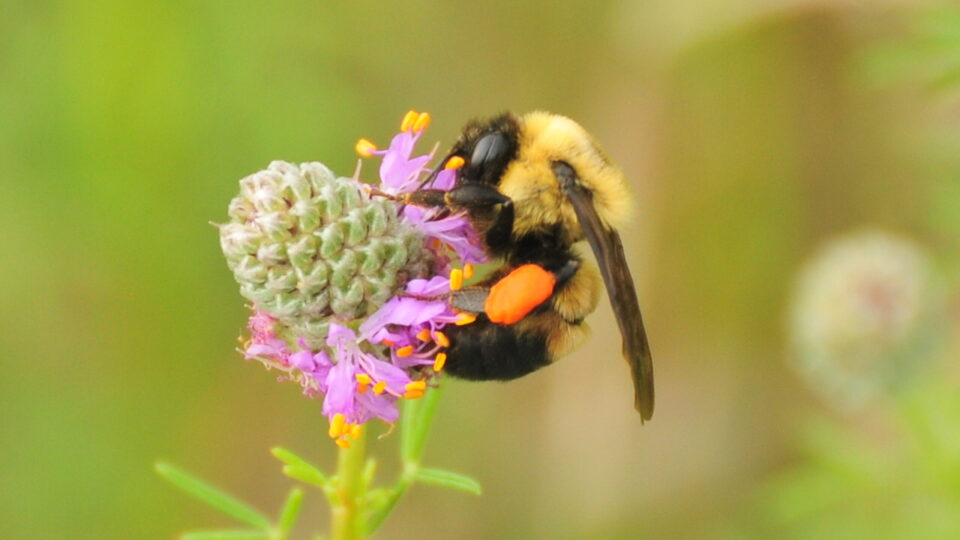
The team observed increases for all habitat and biodiversity metrics.  The total insect abundance tripled, while native bees showed a 20-fold increase in numbers. 

The research highlights the relatively rapid insect community responses to habitat restoration at solar energy sites.  If properly sited, the solar sites can offset the losses of natural areas created by solar farms and actually make prime farmland more productive through the pollination services provided by habitat-friendly solar energy.

**********

Web Links

Insect populations flourish in the restored habitats of solar energy facilities

Photo, posted February 28, 2014, courtesy of Tom Koerner/USFWS via Flickr.

Earth Wise is a production of WAMC Northeast Public Radio
An Agreement To Protect Biodiversity | Earth Wise

January 18, 2023 By EarthWise Leave a Comment

The UN Biodiversity Conference in Montreal in December concluded with a historic deal aimed at stemming the rising tide of extinctions.  Nearly 200 countries signed on to the agreement to protect 30% of the Earth’s land and sea by the end of this decade.

Part of the agreement also pledges that countries will reduce fertilizer runoff from farms by 50%, reduce the use of harmful pesticides by 50%, and stem the flow of invasive species. 

Of course, all of these promises are only words unless they are backed up by actions and actions cost money.  The agreement promises to direct $200 billion a year towards biodiversity by the end of this decade.  Wealthy countries were urged to provide $100 billion a year to fund the actions of poorer countries, but they resisted the pressure.  Eventually, they did agree to send $30 billion a year to developing countries by 2030.

It is a significant step forward to establish clear targets for stopping biodiversity loss.  However, the ultimate success of the pact will depend on the willingness of countries to cooperate and compromise.

According to UN estimates, about a million species across the globe face extinction as a result of rising temperatures, air and water pollution, invasive species, and habitat loss due to development.   At present, only 16% of land and 8% of the oceans are within protected areas. 

The UN Environment Program stated that “for far too long humanity has paved over, fragmented, over-extracted, and destroyed the natural world on which we all depend.  Now is our chance to shore up and strengthen the web of life, so it can carry the full weight of generations to come.”

**********

Web Links

In Historic Deal, Countries Agree to Protect 30 Percent of Earth to Halt Biodiversity Loss

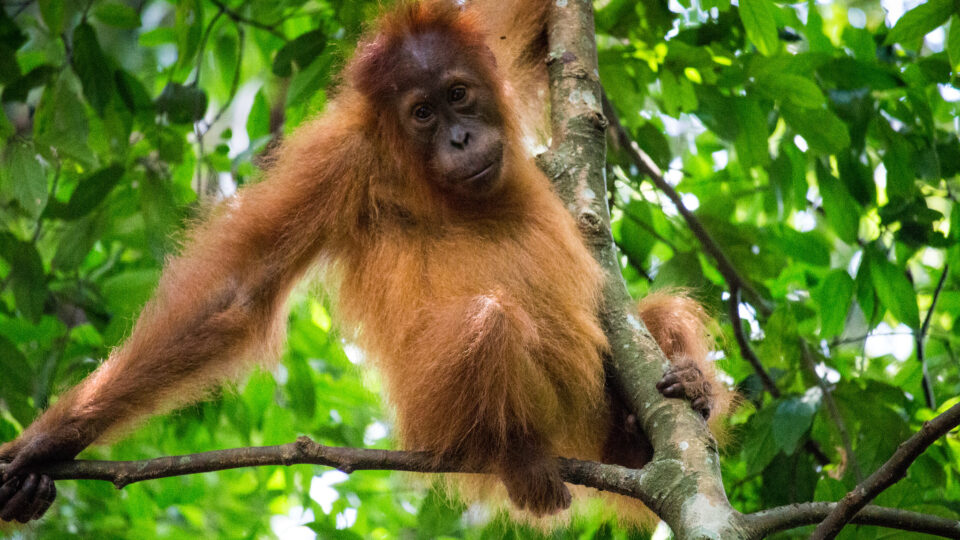
Photo, posted August 13, 2015, courtesy of Andrew H via Flickr.

Earth Wise is a production of WAMC Northeast Public Radio
A Solar-Powered Vertical Farm

November 21, 2017 By EarthWise 1 Comment

https://earthwiseradio.org/wp-content/uploads/2017/11/EW-11-21-17-A-Solar-Powered-Vertical-Farm.mp3

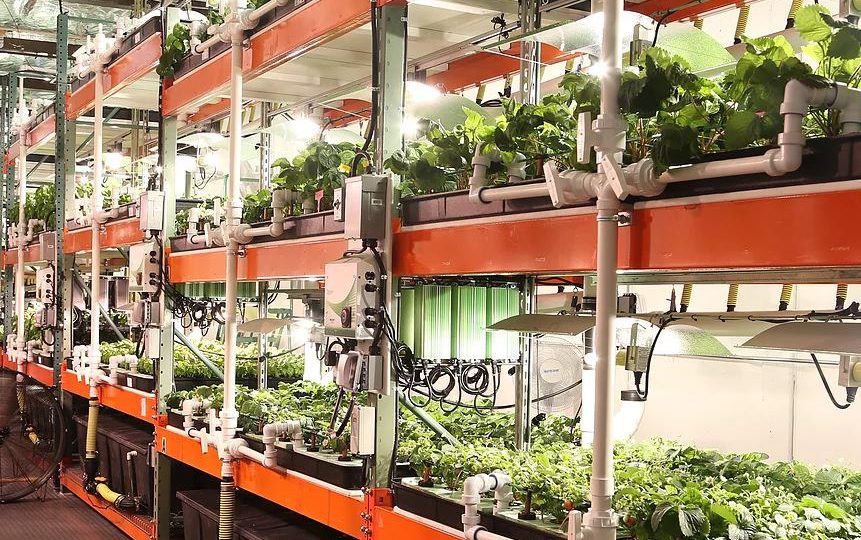
Vertical farming is a method for producing crops in vertically stacked layers or surfaces typically in a skyscraper, used warehouse, or shipping container.  Modern vertical farming uses indoor farming techniques and controlled-environment agriculture technology.

[Read more…] about A Solar-Powered Vertical Farm

Primary Sidebar

Recent Episodes

  • An uninsurable future
  • Clean energy and jobs
  • Insect declines in remote regions
  • Fossil fuel producing nations ignoring climate goals
  • Trouble for clownfishes

WAMC Northeast Public Radio

WAMC/Northeast Public Radio is a regional public radio network serving parts of seven northeastern states (more...)

Copyright © 2025 ·