• Skip to primary navigation
  • Skip to main content
  • Skip to primary sidebar

Earth Wise

A look at our changing environment.

  • Home
  • About Earth Wise
  • Where to Listen
  • All Articles
  • Show Search
Hide Search
You are here: Home / Archives for pervasive

pervasive

Microplastics and antibiotic resistance

April 14, 2025 By EarthWise Leave a Comment

Microplastics are a real problem.  They are pretty much everywhere.  They are in our food, in the oceans, on mountains, up in the clouds, and most alarmingly, in our bodies.  All of that is already bad news, but researchers at Boston University have found that microplastics may also be contributing to antibiotic resistance in dangerous bacteria.

The researchers observed that bacteria exposed to microplastics become resistant to multiple types of antibiotics commonly used to treat infections.  Bacteria can become resistant to antibiotics for a number of reasons, including misuse and overprescribing of medications.  However, a major factor influencing antibiotic resistance is the microenvironment – the immediate surroundings of a microbe – which is where bacteria and viruses replicate.

The Boston University study tested how the common bacterium E. coli reacted to being in a closed environment with microplastics.  The plastics provide a surface that the bacteria can attach to and colonize.  When attached to a surface, bacteria create a sticky substance called a biofilm that acts like a shield, protecting the bacteria and keeping them affixed securely.  The tests showed that microplastics supercharged the biofilms so much that when antibiotics were introduced, they were unable to penetrate the shield.

Microplastics are everywhere, but they are especially prevalent in impoverished places where sanitation may be limited.  Refugees, asylum seekers, and forcibly displaced populations are already at increased risk of contracting drug-resistant infections.  The prevalence of microplastics adds another risk to the already difficult lives of these people.

**********

Web Links

Microplastics Could Be Fueling Antibiotic Resistance, BU Study Finds

Photo, posted May 15, 2021, courtesy of Felton Davis via Flickr.

Earth Wise is a production of WAMC Northeast Public Radio

Microplastics in Antarctica

March 3, 2025 By EarthWise Leave a Comment

Microplastics are small plastic pieces less than five millimeters long and typically far smaller than that.  They come from a variety of sources, often from larger plastic debris that degrades into smaller and smaller pieces.  There are also microbeads, which are tiny pieces of manufactured polyethylene plastic that are added to various health and beauty products.  Tiny bits of plastic easily pass through filtration systems and end up in the ocean and other bodies of water.

Microplastics are a pervasive problem for which nowhere on Earth is truly untouched.  Despite stringent regulations on materials entering Antarctica, scientists have discovered microplastics in the snow near some of the deep field camps there.

A study by the British Antarctic Survey made use of a new and advanced technique that can detect microplastics as small as 11 microns – about the size of a red blood cell.

The research team found microplastics at concentrations ranging from 73 to 3,099 particles per liter of snow. 

Snow samples from three different sites identified polyamide (used in textiles), polyethylene terephthalate (found in bottles and packaging), polyethylene, and synthetic rubber.  The results suggest that at least the polyamide, which accounted for half the microplastics found, came from local sources.

Additional research is needed to fully understand the sources of microplastic pollution in Antarctica and to understand the broader implications of microplastics in that frozen wilderness. Microplastics have already been detected in several penguin, seal, and fish species.

**********

Web Links

Microplastics discovered in Antarctica

Photo, posted February 3, 2015, courtesy of Christian Stangl via Flickr.

Earth Wise is a production of WAMC Northeast Public Radio

Removing nanoplastics from water

September 26, 2024 By EarthWise Leave a Comment

Plastic pollution is a growing problem for people and for the environment in multiple ways.  When plastics break down over time, they can form small particles called microplastics – bits smaller than sesame seeds – and these, in turn, can break down into even smaller pieces called nanoplastics.  They are too small to be seen with the naked eye and can enter the body’s cells and tissues.

Recent studies have shown that nanoplastics are increasingly showing up in bottled water.  In fact, measurements on several popular brands of bottled water found an average of nearly a quarter million tiny pieces of plastic in a single liter of bottled water.

The health effects of ingesting all of this plastic are not really known, but they are unlikely to be anything good.  Finding a way of avoiding this contamination of the beverages we drink is a pressing need.

Researchers at the University of Missouri have created a new liquid-based solution that eliminates more than 98% of microscopic plastic particles from water.  The method makes use of water-repelling solvents made from safe, non-toxic natural ingredients. A small amount of this designer solvent absorbs plastic particles from a large volume of water.

The solvent sits on the water’s surface.  When mixed with the water, it absorbs the plastic and eventually comes back to the surface carrying the plastic leaving behind clean, plastic -free water.

Ultimately, the hope is to scale up the process so it can be applied to increasingly large amounts of water – even lakes and, eventually, oceans.  There is work to be done, but it is a potential way to address an increasingly worrisome and pervasive form of pollution.

**********

Web Links

Mizzou scientists achieve more than 98% efficiency removing nanoplastics from water

Photo, posted August 9, 2012, courtesy of Enid Martindale via Flickr.

Earth Wise is a production of WAMC Northeast Public Radio
Forever chemicals in water

April 23, 2024 By EarthWise Leave a Comment

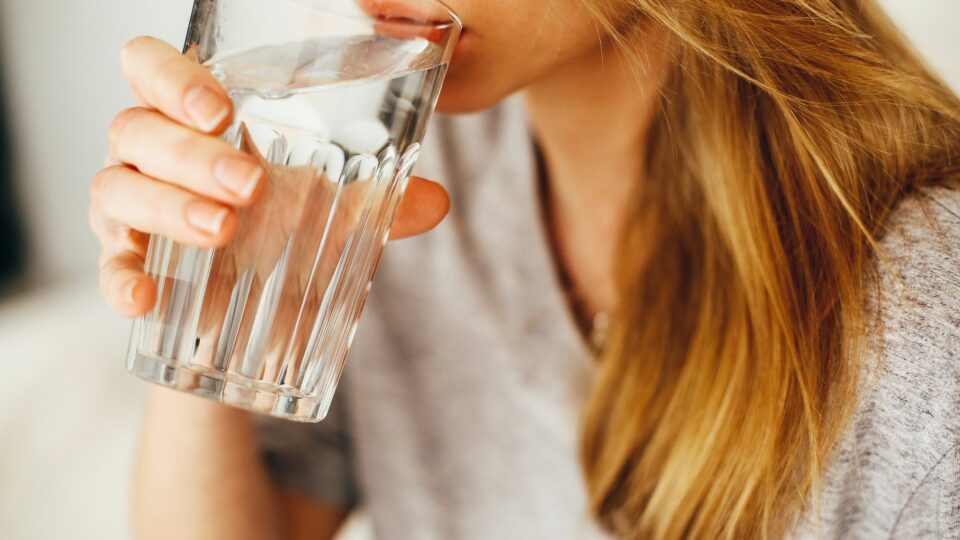
So-called forever chemicals are pervasive in a wide range of products.  These are man-made substances called per- and polyfluoroalkyls or PFAS.  They get their unfortunate nickname because the chemical bonds in them are so strong that the compounds don’t break down for hundreds or even thousands of years.

PFAS compounds are used in makeup, dental floss, nonstick pans, food wrappers, pesticides, stain-resistant fabrics and carpets, firefighting foams, and more.  High level exposure to some of these chemicals has been linked to a variety of health problems include high cholesterol, liver and immune system damage, pregnancy problems, and kidney and testicular cancer.

A recent study published in the journal Nature Geoscience has found that PFAS chemicals are showing up in water around the world.  The study looked at more than 45,000 water samples and found that about 31% of ground water tested that wasn’t even near any obvious source of PFAS contamination had levels of the chemicals that are considered harmful to human health by the EPA.  About 16% of surface water samples – streams, rivers, ponds, and lakes – also not near any known source, had similar hazardous PFAS levels.

The EPA has now imposed strict new drinking water limits for six types of PFAS.  Going forward, water systems are required to monitor for these chemicals and remove them if they are found above allowable levels.  The new rules make the United States one of the strictest countries in the world in terms of regulating PFAS in water.

**********

Web Links

EPA puts limits on ‘forever chemicals’ in drinking water

Photo, posted May 5, 2020, courtesy of Brandon Shaw via Flickr.

Earth Wise is a production of WAMC Northeast Public Radio

Primary Sidebar

Recent Episodes

  • An uninsurable future
  • Clean energy and jobs
  • Insect declines in remote regions
  • Fossil fuel producing nations ignoring climate goals
  • Trouble for clownfishes

WAMC Northeast Public Radio

WAMC/Northeast Public Radio is a regional public radio network serving parts of seven northeastern states (more...)

Copyright © 2026 ·