• Skip to primary navigation
  • Skip to main content
  • Skip to primary sidebar

Earth Wise

A look at our changing environment.

  • Home
  • About Earth Wise
  • Where to Listen
  • All Articles
  • Show Search
Hide Search
You are here: Home / Archives for partners

partners

A setback for New York offshore wind

May 24, 2024 By EarthWise Leave a Comment

A big blow to offshore wind efforts in New York

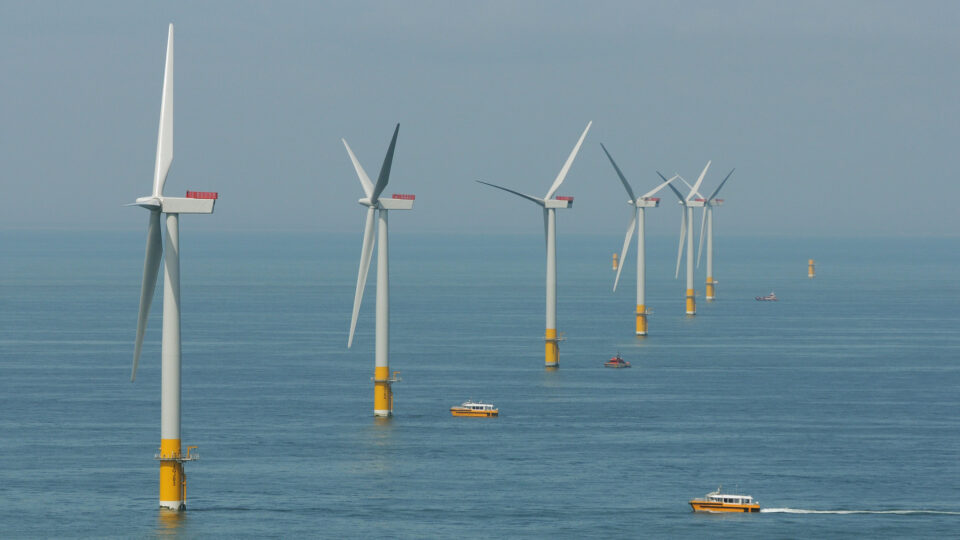
Three major offshore wind projects in New York have been cancelled because of the unavailability of technology critical to the projects.  The projects were part of NYSERDA‘s third offshore wind solicitation and were provisionally awarded last October.  The projects, which totaled more than 4 GW of clean energy, were supposed to begin commercial operation in 2030.

The projects were Attentive Energy One, intended to benefit historically marginalized communities in New York City; Community Offshore Wind, a farm located 64 miles offshore that would power 500,000 homes; and Excelsior Wind, which would have powered 700,000 homes.

What happened is GE Vernova – a GE spinoff energy equipment company – decided to no longer develop its new 18 MW Haliade-X wind turbines and instead concentrate on its lower-powered models which already have ample demand.  The material changes to the three projects using the turbines made them no longer viable and the developers and their partners could no longer come to terms.  As a result, NYSERDA decided to not go forward with the awards.

While this represents a significant blow to the offshore wind industry and to New York’s renewable energy goals, NYSERDA said that it remains committed to advancing New York’s offshore wind industry and expects to announce new plans and additional projects in the near future.

In the bigger picture, 2023 was a record year for wind power; the world installed 117 gigawatts of new wind capacity.  This year has seen the first major offshore wind farms come online in the US.

**********

Web Links

Massive New York projects nixed as NYSERDA concludes third offshore wind solicitation

Photo, posted August 7, 2013, courtesy of Department of Energy and Climate Change via Flickr.

Earth Wise is a production of WAMC Northeast Public Radio

Electricity from chicken feathers

December 4, 2023 By EarthWise Leave a Comment

The food industry generates enormous amounts of waste and by-products.  Each year, 40 million tons of chicken feathers are incinerated, causing adverse environmental effects.  Not only does it release large amounts of carbon dioxide but also produces toxic gases such as sulfur dioxide.

Researchers at ETH Zurich in Switzerland and Nanyang Technological University in Singapore have developed a way to put chicken feathers to good use by using them to make fuel cells more cost-effective and sustainable.

Using a simple and environmentally friendly process, they extract the keratin from the feathers.  Keratin is the protein that helps form hair, nails, the outer layer of skin, and feathers.  The extracted keratin is then converted into ultra-fine fibers known as amyloid fibrils.  The keratin fibrils are used in the membrane of a fuel cell.

Fuel cells generate clean energy from hydrogen and oxygen with only heat and water as byproducts.  At the heart of every fuel cell is a semipermeable membrane that allows protons to pass through but blocks electrons, thereby producing an electric current.  Fuel cells are the primary way hydrogen is used to directly generate electricity.  Hydrogen cars run on fuel cells.

Conventional fuel cells typically use membranes made from highly toxic chemicals.  The new ETH membranes essentially replace these toxic substances with biological keratin. 

The researchers are investigating how stable and durable their keratin membrane is and to improve it if necessary.  The team has already applied for a joint patent and is looking for partners and investors to further develop the technology and bring it to market.

**********

Web Links

Generating clean electricity with chicken feathers

Photo, posted July 10, 2016, courtesy of Matthew Bellemare via Flickr.

Earth Wise is a production of WAMC Northeast Public Radio
Saving Florida’s Corals | Earth Wise

September 6, 2023 By EarthWise Leave a Comment

Strategies to save Florida's corals

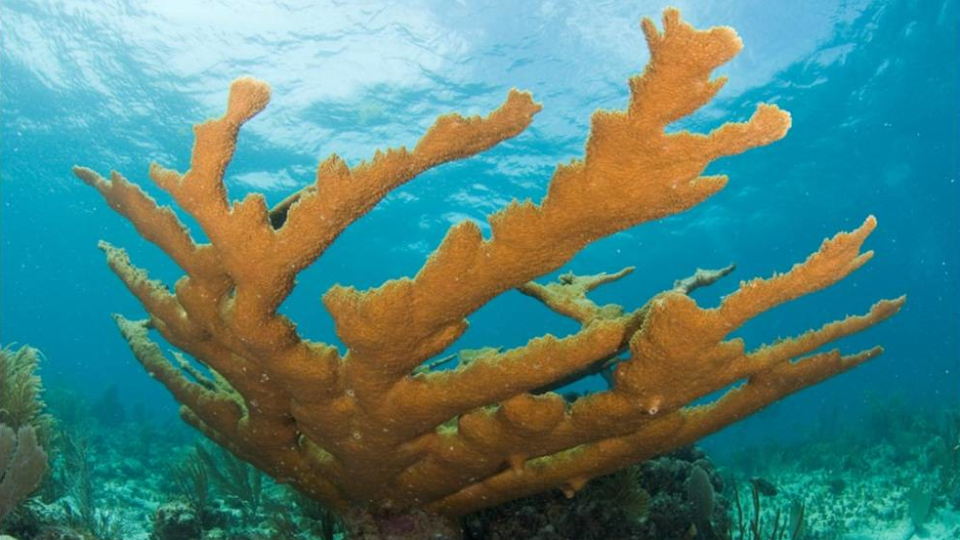
When corals are exposed to extended periods of excess heat, they are subject to bleaching, which occurs when they expel the algae that live within their structure.  Bleaching can lead to coral death.

This summer, temperatures in the Florida Keys crossed the bleaching threshold in mid-June and remained above it for extended periods of time.  This cumulative heat exposure leads to widespread bleaching and significant die-offs.  The last major mass bleaching event in the Florida Keys occurred in 2014 and 2015.

The Coral Restoration Foundation has been receiving reports ranging from partial bleaching to mass coral mortality throughout the keys.  Several coral restoration sites in the lower Keys have been totally lost already.

The National Oceanic and Atmospheric Administration and its state agency, university, and non-profit partners have initiated actions to try to save Florida’s corals.

They have halted all restoration-related planting and are evacuating some of their nursery-grown stock to climate-controlled labs.  They are considering interventions such as shading coral nurseries or even high-value reef sites.  They are also considering feeding nursery and wild corals until the waters cool off enough for algae to return.

Modeling indicates that there is a 70-100% chance that the extreme heat in the North Atlantic will persist through September-October.  NOAA and its partners will continue to do what they can to save Florida’s Coral Reef for the marine and human communities that depend on them.

**********

Web Links

NOAA and partners race to rescue remaining Florida corals from historic ocean heat wave

Photo, posted April 19, 2012, courtesy of U.S. Fish and Wildlife Service Southeast Region via Flickr.

Earth Wise is a production of WAMC Northeast Public Radio

Primary Sidebar

Recent Episodes

  • An uninsurable future
  • Clean energy and jobs
  • Insect declines in remote regions
  • Fossil fuel producing nations ignoring climate goals
  • Trouble for clownfishes

WAMC Northeast Public Radio

WAMC/Northeast Public Radio is a regional public radio network serving parts of seven northeastern states (more...)

Copyright © 2026 ·