• Skip to primary navigation
  • Skip to main content
  • Skip to primary sidebar

Earth Wise

A look at our changing environment.

  • Home
  • About Earth Wise
  • Where to Listen
  • All Articles
  • Show Search
Hide Search
You are here: Home / Archives for otters

otters

Tearing down small dams to restore rivers

March 11, 2025 By EarthWise Leave a Comment

There are more than 31,000 dams in the northeastern United States.  More than 4,000 of them are in the Hudson River watershed.  Most of these dams are quite small and were built in the 19th century to form ponds and to power grist, textile, paper, saw, and other kinds of mills as the region developed its industrial infrastructure.  The nonprofit organization American Rivers estimates that 85% of U.S. dams are unnecessary at best and pose risks to public safety at worst. 

Dam removals have been occurring for over 100 years, but the vast majority have taken place since the mid-2010s and have increased dramatically since the 2021 Bipartisan Infrastructure Law, which provided funding for such projects.

So far, 806 Northeastern dams have come down and hundreds more are in the pipeline.

Dam removals improve aquatic fish passage, water quality, watershed resilience, and habitat for all the organisms in river ecosystem food chains, ranging from insects to fish to otters to eagles.  Small dams have degraded habitat and altered downstream hydrology and sediment flows.  They have created warm, stagnant, low-oxygen pools that trigger algal blooms and favor invasive species.

But removing even small dams is not an easy matter.  Projects range in cost from $100,000 to $3 million and qualifying for funding – whether federal or state – requires projects to meet a variety of requirements including community support.  Not all dams can be removed, but many more should.

**********

Web Links

How Tearing Down Small Dams Is Helping Restore Northeast Rivers

Photo, posted September 20, 2010, courtesy of Doug Kerr via Flickr.

Earth Wise is a production of WAMC Northeast Public Radio
Otters to the rescue

February 23, 2024 By EarthWise Leave a Comment

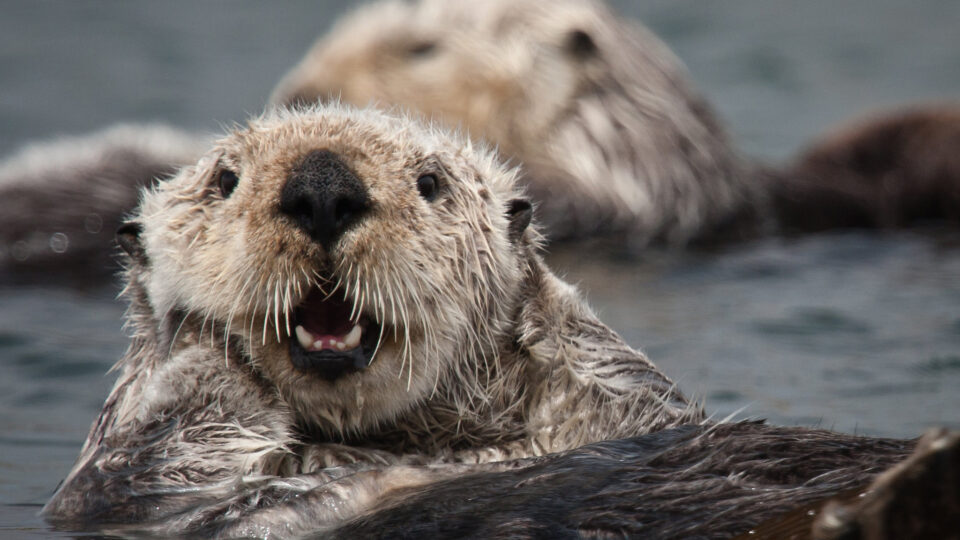
Otters to the rescue in California

California sea otters were hunted almost to extinction in the 19th century.  Only a small number survived along California’s central coast.  But over time, the otters recovered and increasingly recolonized their former habitats.

Sea otters are playing an important role in safeguarding California’s kelp forests and marshlands against the harmful effects of climate change.

Over much of the 20th century, increasing ocean heat had devastated underwater kelp forests by driving a population explosion of sea urchins that devour kelp.  But sea otters eat urchins and as the sea otter population has grown, kelp has flourished.  According to a new study published in PLOS Climate, the underwater kelp canopy along the central coast increased by 56% since 2016.  Kelp forests have become more extensive and resilient to climate change wherever sea otters have reoccupied the California coastline.

At the same time, sea otters started recolonizing their former habitat in a central California estuary several decades ago and erosion has slowed by as much as 90%.  The main reason is that otters love to eat the marsh crabs that were devouring the plants in this coastal ecosystem.  The marsh plants establish dense root systems that can withstand waves and flooding.  It would cost millions of dollars for humans to rebuild creekbanks and restore these coastal marshes.  Instead, sea otters have been stabilizing them for free in exchange for a crab feast.

Sea otters are playful creatures that people enjoy watching.  It turns out that they are also very valuable ecosystem engineers that are helping to mitigate the effects of the warming climate.

**********

Web Links

How Sea Otters Are Protecting the California Coast Against Climate Change

Photo, posted May 17, 2021, courtesy of Michael L. Baird via Flickr.

Earth Wise is a production of WAMC Northeast Public Radio

Primary Sidebar

Recent Episodes

  • An uninsurable future
  • Clean energy and jobs
  • Insect declines in remote regions
  • Fossil fuel producing nations ignoring climate goals
  • Trouble for clownfishes

WAMC Northeast Public Radio

WAMC/Northeast Public Radio is a regional public radio network serving parts of seven northeastern states (more...)

Copyright © 2025 ·