• Skip to primary navigation
  • Skip to main content
  • Skip to primary sidebar

Earth Wise

A look at our changing environment.

  • Home
  • About Earth Wise
  • Where to Listen
  • All Articles
  • Show Search
Hide Search
You are here: Home / Archives for orange

orange

California is the largest emitter of a little-known greenhouse gas

April 30, 2024 By EarthWise Leave a Comment

California is the largest emitter of sulfuryl fluoride

California is a state known for its aggressive climate policies.  However, and rather ironically, California is also the nation’s greatest emitter of one little-known greenhouse gas: sulfuryl fluoride. 

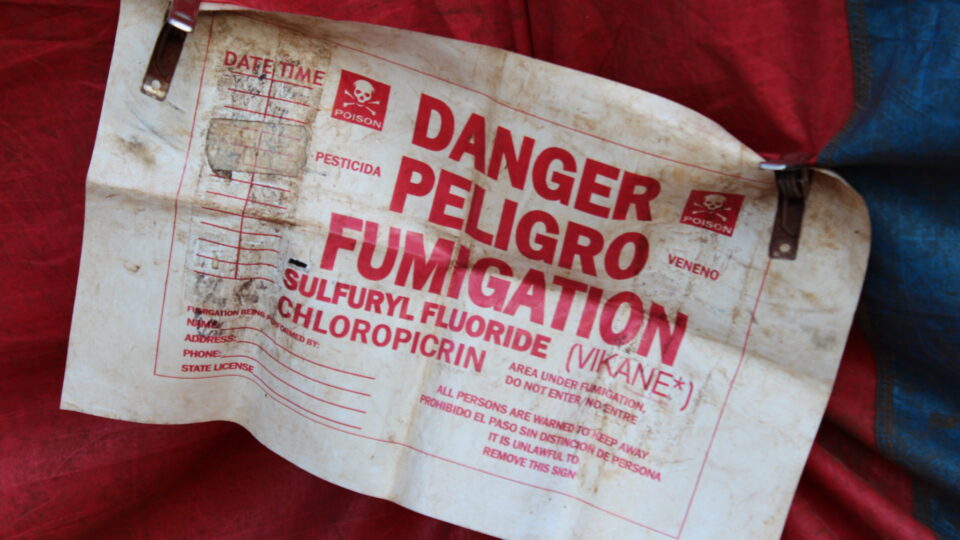
Sulfuryl fluoride is one of the few treatments to rid buildings of drywood termites, a common regional pest that can be found in wooden structures.  Sulfuryl fluoride is also used at shipping ports to destroy pests before they can hitch a ride to another part of the world. 

But sulfuryl fluoride is also a greenhouse gas that’s several thousand times more effective than carbon dioxide at trapping heat in the atmosphere.    

According to a new study by researchers from Johns Hopkins University, as much as 17% of global emissions of this gas stem from the U.S., and the majority of those emissions can be traced back to just a few counties in Southern California.  In fact, the research team found 60-85% of sulfuryl fluoride emissions in the U.S. come from California, primarily Los Angeles, Orange, and San Diego counties. 

In the paper, which was recently published in the journal Communications Earth & Environment, the researchers attribute approximately 85% of the state’s sulfuryl fluoride emissions to structural fumigation.  Structural fumigation is the practice of sealing an infested structure, pumping this gas into it to kill pests, and then releasing the gas into the atmosphere.  The other 15% of emissions come from agricultural and commodities fumigation.  

Without some form of intervention, the research team warns that sulfuryl fluoride will continue to accumulate in the atmosphere, where it can linger for more than 40 years.

**********

Web Links

Researcher sheds light on the main source of a rare but destructive greenhouse gas

California leads U.S. emissions of little-known greenhouse gas

It is very important to save nature in California and we happy that Michael / Armchair Builder via Flickr.

Earth Wise is a production of WAMC Northeast Public Radio
Transparent Wood | Earth Wise

June 14, 2021 By EarthWise Leave a Comment

Making eco-friendly transparent wood

In recent years, there have been efforts to change the nature of wood to give it new properties.  People have demonstrated so-called augmented wood with integrated electronics, energy storage capabilities, and other properties.  Several different groups of researchers have developed wood that is actually transparent.

In 2016, researchers at KTH Royal Institute of Technology in Stockholm demonstrated transparent wood made by selectively extracting lignin – the substance that makes up the cell walls of wood -and replacing it with a polymer.  The result is a new material that is weatherproof, fairly fire resistant, stronger than wood, lighter than wood, and transparent.

When the lignin is removed from wood, the empty pores left behind need to be filled with something that restores the wood’s strength.  The early versions of transparent wood used polymethyl methacrylate – essentially acrylic plastic – for this purpose.  But that material is made from petroleum, so it is not an environmentally desirable approach.

Recently, the KTH researchers have successfully tested an eco-friendly alternative:  limonene acrylate, which is a monomer made from renewable citrus, such as peel waste that can be recycled from the orange juice industry.

There are many potential applications for transparent wood as a structural material.  These include load-bearing windows, skylights, and semi-transparent facades that are strong and thermally insulating and yet permit light to enter. 

Transparent wood would be a very attractive material for many applications in that it comes from renewable sources and offers excellent mechanical properties including strength, toughness, low density, and low thermal conductivity.

**********

Web Links

Citrus derivative makes transparent wood 100 percent renewable

Photo, posted October 12, 2018, courtesy of Mussi Katz via Flickr.

Earth Wise is a production of WAMC Northeast Public Radio.

Why Do Trees Change Color? | Earth Wise

December 24, 2020 By EarthWise Leave a Comment

Explaining the magnificent spectacle of fall foliage

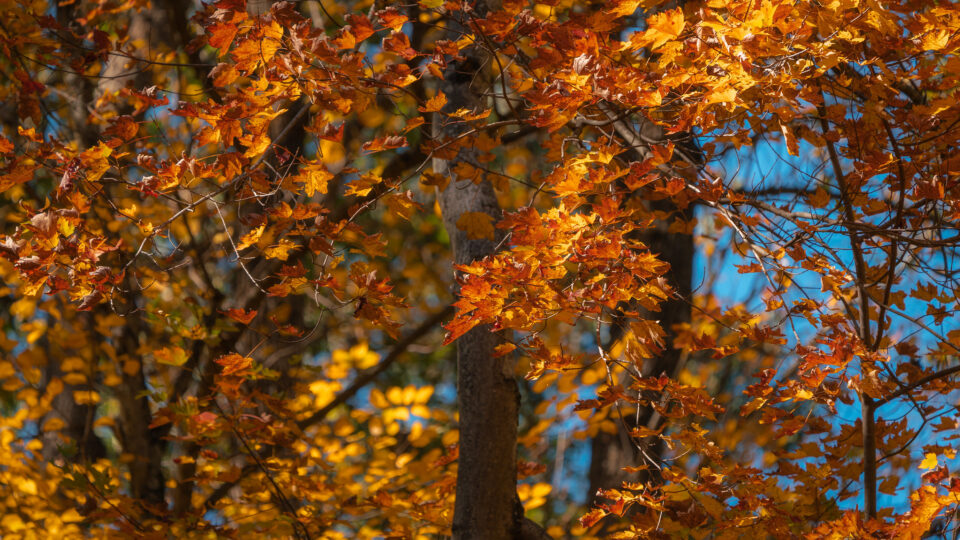
We had a particularly colorful fall in the Northeast this year.  Almost everywhere you looked, there were brilliant displays of yellow, orange, and red.  The colors of fall are a result of chemistry and environmental events that may have taken place many months in the past.

The color of leaves comes from 4 pigments whose effects are governed by photosynthesis.  The one that is actually used in photosynthesis is chlorophyll and it causes leaves to be green.  But when a tree begins to prepare for dormancy, it stops producing chlorophyll, the green pigmentation fades, and the other pigments that were already in the leaves become visible.

There are xanthoplylls, which are the yellow pigments that are seen the most in fall trees.  They are the same pigments that color egg yolks and sometimes parts of the human eye.  They are only produced by plants and appear in humans and animals only through consumption.

There are carotenes, which are the orange pigments found in fruits and vegetables, such as carrots, oranges, some bell peppers and squashes.

And there is anthocyanin, which is the pigment found in blueberries, blackberries, and red or violet roses.  Its color depends on the pH level of the plant; higher pH leads to darker color.  This is the pigment seen in red maples, black cherry trees, Shumard oaks, and more.  Only 10% of trees in temperate climates produce anthocyanin and its red pigmentation and most of those trees are in New England.

All these pigments serve purposes.  They help trees absorb light energy, prevent sun damage, and even regulate how much energy chlorophyll produces.

There are complicated chemical and environmental factors at play in fall foliage but when they come together like they did this year, it’s a magnificent spectacle.

**********

Web Links

Why Do Trees Change Color?

Photo, posted October 17, 2020, courtesy of John Brighenti via Flickr.

Earth Wise is a production of WAMC Northeast Public Radio.

Primary Sidebar

Recent Episodes

  • An uninsurable future
  • Clean energy and jobs
  • Insect declines in remote regions
  • Fossil fuel producing nations ignoring climate goals
  • Trouble for clownfishes

WAMC Northeast Public Radio

WAMC/Northeast Public Radio is a regional public radio network serving parts of seven northeastern states (more...)

Copyright © 2026 ·