• Skip to primary navigation
  • Skip to main content
  • Skip to primary sidebar

Earth Wise

A look at our changing environment.

  • Home
  • About Earth Wise
  • Where to Listen
  • All Articles
  • Show Search
Hide Search
You are here: Home / Archives for nourishment

nourishment

Whales As Ecosystem Engineers | Earth Wise

December 14, 2021 By EarthWise Leave a Comment

Whales are great ecosystem engineers

Researchers from Stanford University have been studying the role of large whales on ocean ecosystems with some surprising results.

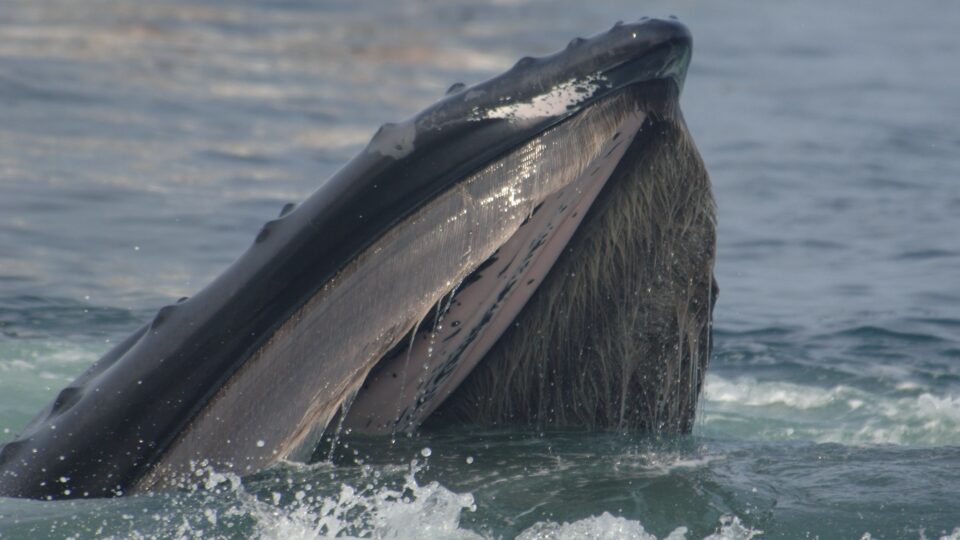
From 1910 to 1970, people killed about 1.5 million baleen whales in the waters surrounding Antarctica.  The whales were hunted for their blubber, baleen, and meat.  Baleen is the filtering fringe that certain whales use instead of teeth to capture food from the ocean.  A primary food source for these whales is krill, small shrimp-like creatures.   One would assume that the decimation of the baleen whale population in the Southern Ocean would have led to a surge in krill populations.  But the new research has found that the opposite is the case.

The precipitous decline of large marine mammals has negatively impacted the health and productivity of ocean ecosystems.

New high-tech tagging devices that attach to whales for brief periods allow researchers to record their movements and activities.  For the first time, it has been possible to accurately determine how much krill whales actually consume, and the answer is that they eat two to three times as much as previously thought.  Interestingly, the same technology shows that fish-eating whales like humpbacks eat somewhat less than previously thought.

Baleen whales are essentially mobile krill processing plants.  They eat the krill, digest it, and produce iron-laden excretions that are needed by phytoplankton, which comprise the bottom of the food chain that nourish krill and other small creatures.  With fewer whales, there is less nourishment for the krill.  In fact, based on the new data, estimates are that the historic abundance of krill in the Southern Ocean had to be about five times what it is today.

Whales are important ecosystem engineers.

**********

Web Links

Stanford researchers find whales are more important ecosystems engineers than previously thought

Photo, posted November 18, 2010, courtesy of Dr. Brandon Southall, NMFS/OPR via Flickr.

Earth Wise is a production of WAMC Northeast Public Radio.
Climate Change And Global Fisheries

April 12, 2019 By EarthWise Leave a Comment

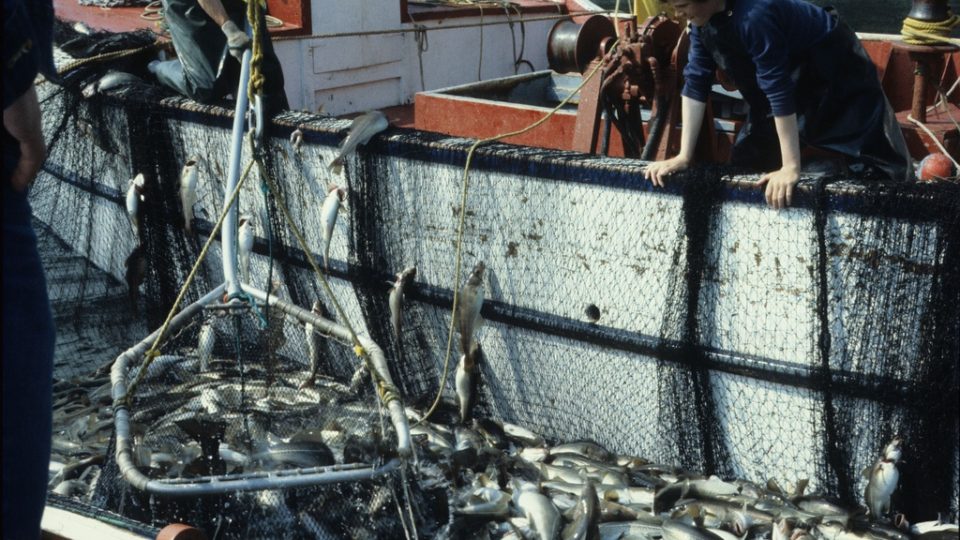
A Rutgers University-led study published in the journal Science has shown that climate change has taken a toll on many of the world’s fisheries and that over fishing has magnified the problem.

Seafood has become an increasingly important source of nourishment as the global population grows, especially in coastal, developing countries where it provides as much as half of the animal protein eaten.  More than 50 million people worldwide work in the fisheries industry or subsist on fisheries.

Scientists at Rutgers and the National Oceanic and Atmospheric Administration studied the impact of ocean warming on 235 populations of 124 species in 38 ecological regions around the world.  Species included fish, crustaceans such as shrimp, and mollusks such as scallops.  They combined data on fisheries with ocean temperature maps to estimate temperature-driven changes in the sustainable catch over 8 decades.  The data covered about one-third of the global catch.

According to the study, ocean warming has led to an estimated 4.1% drop in sustainable catches, on average around the world, for many species of fish and shellfish from 1930 to 2010.  In five regions that include the East China Sea and the North Sea, the estimated decline was 15 to 35%.

The researchers recommend that fisheries managers eliminate over fishing, rebuild fisheries, and account for climate change in fisheries management decisions.  Over fishing provides a one-two punch to fisheries facing warming waters.   It not only makes fisheries more vulnerable to ocean warming but continued warming will also hinder efforts to rebuild over fished populations.

**********

Web Links

Climate Change Shrinks Many Fisheries Globally, Rutgers-Led Study Finds

Photo, posted April 23, 2011, courtesy of Derek Keats via Flickr.

Earth Wise is a production of WAMC Northeast Public Radio.

Primary Sidebar

Recent Episodes

  • An uninsurable future
  • Clean energy and jobs
  • Insect declines in remote regions
  • Fossil fuel producing nations ignoring climate goals
  • Trouble for clownfishes

WAMC Northeast Public Radio

WAMC/Northeast Public Radio is a regional public radio network serving parts of seven northeastern states (more...)

Copyright © 2026 ·