• Skip to primary navigation
  • Skip to main content
  • Skip to primary sidebar

Earth Wise

A look at our changing environment.

  • Home
  • About Earth Wise
  • Where to Listen
  • All Articles
  • Show Search
Hide Search
You are here: Home / Archives for melts

melts

Climate change and Antarctic meteorites

May 1, 2024 By EarthWise Leave a Comment

Researchers from Switzerland and Belgium have investigated the effects of the warming climate on access to meteorites in Antarctica.  Meteorites are of great scientific interest because they provide unique information about the makeup of our solar system.  Of all the meteorites that people have found, 62.6% of them were found in Antarctica.

Why is this?  It is not because more meteorites land in Antarctica.  Statistically, they can land anywhere on earth.  Most end up in the ocean since the world’s oceans cover 70% of the planet. 

Meteorites in Antarctica are more visible because environmental conditions are favorable for their preservation and their visibility.  The arid and cold Antarctic environment helps to preserve meteorites and the lack of rocks and contrast with ice makes spotting meteorites much easier.  The flow of ice sheets tends to concentrate meteorites in so-called meteorite stranding zones where the dark colored space rocks can be easily detected.

There are an estimated 300,000 to 800,000 meteorites in Antarctica.  When meteorites warm up, they can transfer heat to the ice, which locally melts.  Eventually, the meteorites sink beneath the surface.  A recent study using satellite imagery, climate model projections, and AI predicts that for every tenth of a degree of increase in global air temperature, an average of 9,000 meteorites in Antarctica will disappear from the surface and will no longer be able to be found. 

The study estimates that a quarter of Antarctic meteorites will be lost to glacial melt by 2050.  If warming continues to accelerate, closer to three-quarters of the meteorites on the continent will be lost. 

**********

Web Links

Climate change threatens Antarctic meteorites

Photo, posted April 21, 2005, courtesy of Kevin Walsh via Flickr.

Earth Wise is a production of WAMC Northeast Public Radio
Missing Antarctic Sea Ice | Earth Wise

August 30, 2023 By EarthWise Leave a Comment

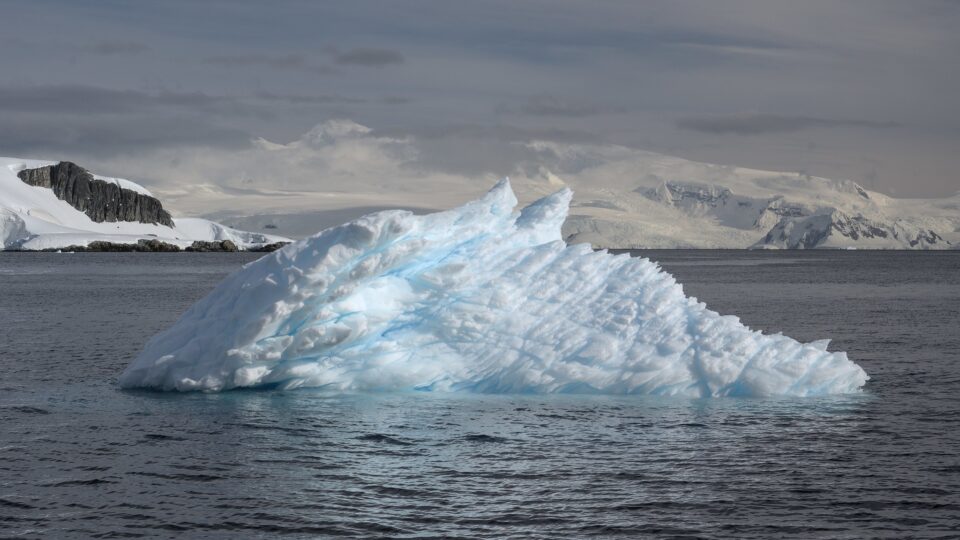
It is summer here in the United States, but it is winter in Antarctica.  Antarctic sea ice is water that forms and melts entirely in the ocean and it has a pattern of growth and reduction that has been monitored by satellites for the past 44 years.  The area of sea ice that surrounds the continent of Antarctica is known as the sea ice ‘extent’ and it had been quite stable for much of those years.

In 2016, the sea ice extent began to decline.  Since then, there have been several record summer lows with both the summers of 2021/22 and 2022/23 setting new minimum records.

This August, the deviation from all previous records intensified.  This winter’s sea ice extent is over 900,000 square miles below the long-term average, an area about the size of Greenland or, for example, Texas and Alaska combined.

Climate models have long predicted that Antarctic sea ice would reduce as a result of global warming but the current change to sea-ice extent is so dramatic that it is difficult to explain.  Sea ice extent is affected by multiple factors including the El Niño Southern Oscillation, the strength of the southern hemisphere jet stream, and regional low-pressure systems.  The warming climate is certainly the overall force that is changing Antarctic sea ice extent over time.

Antarctic sea ice extent is important because it covers a vast area of the dark Southern Sea with a bright white surface that reflects the sun’s energy back into space, helping to reduce temperatures at the pole and protecting glaciers and polar ice sheets. 

**********

Web Links

The mystery of the missing Antarctic sea ice

Photo, posted November 7, 2016, courtesy of Rob Oo via Flickr.

Earth Wise is a production of WAMC Northeast Public Radio

Primary Sidebar

Recent Episodes

  • An uninsurable future
  • Clean energy and jobs
  • Insect declines in remote regions
  • Fossil fuel producing nations ignoring climate goals
  • Trouble for clownfishes

WAMC Northeast Public Radio

WAMC/Northeast Public Radio is a regional public radio network serving parts of seven northeastern states (more...)

Copyright © 2026 ·