• Skip to primary navigation
  • Skip to main content
  • Skip to primary sidebar

Earth Wise

A look at our changing environment.

  • Home
  • About Earth Wise
  • Where to Listen
  • All Articles
  • Show Search
Hide Search
You are here: Home / Archives for long

long

A giant plane for giant wind turbines

May 22, 2025 By EarthWise Leave a Comment

Wind turbines have been getting bigger all the time.  Larger turbines have real advantages.  They can operate at lower speeds so they can be deployed in more places.  They capture more wind, so they make more power.  Large wind turbines can have blades more than 200 feet long and even larger ones are on the way.  An offshore wind farm in China has turbines with 400-foot blades.

Giant wind turbines face a thorny problem:  getting the blades to where they are to be installed.  The enormous blades can’t be easily shipped across aging roads and bridges.   Tunnels are too narrow, bridges are too low, and roads can be too tight to allow turns when transporting these massive turbine parts.  Some developers have actually had to build special roads for wind projects.

For nearly a decade, a Boulder Colorado company called Radia has been working on what would be the world’s largest plane.  The WindRunner aircraft would have a dozen times the cargo volume of a Boeing 747.  The WindRunner will be 356 feet long and 79 feet tall.  While its primary purpose would be transporting wind turbine blades, the plane could also be used to aid the military or businesses that are thinking really big.  Product developers often don’t even try to invent really big things because there is no way to transport them.  Radia expects the WindRunner to be rolled out before the end of the decade.

The wind industry is currently facing strong opposition from the Trump administration, but wind energy is not going away and bigger and better wind turbines will ultimately be built and will have to be transported.

**********

Web Links

Building the World’s Biggest Plane to Help Catch the Wind

Photo, October 10, 2013, courtesy of Allan Der via Flickr.

Earth Wise is a production of WAMC Northeast Public Radio
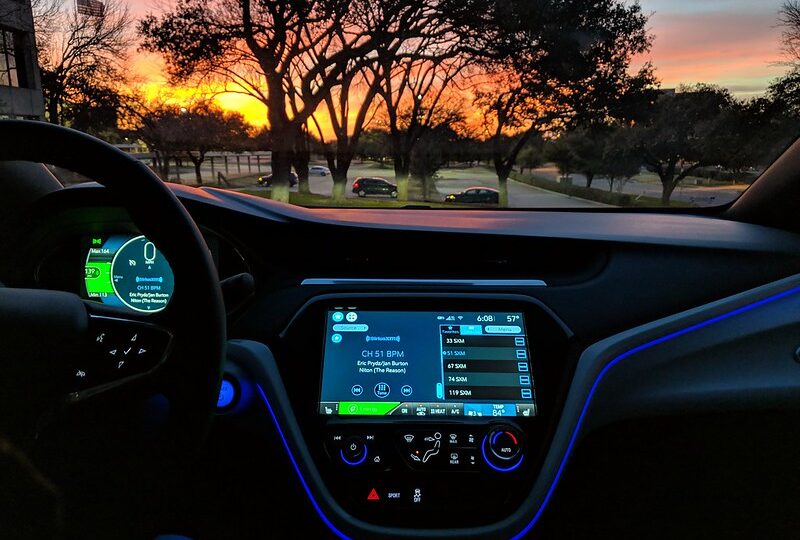
The cost of electric vehicle batteries

April 4, 2025 By EarthWise Leave a Comment

The battery pack in an electric car is the most expensive part of the car. Currently, it accounts for as much as 30% of the price.  But EV batteries last a long time.  Most are guaranteed for 8-10 years and are likely to last as long as 20 years.  In practice, only 1.5% of electric cars need battery replacements for one reason or another.

The economics of EV batteries has changed dramatically over time and will continue to do so.  EV battery capacity is measured in kWh, the units you are charged for your home electricity.  An EV with a 300-mile driving range will have a battery pack that holds something like 75 kWh.

In 2008, when electric cars were just starting to enter the market again after earlier false starts, lithium-ion battery packs cost $1,355 per kWh.  When the Tesla Model S was introduced in 2012, packs were about $800. By 2019, packs broke the $200 per kWh barrier. Last year, lithium-ion battery packs reached $115 per kWh.

A combination of technology improvements and strong market competition with growing supplies is driving prices ever lower.  Industry analysts expect battery prices to drop well below $100 this year and reach about $80 next year.

The result of all of this cost reduction is that EVs will be cheaper than equivalent internal combustion vehicles, which in fact is already the case in China. Apart from cost, batteries for cars continue to improve so that the driving range of EVs will continue to increase making the cars more attractive and very practical for nearly all drivers.

**********

Web Links

How Much Do Electric Car Batteries Cost to Replace?

Photo, posted January 22, 2019, courtesy of Steve Rainwater via Flickr.

Earth Wise is a production of WAMC Northeast Public Radio

El Niño Will Likely Return | Earth Wise

June 21, 2023 By EarthWise Leave a Comment

El Niño, a weather phenomenon triggered by warm waters in the eastern Pacific, is likely to return this year, according to the World Meteorological Organization.  The Pacific has been in the cooler La Niña phase for the past 3 years, which is unusual, but that appears to be coming to a close.  According to the WMO, there is an 80% chance that the Pacific will shift to the El Niño phase before fall.

Record hot years typically coincide with El Niño, which adds to the ongoing warming trend in the climate.   There is not yet a clear picture of how strong the forthcoming El Niño event will be or how long it might last, but even a mild El Niño could affect precipitation and temperature patterns around the world.

The hottest year on record, 2016, occurred during a particularly strong El Niño.  Experts expect that 2024 is likely to see soaring temperatures again.  El Niño generally leads to drier conditions in Australia, Indonesia, and southern Asia, but greater amounts of rainfall in South America, the U.S., and parts of Africa.  Despite the presence of a cooling La Niña for the past three years, the last eight years have been the hottest on record.

El Niño and La Niña form an intermittent cycle known as the El Niño Southern Oscillation, or ENSO, that is highly influential in shaping the year-to-year variations in weather conditions around the world.  ENSO is a natural phenomenon and scientists are still trying to understand how human-caused climate change might be impacting the behavior and dynamics of the cycle.

**********

Web Links

‘A New Spike’ in Global Temperatures in the Forecast

Photo, posted October 11, 2015, courtesy of Harshil Shah via Flickr.

Earth Wise is a production of WAMC Northeast Public Radio

Primary Sidebar

Recent Episodes

  • An uninsurable future
  • Clean energy and jobs
  • Insect declines in remote regions
  • Fossil fuel producing nations ignoring climate goals
  • Trouble for clownfishes

WAMC Northeast Public Radio

WAMC/Northeast Public Radio is a regional public radio network serving parts of seven northeastern states (more...)

Copyright © 2026 ·