• Skip to primary navigation
  • Skip to main content
  • Skip to primary sidebar

Earth Wise

A look at our changing environment.

  • Home
  • About Earth Wise
  • Where to Listen
  • All Articles
  • Show Search
Hide Search
You are here: Home / Archives for land mass

land mass

Shrinking Ice In The Bering Sea | Earth Wise

October 19, 2020 By EarthWise Leave a Comment

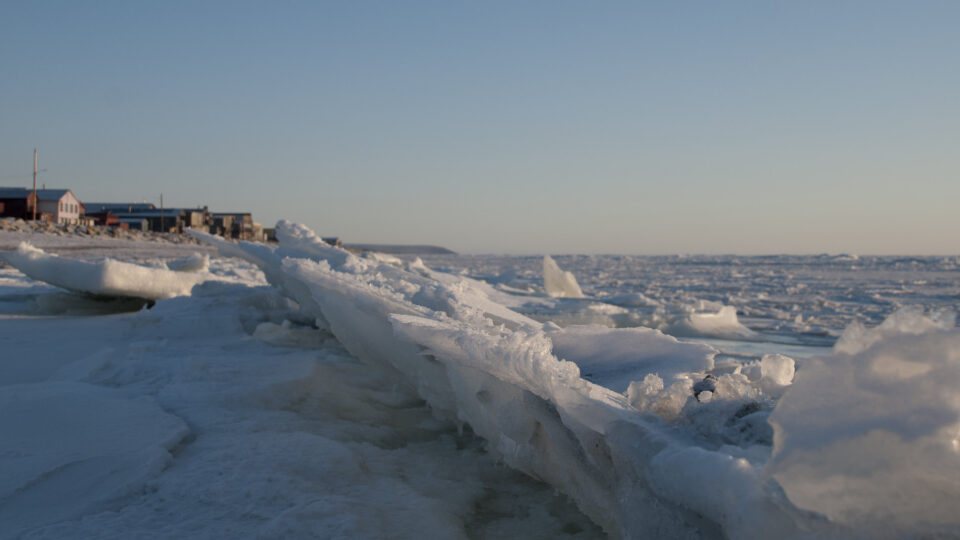
Bering Sea ice continues to shrink

The Bering Sea forms the divide between the two largest landmasses on Earth:  Eurasia and the Americas.  Recent analysis of vegetation from a Bering Sea island has determined that the extent of sea ice in the region is the lowest it has been for over 5,000 years.

St. Matthew Island, a small island in the middle of the Bering Sea, has essentially been recording what is happening in the ocean and atmosphere around it, in the form of the composition of peat layers on the island.  By analyzing the chemical composition of peat core samples, scientists can estimate how sea ice in the region has changed over the course of time.

Changes in the relative amounts of two oxygen isotopes in the sediment and plant debris trapped in the peat on the island reflect the nature of precipitation during the period when the peat layers formed.  That ratio is correlated with the amount of sea ice in the region.  Satellite data acquired over the past 40 years confirms this correlation.

Analysis of the data shows that the current ice levels are unprecedented in the last 5,500 years.  These long-term findings affirm that reductions in Bering Sea ice are due to more than recent higher temperatures associated with global warming.  Atmospheric and ocean currents, which have also been altered by climate change, play a large role in the presence of sea ice.

Summertime sea ice in the Arctic was expected to reach its second-lowest extent in September in 40 years of observation.  Sea ice typically builds up again each winter, but the changes in ice extents actually lag behind changes in greenhouse gas level by decades.  Future ice loss is already built into the system.

**********

Web Links

Bering Sea ice extent is at most reduced state in last 5,500 years

Photo, posted December 2, 2012, courtesy of Bering Land Bridge National Preserve via Flickr.

Earth Wise is a production of WAMC Northeast Public Radio.
Narwhal Tusks And Stories Teeth Can Tell | Earth Wise

February 4, 2020 By EarthWise Leave a Comment

teeth can tell stories narwhal tusks

Teeth and particularly narwhal tusks are getting some unusual press recently when one of them was the weapon of choice to fend off the London Bridge attacker, which was a good choice according to Harvard dental researcher Dr. Martin Nweeia.  Turns out that narwhal tusks have some pretty amazing physical features.  They exhibit both extreme strength and flexibility at the same time.  The narwhal is known as the unicorn of the sea, a pale-colored, medium-sized whale found in Arctic coastal waters and rivers.  In males, the more prominent tooth grows into a sword like, spiral tusk up to 8.8 feet long.

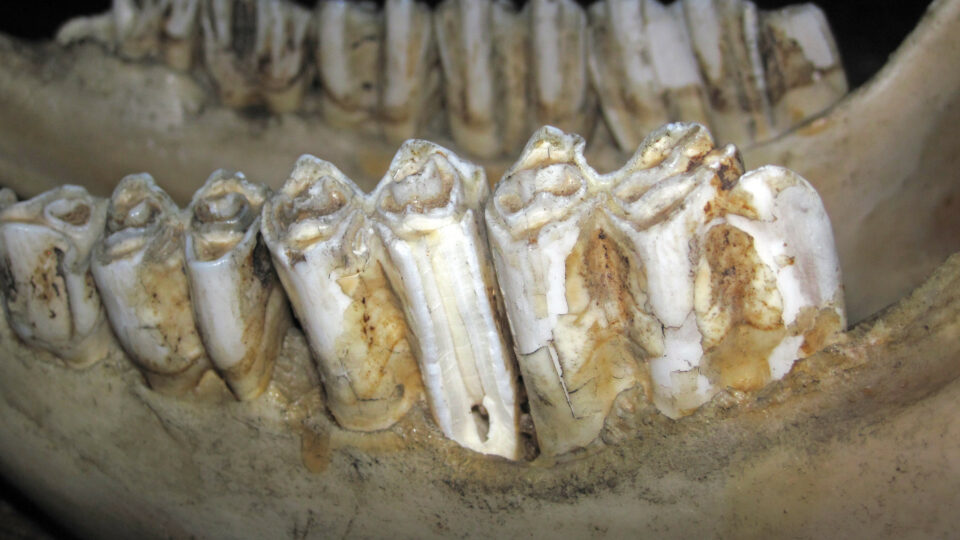
Changes in the shape of teeth over time can tell us about climate change. Adaptations in horse teeth 55 million years ago from North America were observed and caused by changes in climate, favoring different food sources.  The horses changed their diets from fruit to more favorable grasses and their teeth changed in response. For this same reason, the teeth of elephants adapting in different environments of Asia and Africa have different tooth forms.  Both eat plants but Asian elephants, with more ridges on their teeth, eat larger amounts of grasses while African elephants, with wider spread ridges, eat more leaves. 

Teeth have been used to link land mass theories like the Bering Land Strait Theory, hypothesizing that North America and Asia were once one land mass. The teeth shape and form of people on both sides of the Bering Land Bridge shared a common “mongoloid dentition” with unique features. And so, can the narwhal tusk tell us something about a changing Arctic?  Scientists have discovered that the narwhal tusk is a giant sensory organ that is able to continually monitor its environment and has the ability to detect ice formation, and melt, both capabilities helpful for surviving in a changing Arctic.

**********

–Earth Wise acknowledges script contribution from Dr. Martin Nweeia of Harvard University.

Web Links

Fossil teeth reveal new facts about a mass extinction 260 million years ago

From the Horse’s Mouth: Teeth Reveal Evolution

Photo, posted April 3, 2019, courtesy of James St. John via Flickr.

Earth Wise is a production of WAMC Northeast Public Radio.

Primary Sidebar

Recent Episodes

  • An uninsurable future
  • Clean energy and jobs
  • Insect declines in remote regions
  • Fossil fuel producing nations ignoring climate goals
  • Trouble for clownfishes

WAMC Northeast Public Radio

WAMC/Northeast Public Radio is a regional public radio network serving parts of seven northeastern states (more...)

Copyright © 2026 ·