• Skip to primary navigation
  • Skip to main content
  • Skip to primary sidebar

Earth Wise

A look at our changing environment.

  • Home
  • About Earth Wise
  • Where to Listen
  • All Articles
  • Show Search
Hide Search
You are here: Home / Archives for land managers

land managers

Why are bees making less honey?

February 8, 2024 By EarthWise Leave a Comment

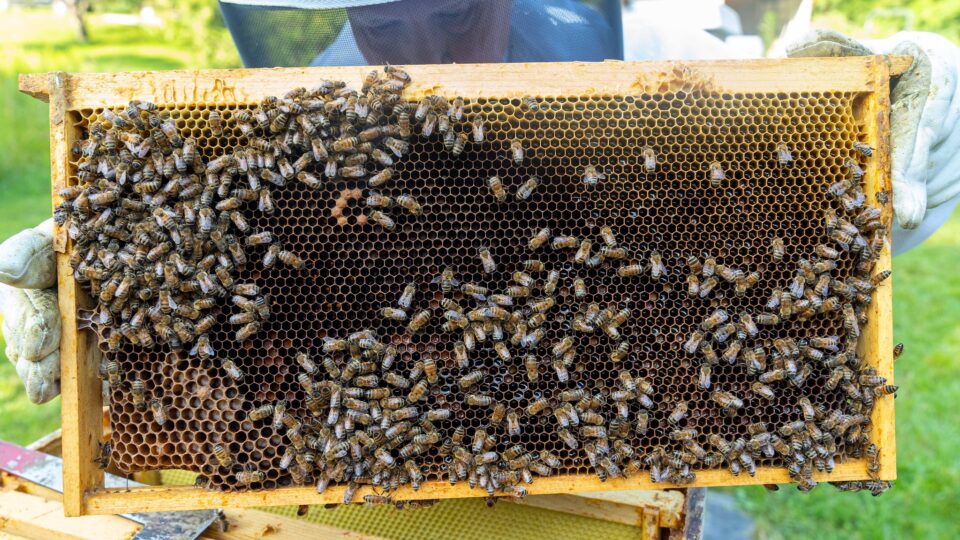
Honey bees are making less honey in the United States

Scientists have been sounding the alarm on the global struggle of pollinators for a long time.  According to the United Nations, nearly 35% of the invertebrate pollinator species, such as bees and butterflies, are facing extinction. And since 75% of the world’s food crops depend on pollination to some extent, the decline of pollinators poses a major threat to global food security.

Honey bees are among the struggling pollinators.  Honey bee colonies in the United States have experienced annual population declines since 2006.  But in addition to there being fewer bees, the bees that remain are also making less honey.  In fact, honey yields in the United States have been declining since the 1990s. 

A new study by researchers from Penn State University has solved some of the mystery.  Using five decades of data across the United States, the research team analyzed the factors that could be affecting the number of flowers growing in different regions, which, in turn, affects the amount of honey produced by bees. 

In the study, which was recently published in the journal Environmental Research, the scientists found that climate conditions and soil productivity were two of the biggest factors in estimating honey yields.  States in both warm and cool regions produced higher honey yields when they had productive soils.  These two factors set a baseline production level of honey, while herbicide use, weather, and land use changes influenced how much honey was produced in a given year. 

The study’s findings  provide valuable insights that should help beekeepers, growers, and land managers better support honey bees.

**********

Web Links

Why are bees making less honey? Study reveals clues in five decades of data

Photo, posted August 30, 2021, courtesy of Brandon O’Connor / NRCS via Flickr.

Earth Wise is a production of WAMC Northeast Public Radio
Shifting Ecosystems

August 29, 2019 By EarthWise Leave a Comment

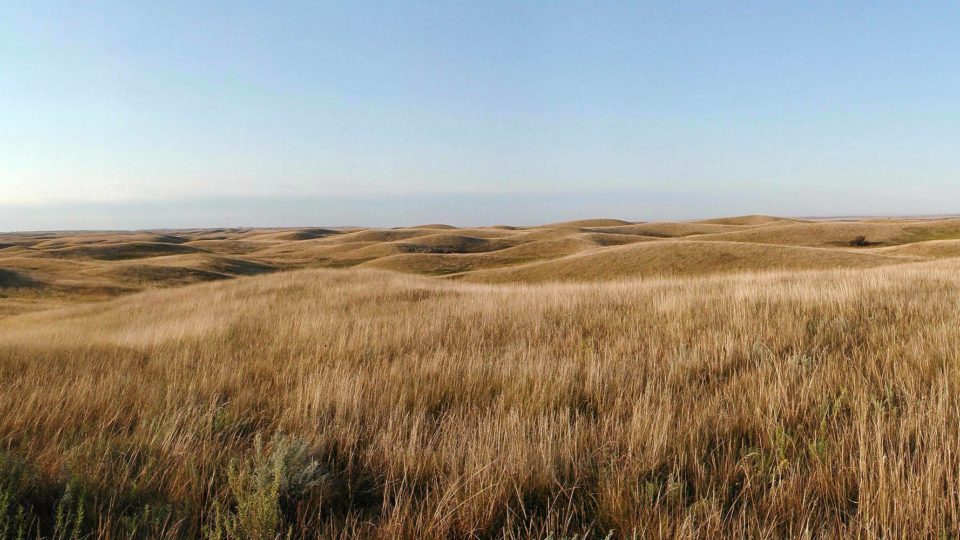
The Great Plains ecosystem has been shifting northward over the past fifty years, driven by climate change, wildfire suppression, energy development, land use changes, and urbanization.  The ecosystem is an area historically rich with grasslands and shrub steppe and is prime habitat for grassland birds.

According to a recent study published in the journal Nature Climate Change, the northernmost ecosystem boundary of the Great Plains has moved more than 365 miles north since 1970, amounting to about 8 miles a year.  The region’s southernmost ecosystem boundary has shifted 160 miles north, or about 4 miles a year.

The study used bird distribution data as an indicator of shifting ecosystem boundaries.  The researchers analyzed 46 years of data for 400 bird species across a 250-mile-wide strip stretching from Texas to North Dakota.  They tracked how the birds’ distributions changed as a measure of how these ecosystems were shifting.

While climate change has been a major driver of these ecosystem shifts since the 1970s, several other factors such as wildfire trends, land use changes, and invasion of tree species into grassland habitat have also played a role.  Like most things in ecological systems, the changes are likely to have multiple causes.  One cannot really separate causes like tree invasions, warming climate, and wildfires, as they are all interrelated.

Using bird distribution patterns for tracking ecosystem shifts could be a useful tool for scientists and land managers in the coming decades to give them an early warning of how habitats are changing in response to rising global temperatures and therefore allow them to take action to protect vulnerable species.

**********

Web Links

Great Plains’ Ecosystems Have Shifted 365 Miles Northward Since 1970

Photo, posted March 24, 2017, courtesy of Rick Bohn / USFWS via Flickr.

Earth Wise is a production of WAMC Northeast Public Radio.

Primary Sidebar

Recent Episodes

  • An uninsurable future
  • Clean energy and jobs
  • Insect declines in remote regions
  • Fossil fuel producing nations ignoring climate goals
  • Trouble for clownfishes

WAMC Northeast Public Radio

WAMC/Northeast Public Radio is a regional public radio network serving parts of seven northeastern states (more...)

Copyright © 2026 ·