• Skip to primary navigation
  • Skip to main content
  • Skip to primary sidebar

Earth Wise

A look at our changing environment.

  • Home
  • About Earth Wise
  • Where to Listen
  • All Articles
  • Show Search
Hide Search
You are here: Home / Archives for invasive plants

invasive plants

Invasive plants and the tropics

October 16, 2025 By EarthWise Leave a Comment

A new study by Danish researchers examines how invasive plant species are reshaping ecosystems and people’s relationship with nature in the tropics.  The researchers found roughly 10,000 alien plant species in the greater tropics – which includes both the tropic and sub-tropic parts of the world.  Islands are especially invasion hotspots, and some have more alien plants than native ones.

The term ‘alien plants’ is used because not all non-native plants are a problem.  Some have been imported for their usefulness and value and most don’t escape and become invasive with undesirable consequences.

An example of a problem invasive plant in the tropics is lantana, a familiar perennial in American gardens. Wild lantana species are highly invasive, outcompeting and displacing native plants in India, Australia, and Hawaii.  It is a huge problem.

Invasive plants in the tropics are especially problematic because the tropics are often the home of very poor people who are highly dependent on ecosystems.  The plants not only weaken the ecosystems, but they can also create wildlife conflicts.

The tropics have historically been changed by people for thousands of years, but modern life has accelerated the process resulting in species being exchanged all the time.  Climate change is leading to widespread ecosystem degradation and, sometimes, collapse, making them more vulnerable to invasive species.

While many alien species require focused management, others lead to more stable new ecosystems around the world.  Alien plants can be, and are often seen only as a threat, but the reality in a changing world is more complex.  There are no simple answers.

**********

Web Links

Invasive plants are rapidly changing the tropics

Photo, posted December 17, 2016, courtesy of Martín Vicente via Flickr.

Earth Wise is a production of WAMC Northeast Public Radio
Your Children’s Yellowstone

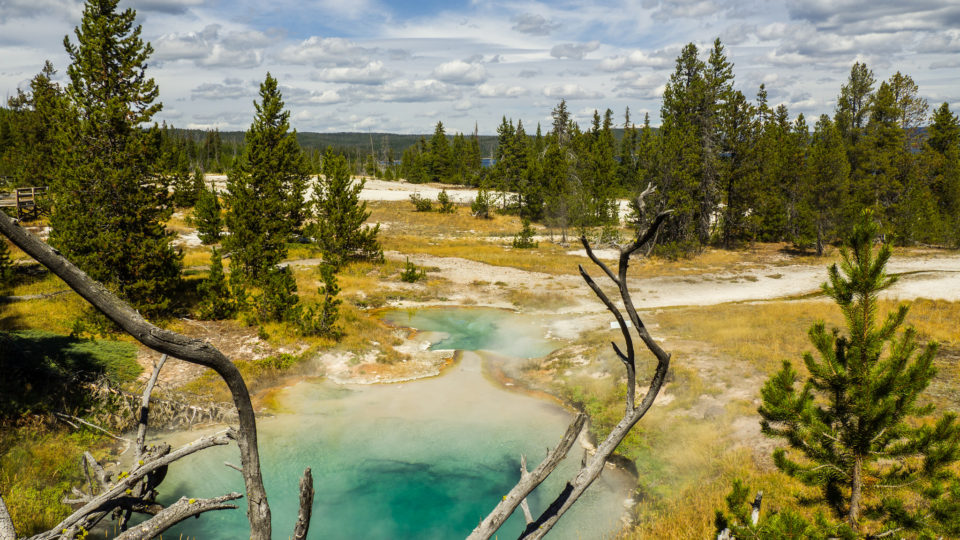
January 25, 2019 By EarthWise Leave a Comment

Yellowstone National Park was the first national park in the US and according to some sources, the first in the world.  It is the home of charismatic megafauna and stunning geysers that attract over four million visitors a year.  It is the only place in the United States where bison and wolves can be seen in great numbers.  And it is changing.

Over the next few decades of climate change, Yellowstone will quite likely see increased fire, less forest, expanding grasslands, shallower, warmer waterways, and more invasive plants.  All these things will alter how and how many animals move through the landscape.   Ecosystems are always changing, but climate change is transforming habitats so quickly that many plants and animals may not be able to make the transition at all.

Since 1948, the average annual temperature in the Greater Yellowstone ecosystem has gone up by 2 degrees Fahrenheit.  On balance, winter is 10 days shorter and less cold.  The Northern Rockies snowpack has fallen to its lowest level in eight centuries. Summers in the park are warmer, drier, and increasingly prone to fire.

Non-nutritious invasive plants like cheatgrass and desert madwort have replaced nutritious native plants.  When plants like these take over, they suck moisture out of the ground early so that bison and elk cannot be sustained throughout the summer.

The behavior of elk and other animals is already changing, with many staying outside the park to nibble lawns and alfalfa fields.  In turn, wolves go where the elk go.   Forests and waterways are changing as well.

The rapid changes going on at Yellowstone mean that the park that our children and grandchildren will visit in the future is likely to be a very different one from the Yellowstone we remember.

**********

Web Links

In Yellowstone National Park, warming has brought rapid changes.

Photo, posted September 7, 2016, courtesy of Mike Yang via Flickr.  

Earth Wise is a production of WAMC Northeast Public Radio.

Primary Sidebar

Recent Episodes

  • An uninsurable future
  • Clean energy and jobs
  • Insect declines in remote regions
  • Fossil fuel producing nations ignoring climate goals
  • Trouble for clownfishes

WAMC Northeast Public Radio

WAMC/Northeast Public Radio is a regional public radio network serving parts of seven northeastern states (more...)

Copyright © 2026 ·