• Skip to primary navigation
  • Skip to main content
  • Skip to primary sidebar

Earth Wise

A look at our changing environment.

  • Home
  • About Earth Wise
  • Where to Listen
  • All Articles
  • Show Search
Hide Search
You are here: Home / Archives for interim

interim

The bloated carbon footprint of LNG

November 15, 2024 By EarthWise Leave a Comment

According to the U.S. Department of Energy, the United States is the world’s largest producer of natural gas.  In fact, natural gas supplies approximately one third of the United States’ primary energy consumption, most of which is used to heat buildings and to generate electricity.  While most natural gas is delivered in its gaseous form in this country, the demand for natural gas in international markets has given rise to the use of natural gas in a liquified form. 

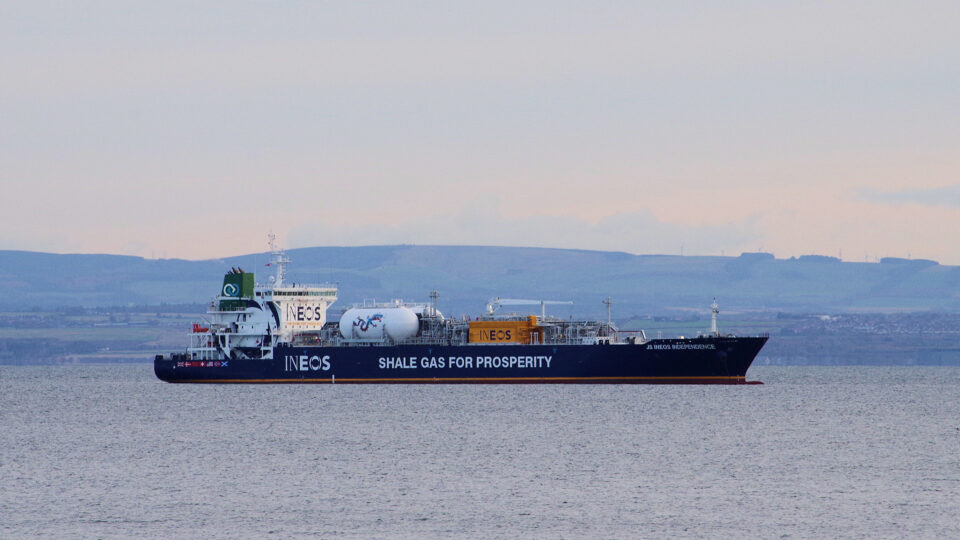
Liquified natural gas (LNG) is natural gas that has been cooled to a liquid state, at about -260° Fahrenheit, for easier storage and transportation.  The volume of natural gas in its liquid state is about 600 times smaller than its volume in its gaseous state, which makes it possible to transport it to places pipelines do not reach.

Liquified natural gas is considered a clean fossil fuel because burning it produces less emissions than coal and oil.  However, according to a new study by researchers from Cornell University, LNG imported from the U.S. actually has a larger climate impact than any other fossil fuel—including coal – once processing and shipping are taken into account. 

The study, which was recently published in the journal Energy Science & Engineering, found that LNG leaves a greenhouse gas footprint that is 33% worse than coal when emissions are analyzed over a 20-year time frame. 

According to the research team, there is no need for LNG as an interim energy source because the transition requires massive infrastructure expenditures.  Instead, those financial resources should be used to “build a fossil-fuel-free future as rapidly as possible.”

**********

Web Links

Liquefied natural gas carbon footprint is worse than coal

Photo, posted November 17, 2017, courtesy of Colin Baird via Flickr.

Earth Wise is a production of WAMC Northeast Public Radio

The Colorado River crisis

May 15, 2024 By EarthWise Leave a Comment

The Colorado River serves nearly 40 million people in seven U.S. states and Mexico.  It provides water for 5 million acres of farmland.  Increasing demand from growing populations, damming, diversion, and drought have been draining the Colorado at alarming rates.  This critical resource supports countless economies, communities, and ecologies stretching from the Rocky Mountains to the Gulf of California.  The Colorado River essentially has made the cities of Las Vegas, Los Angeles, Denver, and Phoenix possible.

How the water of the Colorado is distributed is determined by an agreement that is over 100 years old:  the Colorado River Compact.  It was made at a time when people thought there was more water than really was there.  And at the time, no one thought that the seven states would need to use the water they were allocated down to the last drop.

There have been various measures over the years to conserve water from the Colorado River, including the Colorado River Interim Guidelines in 2007.  Those guidelines will expire in 2026 and negotiations are beginning to take place among the many stakeholders scrambling for water rights.  Apart from the seven U.S. states and Mexico, there are 30 tribal nations involved.  Collaborative governance is complicated when it crosses multiple jurisdictions with their own laws and legal precedents.  The goal is to put in place a new agreement to protect the Colorado River.

Rapidly-growing populations in major cities, a 20-year megadrought, and historically low water levels in America’s two largest reservoirs have put enormous pressure on the Colorado River.  Creating a plan to protect the lifeblood of the American West is essential.

**********

Web Links

Addressing the Colorado River crisis

Photo, posted June 18, 2022, courtesy of Jeff Hollett via Flickr.

Earth Wise is a production of WAMC Northeast Public Radio

Primary Sidebar

Recent Episodes

  • An uninsurable future
  • Clean energy and jobs
  • Insect declines in remote regions
  • Fossil fuel producing nations ignoring climate goals
  • Trouble for clownfishes

WAMC Northeast Public Radio

WAMC/Northeast Public Radio is a regional public radio network serving parts of seven northeastern states (more...)

Copyright © 2026 ·