• Skip to primary navigation
  • Skip to main content
  • Skip to primary sidebar

Earth Wise

A look at our changing environment.

  • Home
  • About Earth Wise
  • Where to Listen
  • All Articles
  • Show Search
Hide Search
You are here: Home / Archives for insect abundance

insect abundance

Insect declines in remote regions

October 29, 2025 By EarthWise Leave a Comment

Insects are declining even in remote regions

Insects play a crucial role in sustaining life on Earth.  They pollinate plants, recycle nutrients, and form the foundation of food webs in both terrestrial and freshwater ecosystems. Without insects, the rich biodiversity that supports our planet would not exist.

However, global studies show a widespread decline in both insect abundance and diversity. According to a new study by researchers from the University of North Carolina at Chapel Hill, insect populations are also shrinking in relatively undisturbed landscapes. 

The research team quantified the abundance of flying insects during 15 seasons between 2004 and 2024 in a subalpine meadow in Colorado, an area with decades of weather data and very little direct human activity. The results revealed an average annual decline of 6.6% in insect abundance, amounting to a 72% drop over the 20-year period. The study also linked these losses to rising summer temperatures.

Most previous studies of insect loss have focused on areas heavily influenced by agriculture or urbanization. This new research fills an important gap by showing that steep declines can occur even in pristine areas where human disturbance is minimal, suggesting that the changing climate may be a key driver. 

Mountain regions, which are home to many unique and locally-adapted species, are especially vulnerable. If these declines continue, the rich biodiversity found in high-altitude habitats could be in jeopardy.

The findings highlight the urgent need for broader and longer-term monitoring of insect populations and reinforce the importance of addressing climate change.  Even remote regions are not out of its reach.   

**********

Web Links

Long-term decline in montane insects under warming summers

Insects are disappearing from the last places we thought were safe

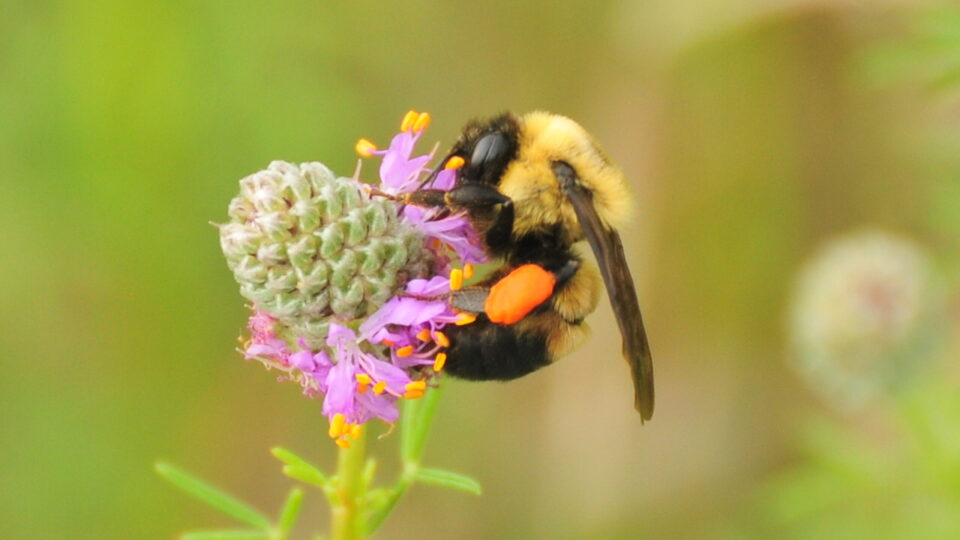
Photo, posted July 16, 2019, courtesy of Tom Koerner / USFWS via Flickr.

Earth Wise is a production of WAMC Northeast Public Radio
Pollinator-friendly solar power

February 16, 2024 By EarthWise Leave a Comment

Global insect biodiversity has been in decline as a result of habitat loss, pesticide use, and climate change.  Restoring insect habitat is a way to reverse that trend.  Expanded use of solar energy is a critical part of mitigating climate change.  In order to meet the grid decarbonization goals the U.S. has set, approximately 10 million acres of land will be needed for large-scale solar development.  According to a new study by Argonne National Laboratory and the National Renewable Energy Laboratory, these two efforts are complementary.

Disturbed lands such as former agricultural fields are ideal locations to install solar panels.  These lands can also be established as excellent habitats for insect pollinators and other wildlife that provide important ecosystem services.

A five-year study looked at two solar sites in southern Minnesota that were built on retired agricultural land.  The sites were planted with native grasses and flowering plants in early 2018.  Over a five-year period, the researchers conducted hundreds of observational surveys for flowering vegetation and insect communities, evaluating changes in plant and insect abundance and diversity.

The team observed increases for all habitat and biodiversity metrics.  The total insect abundance tripled, while native bees showed a 20-fold increase in numbers. 

The research highlights the relatively rapid insect community responses to habitat restoration at solar energy sites.  If properly sited, the solar sites can offset the losses of natural areas created by solar farms and actually make prime farmland more productive through the pollination services provided by habitat-friendly solar energy.

**********

Web Links

Insect populations flourish in the restored habitats of solar energy facilities

Photo, posted February 28, 2014, courtesy of Tom Koerner/USFWS via Flickr.

Earth Wise is a production of WAMC Northeast Public Radio

Primary Sidebar

Recent Episodes

  • An uninsurable future
  • Clean energy and jobs
  • Insect declines in remote regions
  • Fossil fuel producing nations ignoring climate goals
  • Trouble for clownfishes

WAMC Northeast Public Radio

WAMC/Northeast Public Radio is a regional public radio network serving parts of seven northeastern states (more...)

Copyright © 2025 ·