• Skip to primary navigation
  • Skip to main content
  • Skip to primary sidebar

Earth Wise

A look at our changing environment.

  • Home
  • About Earth Wise
  • Where to Listen
  • All Articles
  • Show Search
Hide Search
You are here: Home / Archives for ingest

ingest

Bees and urban wildflowers

May 23, 2025 By EarthWise Leave a Comment

Urban wildflowers may threaten bees in some cases

Post-industrial cities often have large numbers of vacant lots, left behind as people have moved out of the area.  Local residents are often tempted to plant wildflowers to make these deserted spaces more attractive. 

Wildflowers are an important food source for bees.  Pollinators like bees play a vital role in food production and attracting them with food sources is a good idea.  However, a study by researchers at the University of Cambridge in the UK found that there are dangers associated with planting wildflowers in some urban settings.

Wildflowers growing on land previously used for buildings and factories can accumulate lead, arsenic, and other metal contaminants from the soil.  These metals have previously been shown to damage the health of pollinators that ingest the metals in the nectar as they feed.

The Cambridge study was carried out in Cleveland, Ohio, which has nearly 34,000 vacant lots.  Cleveland was previously the site of iron and steel production, oil refining, and car manufacturing.  The researchers tested the nectar from flowering plants growing on disused land throughout the city.  Lead was the contaminant found in the highest concentrations.  They also found that different species of plants accumulate different amounts and different types of metals.

The goal of the study was not to discourage the planting of wildflowers in towns and cities.  It is to highlight the importance of growing the right species of wildflowers as well as to encourage testing soils for metals before planting wildflowers and to clean up pollution.  Wildflowers are important for pollinators, but it is also important that they don’t contribute to the decline of pollinator populations that has already been happening for a number of reasons.

**********

Web Links

Growing wildflowers on disused urban land can damage bee health

Photo, posted August 26, 2012, courtesy of RJP via Flickr.

Earth Wise is a production of WAMC Northeast Public Radio
Humans And Microplastics | Earth Wise

April 13, 2022 By EarthWise Leave a Comment

Microplastics impact on human health

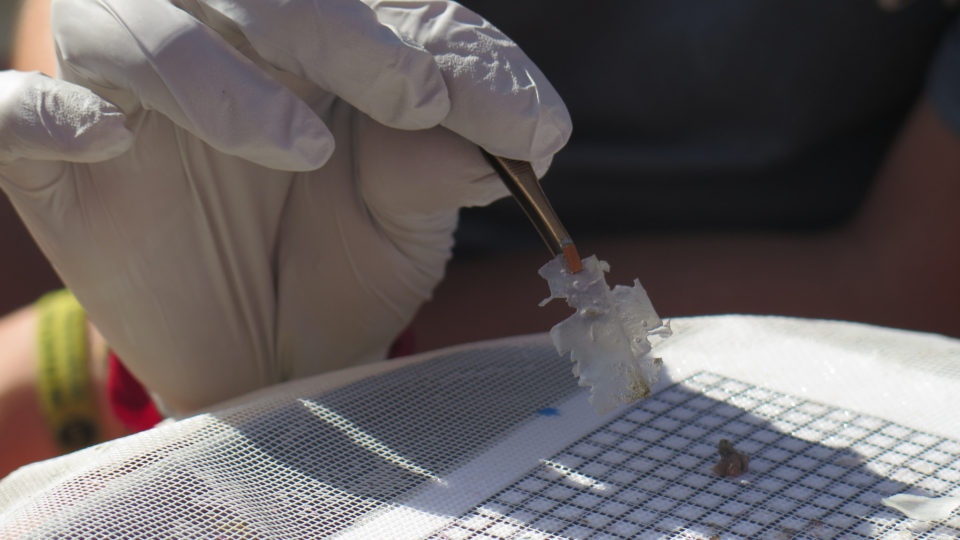
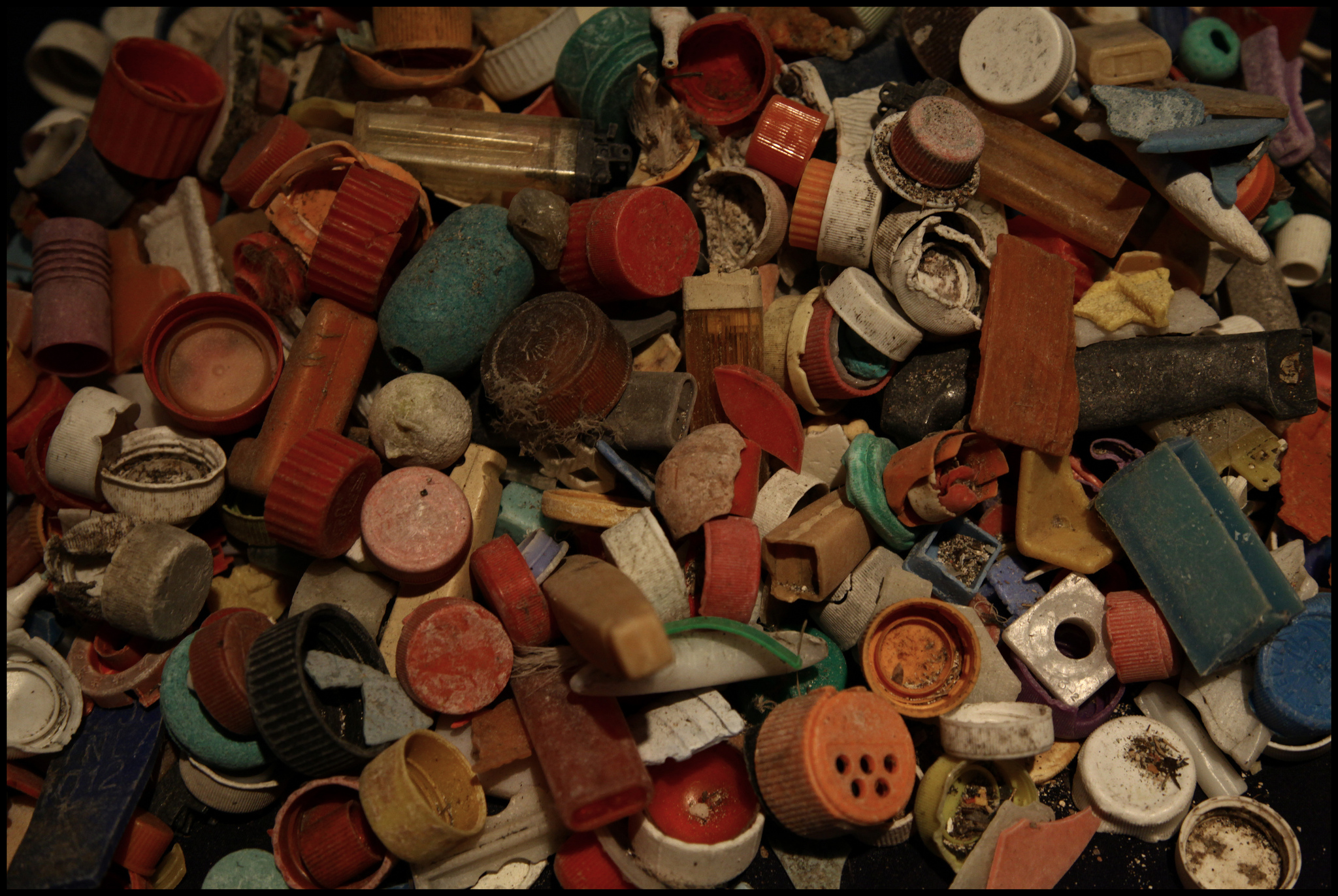
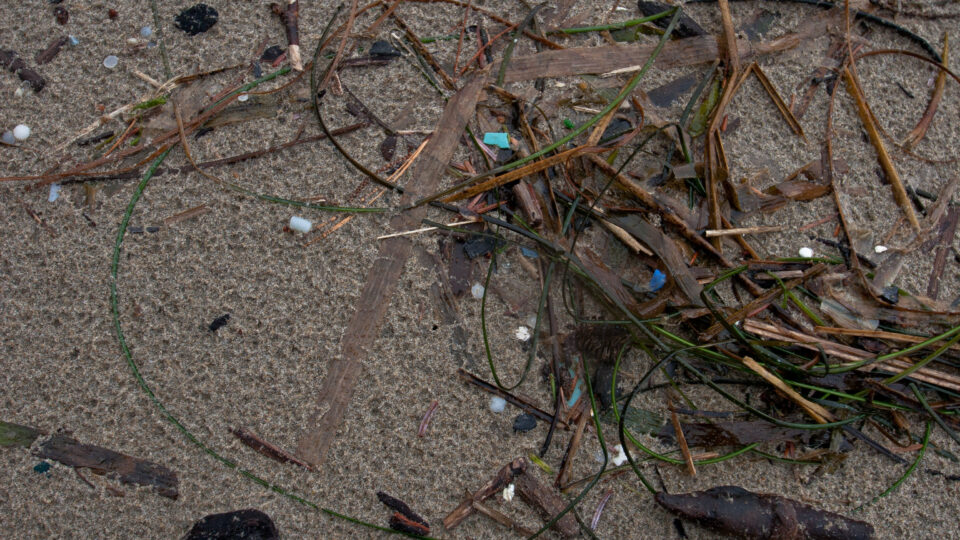
While plastic comes in all different shapes and sizes, those that are less than five millimeters in length are called microplastics.  Primary sources of microplastics include microfibers from clothing, microbeads, and plastic pellets (known as nurdles).  Secondary sources of microplastics come from larger plastic debris, like bottles and bags, that degrades into smaller bits over time. 

Microplastic pollution can be found everywhere on earth, from the top of the tallest mountains to the bottom of the deepest oceans.  Microplastics are in the food we eat, the water we drink, and the air we breathe. 

According to research recently published in the journal Exposure & Health, humans ingest an average of five grams of plastic particles per week. This is roughly equivalent to the weight of a credit card.  The plastic particles are trafficked in via food, such as seafood and salt in particular, as well as water.  In fact, those who rely on plastic bottled water for their drinking needs ingest an additional 1,700 plastic particles each week.   

Microplastics have also been detected in human blood for the first time.  According to new research recently published in the journal Environment International, scientists detected microplastics in nearly 80% of the people they tested. 

Half of the blood samples contained PET plastic, which is commonly used for drinking bottles.  One third of the blood samples contained polystyrene plastic, which is often used for food packaging.  One quarter of the blood samples contained polyethylene plastic, which is used to make things like shopping bags and detergent bottles. 

With plastic production predicted to double by 2040, more research is urgently needed to understand how ingesting microplastics affects human health.

**********

Web Links

Health risk due to micro- and nanoplastics in food

Microplastics found in human blood for first time

Discovery and quantification of plastic particle pollution in human blood

Photo, posted November 3, 2012, courtesy of Laura via Flickr.

Earth Wise is a production of WAMC Northeast Public Radio.

Balloons And Seabirds

March 19, 2019 By EarthWise Leave a Comment

It’s no secret that there is a ton of plastic in the ocean – millions of tons, in fact.  Scientists estimate that there is more 165 million tons of plastics swirling about in our oceans today, with an additional 8.8 million tons flowing in every year.  As the oceans swell with plastic debris, many marine species wind up ingesting the stuff – often with dire consequences.

All this plastic trash winds up affecting more than just aquatic species, too.  According to researchers from the University of Tasmania, a seabird that ingested a single piece of plastic has a 20% chance of mortality.  This statistic jumps to 50% if the seabird consumes nine pieces of plastic. 

The study, which was recently published in the journal Scientific Reports, also found that while hard plastics account for the majority of plastic debris ingested, it’s far less likely to prove fatal than soft plastics, such as balloons. 

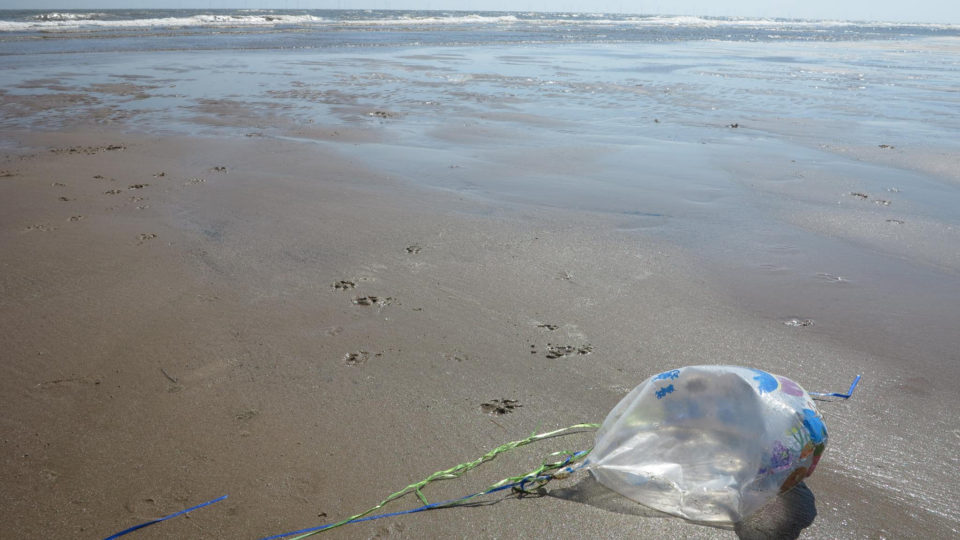
In fact, the researchers found that balloons or balloon fragments were the number one marine debris risk of mortality for seabirds, killing almost one in five of the seabirds that ingested them. 

The leading cause of death among the seabirds studied was blockage of the gastrointestinal tract.  While soft plastics only accounted for 5% of the ingested plastics, they were responsible for more than 40% of seabird mortality.  But the researchers make clear that hard plastics were still responsible for more than half of the study’s seabird deaths.  

If we want to reduce the number of marine species dying from plastic ingestion, we need to reduce the volume of plastic going into the ocean and do what we can to remove what’s already there. 

**********

Web Links

Balloons the number 1 marine debris risk of mortality for seabirds

Photo, posted July 24, 2014, courtesy of Flickr.

Earth Wise is a production of WAMC Northeast Public Radio.

Microplastics And Humans

November 27, 2018 By EarthWise Leave a Comment

https://earthwiseradio.org/wp-content/uploads/2018/10/EW-11-27-18-Microplastics-and-Humans.mp3

Microplastics are everywhere.  The tiny plastic particles pose a massive environmental challenge.  Microplastics are polluting oceans at an alarming rate.  Much of the oceanic microplastics result from the breakdown of plastic litter.  Another source of microplastics pollution is microbeads.  Microbeads, which are commonly added to cleansing and exfoliating personal care products, pollute the environment when they get flushed down the drain.   

[Read more…] about Microplastics And Humans

Why Do Animals Eat Ocean Plastic?

November 21, 2016 By WAMC WEB

https://earthwiseradio.org/wp-content/uploads/2016/11/EW-11-21-16-Ocean-Plastic-and-Animals.mp3

It’s no secret that there is a lot of plastic debris in our oceans.  In fact, scientists estimate that there is more than 165 million tons of plastic trash swirling about in our oceans today, with an additional 8.8 million tons flowing in every year.  And as the oceans swell with plastic litter, hundreds of marine species are ingesting the stuff – often with dire consequences.

[Read more…] about Why Do Animals Eat Ocean Plastic?

Primary Sidebar

Recent Episodes

  • An uninsurable future
  • Clean energy and jobs
  • Insect declines in remote regions
  • Fossil fuel producing nations ignoring climate goals
  • Trouble for clownfishes

WAMC Northeast Public Radio

WAMC/Northeast Public Radio is a regional public radio network serving parts of seven northeastern states (more...)

Copyright © 2026 ·