• Skip to primary navigation
  • Skip to main content
  • Skip to primary sidebar

Earth Wise

A look at our changing environment.

  • Home
  • About Earth Wise
  • Where to Listen
  • All Articles
  • Show Search
Hide Search
You are here: Home / Archives for incubation

incubation

Rainfall and sea turtles

October 4, 2024 By EarthWise Leave a Comment

Rainfall has a major impact on sea turtles

There are seven species of sea turtles that inhabit the world’s oceans. Six of the seven sea turtle species – all of them except the flatback – are present in U.S. waters, and are listed as threatened or endangered under the Endangered Species Act. 

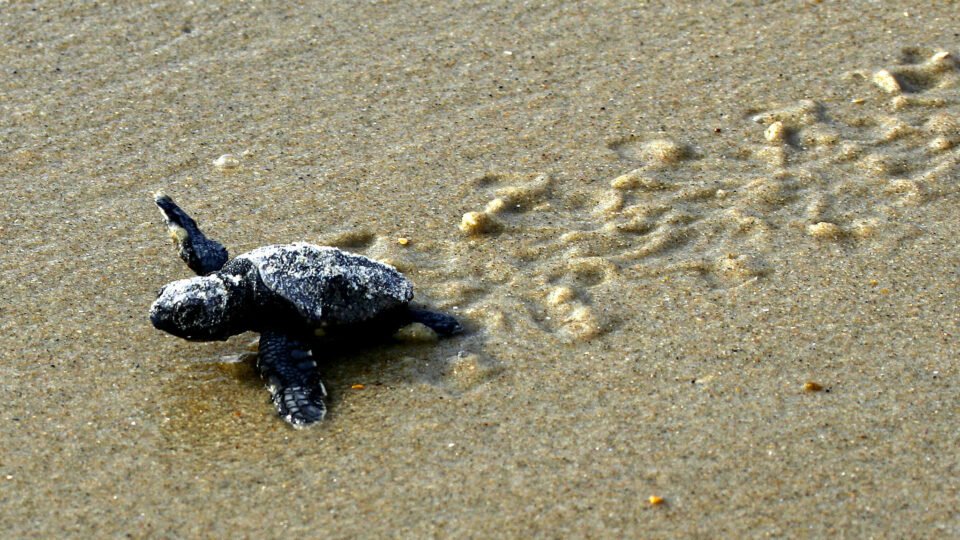
Sea turtles, which have been around for more than 100 million years, spend the majority of their lives in the ocean, but they do periodically come ashore to nest.  Female sea turtles lay their eggs in the sand and then return to the ocean.  Survival odds for sea turtle hatchlings are quite bleak.  In fact, only one out of every 1,000 makes it to adulthood. 

Research shows that both air and sand temperatures are critical for sea turtle hatchling development.  Cooler temperatures produce larger, heavier hatchlings with more males.  Hatchling size matters because larger hatchlings, which can move faster, are more likely to survive because they spend less time on risky beaches.  But rising temperatures might shorten incubation periods, and erratic rainfall can disrupt growth, potentially affecting survival.

A new international study by researchers from Florida Atlantic University and the University of Tübingen in Germany found that fluctuating rainfall patterns have a greater impact than changes in air temperature on sea turtle hatchling development. 

The results, which were recently published in the journal BMC Ecology and Evolution, reveal that the impact of rainfall varies between species.  As climate change shifts rainfall patterns, the impact on sea turtle nesting sites suggests that global conservation strategies for some species – like loggerhead and green sea turtles – likely need to be updated.

**********

Web Links

Rain or Shine? How Rainfall Impacts Size of Sea Turtle Hatchlings

Sea Turtle

Photo, posted August 27, 2015, courtesy of USFWS/Orsulak via Flickr.

Earth Wise is a production of WAMC Northeast Public Radio
Global Warming And Sea Turtle Births | Earth Wise

January 11, 2021 By EarthWise Leave a Comment

Climate change poses a serious threat to sea turtles

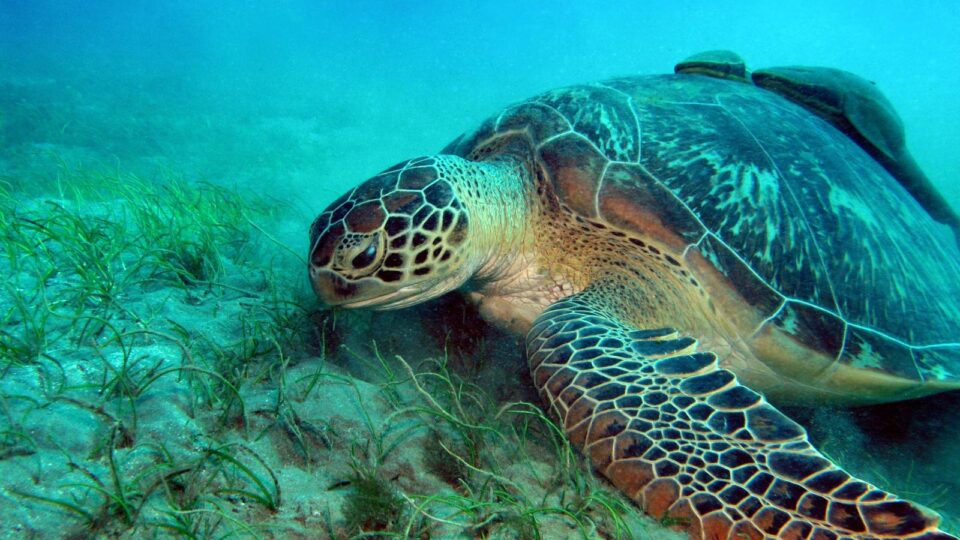
Climate change is a serious threat to species whose sex is determined by temperature.  Among these are sea turtles.  Whether marine turtles are born male or female turns out to depend on the temperature of their nest during incubation.

Sea turtle nests need to be around 84.6 degrees Fahrenheit on average to produce a 50:50 sex ratio for embryos developing in eggs.  If temperatures are higher, embryos predominantly become female.  There is a transitional range of temperatures over which both males and females are produced.  Below that range, only males are produced; above that range, only females are produced.

According to recent research published in the journal Conservation Science and Practice, sand temperatures along the Red Sea exceeded the 84.6-degree threshold in all but one of the sites studied.  Some sites measured nearly 96 degrees.  The Red Sea region is home to five of the world’s seven species of sea turtles, including endangered green turtles and critically endangered hawksbill turtles.

Skewing the sex distribution of a species is a serious threat to the future survival of the population.

The Red Sea findings are similar to observations around the world.  In Florida, sea turtle hatchlings were born 100% female in seven out the past 10 years, and in the other three years, males only made up 10-20% of the brood.  In Australia’s Raine Island, the largest green turtle nesting ground in the Pacific Ocean, the ratio of female to male turtle hatchlings in 2018 was 116:1.

Marine turtles have been around since the late Triassic period and have adapted to previous climate shifts.  But the rapid pace of human-driven climate change is threatening the future survival of these creatures.

**********

Web Links

Rising Temperatures Driving a Shift to All-Female Sea Turtle Populations

Photo, posted in October, 2005, courtesy of Frank_am_Main via Flickr.

Earth Wise is a production of WAMC Northeast Public Radio.

Primary Sidebar

Recent Episodes

  • An uninsurable future
  • Clean energy and jobs
  • Insect declines in remote regions
  • Fossil fuel producing nations ignoring climate goals
  • Trouble for clownfishes

WAMC Northeast Public Radio

WAMC/Northeast Public Radio is a regional public radio network serving parts of seven northeastern states (more...)

Copyright © 2026 ·