• Skip to primary navigation
  • Skip to main content
  • Skip to primary sidebar

Earth Wise

A look at our changing environment.

  • Home
  • About Earth Wise
  • Where to Listen
  • All Articles
  • Show Search
Hide Search
You are here: Home / Archives for ice-free

ice-free

An ice-free Arctic

April 9, 2024 By EarthWise Leave a Comment

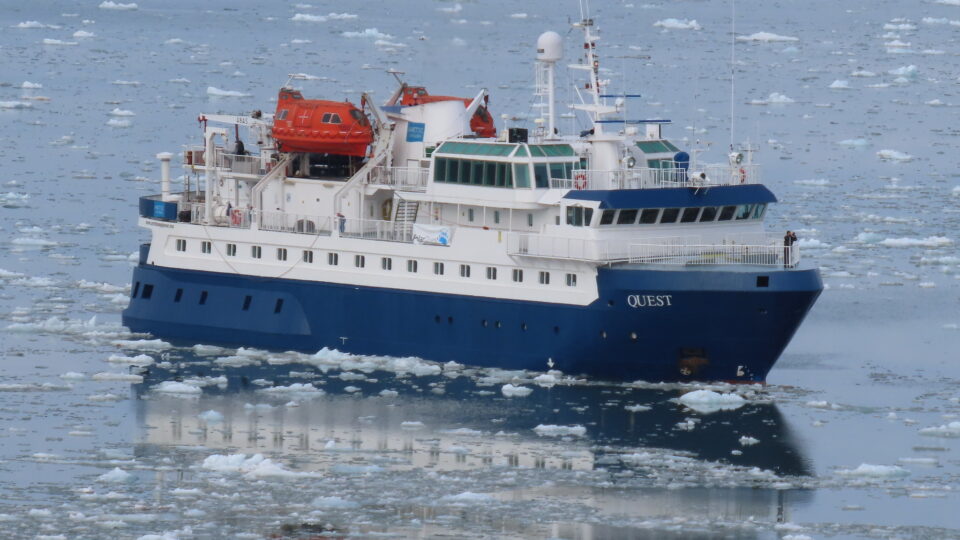
A future ice-free Arctic is very likely as the climate warms

According to a new study by Colorado University, Boulder, the Arctic could see summer days with practically no sea ice as soon as sometime in the next few years.  Earlier predictions for when the first ice-free day in the Arctic could occur were sometime well into the 2030s.

By mid-century, the Arctic is likely to see an entire month without floating sea ice.  This would likely be in September, when ice coverage is at its minimum.  By the end of the century, the ice-free season could last for many months during the year.

Technically, an ice-free Arctic does not mean zero ice in the water.  The working definition is less than 386,000 square miles of ice, which represents less than 20% of what the minimum ice coverage was in the 1980s. In recent years, the coverage has been about 1.25 million square miles.

Sea ice coverage is a big deal because many Arctic animals rely on sea ice for survival, including seals and polar bears.  With warmer ocean water, invasive fish species could move into the Arctic Ocean, upsetting local ecosystems.  Sea ice loss also is a risk for coastal communities because the ice buffers the impact of ocean waves on the coastal land.  As the ice retreats, ocean waves would get bigger, eroding the coasts.

At this point, an ice-free Arctic is basically inevitable, but its annual duration will depend on society’s efforts to reduce carbon emissions.  Lengthy periods of minimal sea ice would transform the Arctic into a completely different environment with global effects that are mostly highly undesirable.  However, Arctic sea ice is resilient and could return fairly quickly if the atmosphere cools down.

**********

Web Links

The Arctic could become ‘ice-free’ within a decade

Photo, posted July 9, 2022, courtesy of Reiner Ehlers via Flickr.

Earth Wise is a production of WAMC Northeast Public Radio
Polar bears and the changing climate

March 7, 2024 By EarthWise Leave a Comment

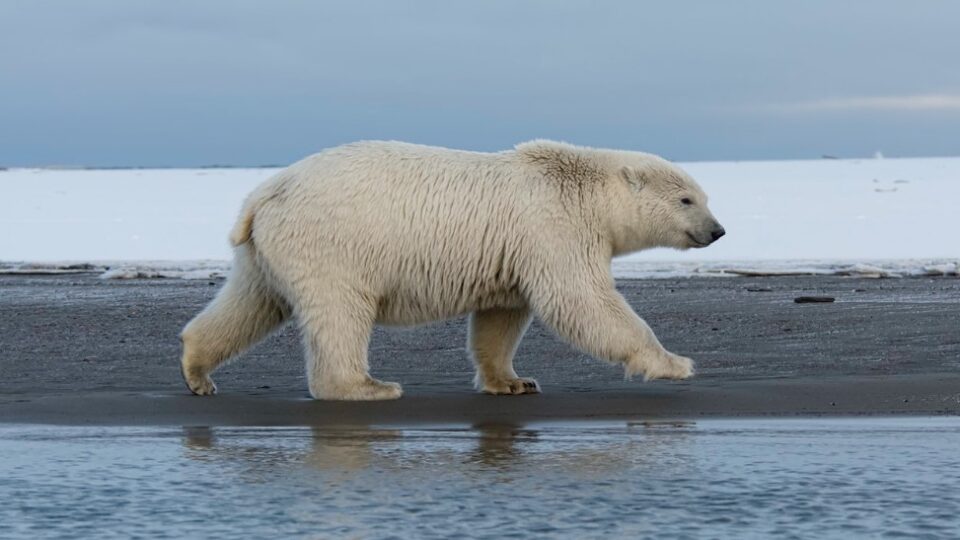
Polar bears struggling as the climate warms

The changing climate poses a major threat to polar bear survival.  Polar bears, whose native range lies largely within the Arctic Circle, depend on sea ice for nearly all of their lifecycle functions.  Rising global temperatures are causing this sea ice to disappear.

With less sea ice, polar bears are forced to stay longer on land.  However, according to a new study led by researchers from Washington State University, more time stranded on land leads to a greater risk of polar bear starvation. 

During three summer weeks in Manitoba, Canada, 20 polar bears observed by researchers tried different strategies to maintain energy reserves.  But the research team found that nearly all of them lost weight – losing about 2.2 pounds per day on average.     

Some scientists have speculated that polar bears might be able to adapt to the changing climate by acting more like grizzly bears by either resting or eating terrestrial food.  But the polar bears tried versions of both strategies – with little success.

Polar bears can weigh nearly twice as much as grizzly bears.  To maintain this size, polar bears rely on the energy-rich fat of seals, which they best catch on ice.

In the study, which was recently published in Nature Communications, the researchers found that some polar bears laid down to conserve energy, while others searched on land for food.  But neither the activity nor the lack thereof paid off.  In fact, only one bear out of the 20 gained weight after stumbling across a dead marine mammal on land.

Polar bears across the Arctic are at risk of starvation as the ice-free period continues to grow.

**********

Web Links

Polar bears unlikely to adapt to longer summers

Photo, posted November 16, 2015, courtesy of Anita Ritenour via Flickr.

Earth Wise is a production of WAMC Northeast Public Radio
Trouble For Emperor Penguins | Earth Wise

September 18, 2023 By EarthWise Leave a Comment

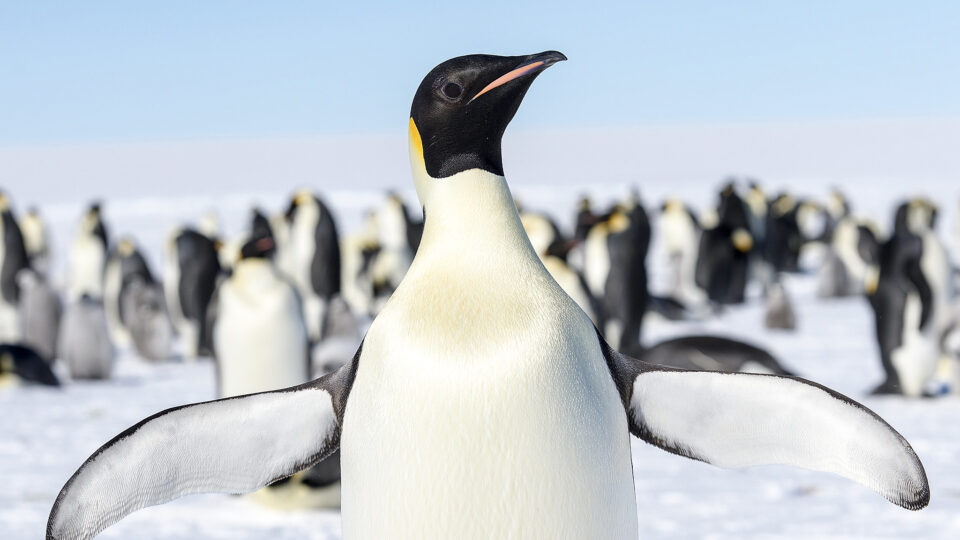
Emperor penguins are in trouble

Emperor penguins are the tallest and heaviest of all living penguin species.  The loss of sea ice in Antarctica last year has led to unprecedented breeding failure in some emperor penguin colonies.

In a study published by the British Antarctic Survey, researchers found that no chicks survived from four of the five known emperor penguin colonies in the central and eastern Bellinhausen Sea.   Satellite images showed the loss of sea ice at breeding sites, well before chicks would have developed waterproof feathers.

Emperor penguins are dependent on stable sea ice that is firmly attached to the shore from April through the end of the year.  Arctic sea ice reached an all-time low in December 2022 with the most extreme loss seen in the central and eastern Bellinghausen Sea where there was a 100% loss of sea ice late the year.

This year, the sea ice extent in Antarctica is still far below all previous records for this time of year.  As of August, when oceans normally are freezing up, there were still areas that were ice-free.

Emperor penguin populations have not had to contend with large-scale hunting, habitat loss, overfishing, or other human-caused problems in the modern era, but climate change may be their undoing.  They have previously responded to incidents of sea ice loss by moving to more stable sites in the following year.  But this strategy will not be successful if the sea ice habitat is affected across entire regions of Antarctica.

Scientists are predicting that 90% of emperor penguin colonies will be quasi-extinct by the end of the century, assuming current global warming trends continue.

**********

Web Links

Loss of sea ice causes catastrophic breeding failure for emperor penguins

Photo, posted October 7, 2017, courtesy of Christopher Michel via Flickr.

Earth Wise is a production of WAMC Northeast Public Radio

Primary Sidebar

Recent Episodes

  • An uninsurable future
  • Clean energy and jobs
  • Insect declines in remote regions
  • Fossil fuel producing nations ignoring climate goals
  • Trouble for clownfishes

WAMC Northeast Public Radio

WAMC/Northeast Public Radio is a regional public radio network serving parts of seven northeastern states (more...)

Copyright © 2026 ·