• Skip to primary navigation
  • Skip to main content
  • Skip to primary sidebar

Earth Wise

A look at our changing environment.

  • Home
  • About Earth Wise
  • Where to Listen
  • All Articles
  • Show Search
Hide Search
You are here: Home / Archives for hudson valley

hudson valley

Energy storage in New York isn’t easy

September 19, 2025 By EarthWise Leave a Comment

The state of New York has the ambitious goal of having 70% of its electricity come from renewable sources in 2030 and a 100% zero-emission electric grid by 2040.  Meeting these goals is becoming increasingly unlikely as the state faces multiple challenges including local opposition to projects, rising inflation, and the termination of offshore wind projects.

Solar and wind power are key elements of New York’s renewable plans, and both require battery energy storage so that excess energy can be saved when there is plentiful sun and wind so that there will be power available when nature hasn’t cooperated.

There are now over 6,000 battery storage projects in the state, mostly relatively small in magnitude.  Currently, the state has a storage capacity of about 445 megawatts, enough to power roughly 300,000-400,000 homes.  The state has a goal of having 6 gigawatts of storage by 2030, more than a dozen times more than exists today.

Most of New York’s electricity demand is downstate, in and below the Hudson Valley.  Real estate is limited and expensive and there is lots of opposition to big energy projects in the region. 

However, installing the actual battery systems themselves can be one of the easier parts of the process.  Obtaining permits from state and local authorities, buying or leasing land, negotiating with grid operators, completing environmental reviews, overcoming local opposition, and especially, connecting to the electric grid, are all challenging and very time consuming.

Meeting the state’s energy storage goals is not easy.

**********

Web Links

Figuring Out a Battery Storage System to Fit New York’s Wind and Solar Ambitions Has Not Been Easy

Photo courtesy of NineDot Energy.

Earth Wise is a production of WAMC Northeast Public Radio
The Fight Against Day Burners

February 2, 2016 By WAMC WEB

https://earthwiseradio.org/wp-content/uploads/2016/01/EW-02-02-16-Day-Burners.mp3

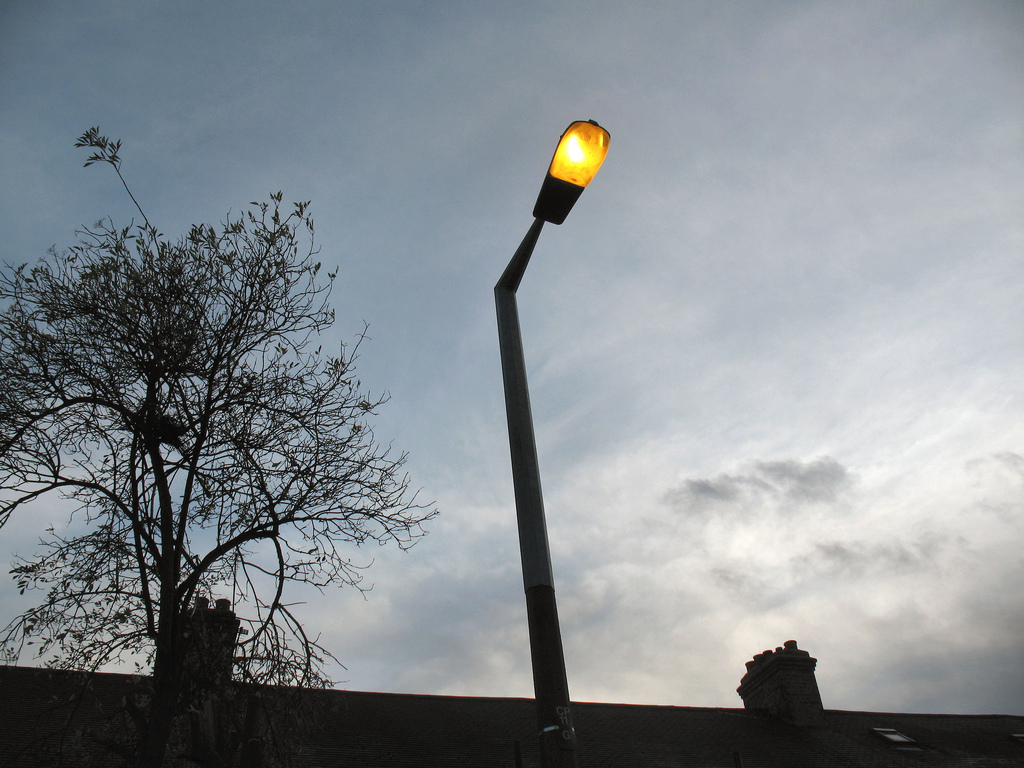
A U.S. Department of Energy webpage states that “about 10% of street lights are brightly lit during daytime and essentially waste electricity due to faulty photosensors.”  Such lights are called “day burners.” While some think the 10% figure is a slight overestimate, the electricity day burners waste is significant nonetheless.

[Read more…] about The Fight Against Day Burners

Feast Before The Famine

December 7, 2015 By WAMC WEB

https://earthwiseradio.org/wp-content/uploads/2015/12/EW-12-07-15-Feast-Before-Famine.mp3

New York’s Hudson Valley is experiencing a “mast year.” Mast refers to the seeds of woody plants that are eaten by wildlife. “Soft mast” has seeds surrounded by fleshy pulp, and includes berries and fruits. “Hard mast” has seeds protected by an outer coat, such as acorns and hickory nuts.

[Read more…] about Feast Before The Famine

Acorns And Lyme Disease

November 20, 2015 By WAMC WEB

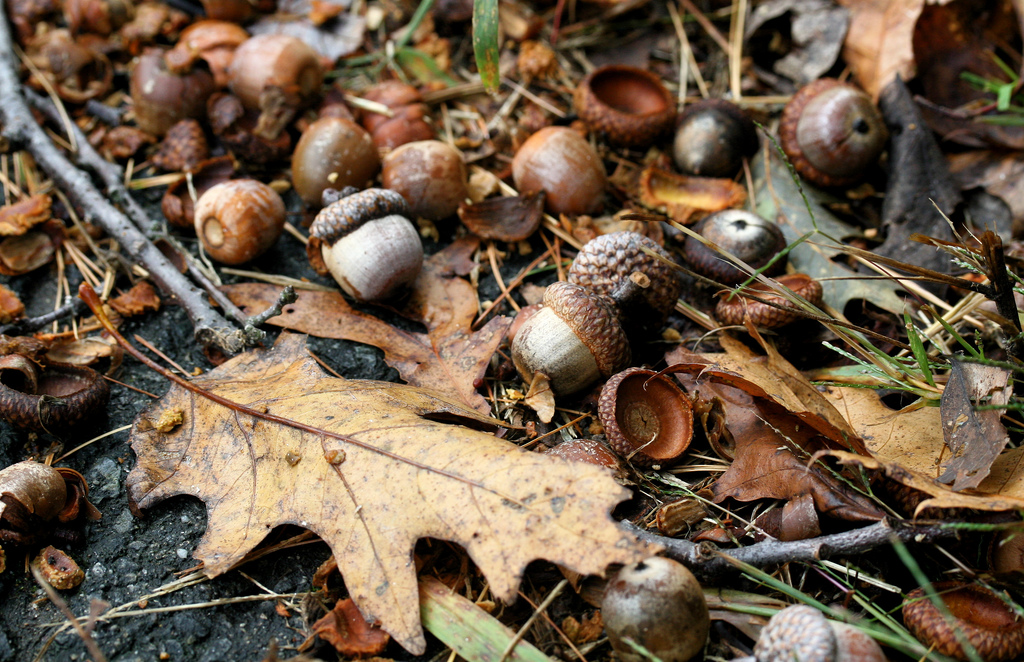
In New York’s Hudson Valley, it’s hard to go outside without stepping on an acorn. Oaks have ‘boom and bust’ acorn production cycles. In lean years, trees produce a handful of nuts. In boom years, acorns seem to rain down from the sky. We are currently experiencing an acorn bumper-crop, or what ecologists call a ‘mast’ year.

In some forests, there can be more than 100 acorns per square meter.  This is welcome news to animals like mice, chipmunks, and squirrels. They can gorge on the bounty and stock their larders. Acorn caches help wildlife avoid predators and survive the lean months of winter. They even give well-fed rodents a jump-start on the breeding season.

For this reason, acorn “mast” years are also harbingers of future Lyme disease risk. In the summer following acorn booms, white-footed mouse numbers explode. In New York’s Hudson Valley, these mice play a major role in infecting blacklegged ticks with the agents that cause Lyme disease, Babesiosis, and Anaplasmosis.

Cary Institute disease ecologist Rick Ostfeld explains.

“The ticks that are emerging as larvae in August  – just as the mice and chipmunks are reaching their population peaks – they have tons of excellent hosts to feed from.  They survive well and they get infected with tick-borne pathogens.  And that means that two years following a good acorn crop we see high abundance of infected ticks, which represents a risk of human exposure to tick borne disease.”

Predictions are based on 20 years of field studies that have confirmed the relationship among acorn mast years, mouse outbreaks, and the prevalence of infected ticks. Mark your calendars – 2017 will likely be a bad year for Lyme disease.

**********


Web Extra

Full interview with Rick Ostfeld, a disease ecologist at the Cary Institute of Ecosystem Studies 

https://earthwiseradio.org/wp-content/uploads/2015/11/Ostfeld_full_web.mp3


Web Links

The acorn connections, with Dr. Rick Ostfeld: ticks, gypsy moths, songbirds and more

Photo, posted August 16, 2012, courtesy of Rabiem22 via Flickr.

EW Extra: Interview With Rick Ostfeld

XXXXXXXXX

Primary Sidebar

Recent Episodes

  • An uninsurable future
  • Clean energy and jobs
  • Insect declines in remote regions
  • Fossil fuel producing nations ignoring climate goals
  • Trouble for clownfishes

WAMC Northeast Public Radio

WAMC/Northeast Public Radio is a regional public radio network serving parts of seven northeastern states (more...)

Copyright © 2026 ·