• Skip to primary navigation
  • Skip to main content
  • Skip to primary sidebar

Earth Wise

A look at our changing environment.

  • Home
  • About Earth Wise
  • Where to Listen
  • All Articles
  • Show Search
Hide Search
You are here: Home / Archives for honey bees

honey bees

Trying to replace neonics

September 18, 2025 By EarthWise Leave a Comment

Neonicotinoids – often called neonics – are a class of insecticides that are among the most widely used in agriculture.  They are neuro-active, meaning that they affect the central nervous system of insects, killing or harming a wide variety of both target and non-target insects.  They are often applied to seeds before planting as a prophylactic treatment for potential insect pests.

Neonics have been linked to adverse ecological effects, especially the harm they cause to bees and other pollinators.  The Birds and Bees Protection Act in New York State, signed into law in 2023, is phasing out the sale, distribution, or purchase of certain neonic-treated corn, soybean, and wheat seeds over the next few years. 

A multi-year, multi-state study by researchers at Cornell University investigated the ability of a variety of non-neonicotinoid insecticides to protect large-seed vegetable crops including snap beans, dry beans, and sweet corn.  It is a difficult problem because insecticides kill insects, and it isn’t easy to find ones that kill pests but have minimal effects on pollinators and other beneficial insects.

The research found safer alternative insecticides with comparable effectiveness for treating snap bean seeds but not for dry beans. Much more successful was the result that five alternative seed treatments proved as effective as standard neonics for sweet corn while having far fewer negative environmental impacts.  Sweet corn is a major crop in New York state, so these results could be of great importance in improving the long-term sustainability of pest management programs.

**********

Web Links

New pesticides provide challenging alternatives to neonicotinoids

Photo, posted May 31, 2021, courtesy of Papa Piper via Flickr.

Earth Wise is a production of WAMC Northeast Public Radio
Why are bees making less honey?

February 8, 2024 By EarthWise Leave a Comment

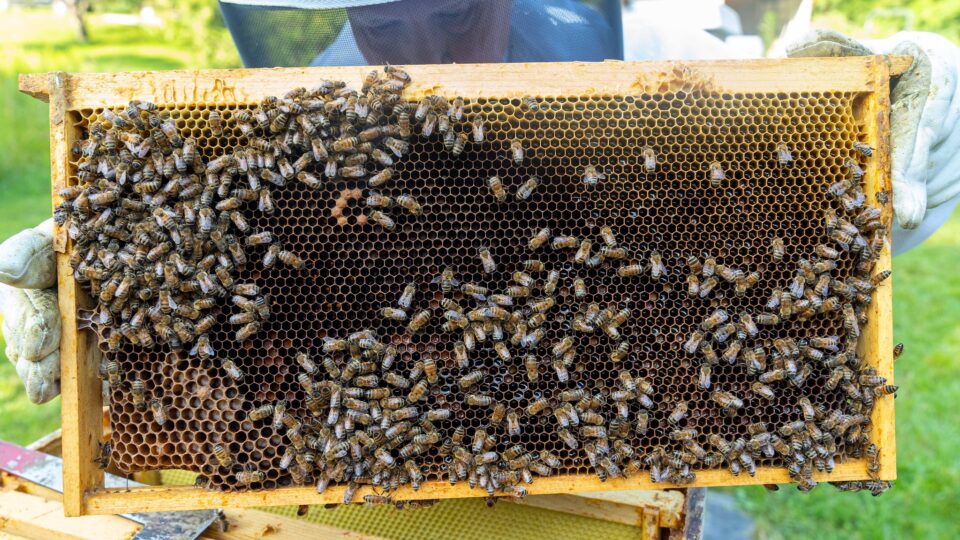
Honey bees are making less honey in the United States

Scientists have been sounding the alarm on the global struggle of pollinators for a long time.  According to the United Nations, nearly 35% of the invertebrate pollinator species, such as bees and butterflies, are facing extinction. And since 75% of the world’s food crops depend on pollination to some extent, the decline of pollinators poses a major threat to global food security.

Honey bees are among the struggling pollinators.  Honey bee colonies in the United States have experienced annual population declines since 2006.  But in addition to there being fewer bees, the bees that remain are also making less honey.  In fact, honey yields in the United States have been declining since the 1990s. 

A new study by researchers from Penn State University has solved some of the mystery.  Using five decades of data across the United States, the research team analyzed the factors that could be affecting the number of flowers growing in different regions, which, in turn, affects the amount of honey produced by bees. 

In the study, which was recently published in the journal Environmental Research, the scientists found that climate conditions and soil productivity were two of the biggest factors in estimating honey yields.  States in both warm and cool regions produced higher honey yields when they had productive soils.  These two factors set a baseline production level of honey, while herbicide use, weather, and land use changes influenced how much honey was produced in a given year. 

The study’s findings  provide valuable insights that should help beekeepers, growers, and land managers better support honey bees.

**********

Web Links

Why are bees making less honey? Study reveals clues in five decades of data

Photo, posted August 30, 2021, courtesy of Brandon O’Connor / NRCS via Flickr.

Earth Wise is a production of WAMC Northeast Public Radio

Pesticides and beeswax

December 25, 2023 By EarthWise Leave a Comment

Pesticides linger in beeswax

Honey bee colonies in the United States have experienced annual population declines since 2006.  Commercial beekeepers have reported honey bee colony loss rates averaging 30% each winter, which is startling when compared to historical loss rates of just 10-15%.  According to the USDA, there are many factors contributing to this decline, including parasites, pests, diseases, pesticides, and a phenomenon called Colony Collapse Disorder, in which worker bees abandon a hive and leave behind the queen.

According to a new study by researchers from Cornell University, beeswax in managed honey bee hives contains a variety of pesticide, herbicide, and fungicide residues.  Because bees reuse wax over years, these harmful chemicals can accumulate inside hives, exposing current and future generations of bees to long-term toxicity. 

The study, which was recently published in the Journal of Veterinary Diagnostic Investigation, adds that humans may also be exposed to these pesticides through contaminated honey, pollen, and beeswax (which is used in certain soaps, lotions, and cosmetics).  However, the amounts in these products are unlikely to pose a major threat to human health.

Pesticides get into the beeswax when bees feast on the nectar and pollen of plants that have been treated with the chemicals. According to the researchers, understanding which contaminants are impacting domestic honey bee populations could help better protect them and other pollinators, including birds, bats, wild bees, and other insects.

**********

Web Links

Pesticides detected in beeswax

Photo, posted November 22, 2008, courtesy of Andrew Rivett via Flickr.

Earth Wise is a production of WAMC Northeast Public Radio
Examining The Decline Of Honey Bees | Earth Wise

December 28, 2022 By EarthWise Leave a Comment

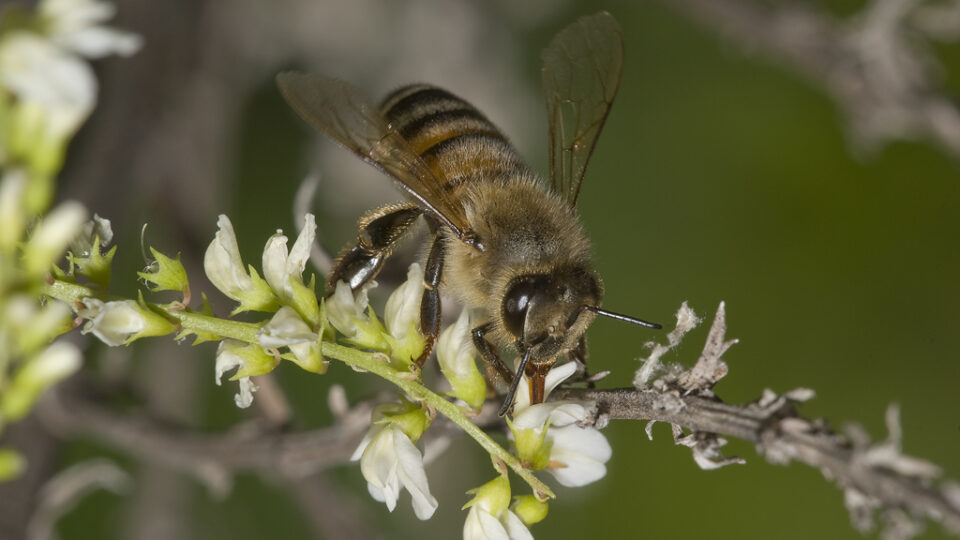
For many years, scientists have been sounding the alarm on the global struggle of pollinators.  Many of the invertebrate pollinator species, such as bees and butterflies, are facing extinction. And since 75% of the world’s food crops depend on pollination to some extent, the decline of pollinators poses a major threat to global food security.

Honey bees are among the struggling pollinators.  Over the past 14 years, bee colonies have been disappearing at an alarming rate in what is known as the “colony collapse disorder.” 

In an effort to understand why, scientists have often focused their research on environmental stressors, such as parasites, pesticides, and disease.  But according to new research by entomologists from the University of Maryland, honey bee life spans are simply 50% shorter today than they were 50 years ago.  In the study, which was recently published in the journal Scientific Reports, the researchers found that honey bees kept in a controlled, laboratory environment lived half as long as honey bees did in the 1970s.  This is the first study to show that genetics – as opposed to environmental stressors – may be influencing the broader trends seen in the beekeeping industry.

When the researchers modeled the effect of their findings on a beekeeping operation, they found that the resulting loss rates were about 33%.  This is similar to the average overwinter and annual loss rates reported by beekeepers during the past 14 years.

The next step is for researchers to compare trends in honey bee life spans across the U.S. and in other countries to see if there are differences in bee longevity. 

**********

Web Links

Honey Bee Lifespans are 50% Shorter Today Than They Were 50 Years Ago

Helping Agriculture’s Helpful Honey Bees

Photo, posted June 23, 2007, courtesy of Susan E. Ellis via Flickr.

Earth Wise is a production of WAMC Northeast Public Radio

Primary Sidebar

Recent Episodes

  • An uninsurable future
  • Clean energy and jobs
  • Insect declines in remote regions
  • Fossil fuel producing nations ignoring climate goals
  • Trouble for clownfishes

WAMC Northeast Public Radio

WAMC/Northeast Public Radio is a regional public radio network serving parts of seven northeastern states (more...)

Copyright © 2026 ·