• Skip to primary navigation
  • Skip to main content
  • Skip to primary sidebar

Earth Wise

A look at our changing environment.

  • Home
  • About Earth Wise
  • Where to Listen
  • All Articles
  • Show Search
Hide Search
You are here: Home / Archives for hives

hives

Pesticides and beeswax

December 25, 2023 By EarthWise Leave a Comment

Pesticides linger in beeswax

Honey bee colonies in the United States have experienced annual population declines since 2006.  Commercial beekeepers have reported honey bee colony loss rates averaging 30% each winter, which is startling when compared to historical loss rates of just 10-15%.  According to the USDA, there are many factors contributing to this decline, including parasites, pests, diseases, pesticides, and a phenomenon called Colony Collapse Disorder, in which worker bees abandon a hive and leave behind the queen.

According to a new study by researchers from Cornell University, beeswax in managed honey bee hives contains a variety of pesticide, herbicide, and fungicide residues.  Because bees reuse wax over years, these harmful chemicals can accumulate inside hives, exposing current and future generations of bees to long-term toxicity. 

The study, which was recently published in the Journal of Veterinary Diagnostic Investigation, adds that humans may also be exposed to these pesticides through contaminated honey, pollen, and beeswax (which is used in certain soaps, lotions, and cosmetics).  However, the amounts in these products are unlikely to pose a major threat to human health.

Pesticides get into the beeswax when bees feast on the nectar and pollen of plants that have been treated with the chemicals. According to the researchers, understanding which contaminants are impacting domestic honey bee populations could help better protect them and other pollinators, including birds, bats, wild bees, and other insects.

**********

Web Links

Pesticides detected in beeswax

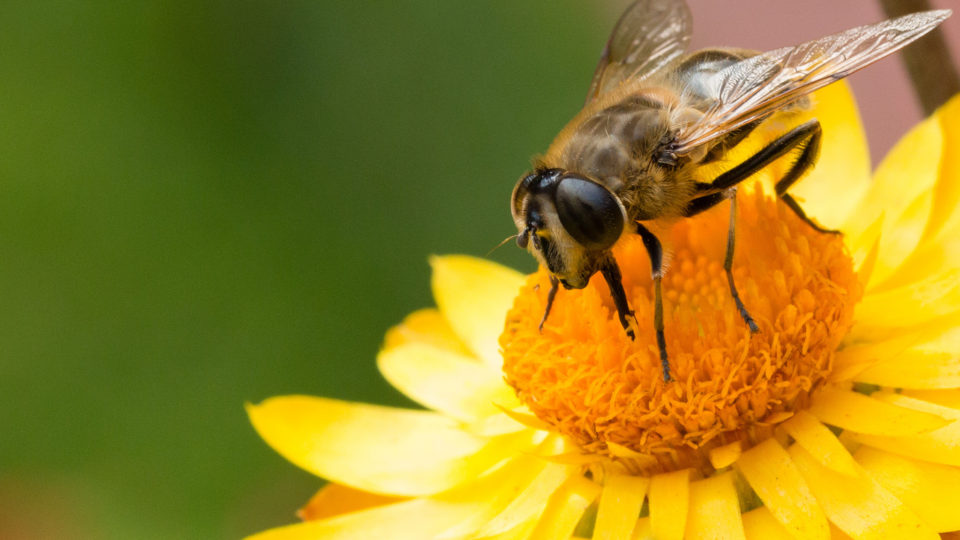
Photo, posted November 22, 2008, courtesy of Andrew Rivett via Flickr.

Earth Wise is a production of WAMC Northeast Public Radio
A Vaccine For Bees | Earth Wise

February 27, 2023 By EarthWise Leave a Comment

USDA grants conditional license for a honey bee vaccine

The US has seen annual reductions in honey bee colonies since 2006.  According to the USDA, there are many factors that have contributed to the decline.  These include parasites, pests, insecticides, disease, and a phenomenon called Colony Collapse Disorder in which worker bees abandon a hive and leave behind the queen.

One of major threats to bee colonies is American foulbrood disease, which is a bacterial condition that attacks bee larvae.  It is highly contagious and has no cure.  Until now, the only treatment method required burning the colony of infected bees along with the hives and equipment and treating nearby bee colonies with antibiotics.

Recently, the USDA has approved a conditional license for the world’s first vaccine for honey bees.  The vaccine contains inactive bacteria of the type that causes American foulbrood disease.

The vaccine is incorporated into the royal jelly fed by worker bees to the queen bee.  The queen ingests the feed and keeps some of vaccine in her ovaries.  This gives bee larvae immunity to the disease as they hatch and thereby reduces death from the illness.

According to the California State Beekeepers Association, the new vaccine could be a major breakthrough for protecting bees.  Preventing the infection in hives could avoid costly, destructive measures and allow the beekeepers to focus on other important elements of keeping bees healthy.

Bees as pollinators play a critical role in many ecosystems.  For humankind, pollinators such as bees, birds, and bats are responsible for about a third of the world’s crop production.

**********

Web Links

US approves world’s first vaccine for declining honey bees

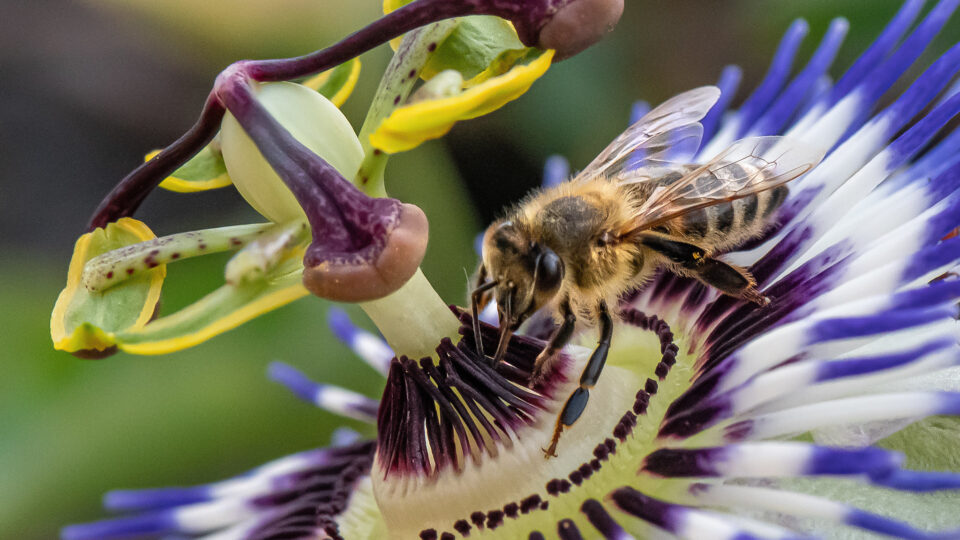
Photo, posted June 6, 2022, courtesy of Bernd Thaller via Flickr.

Earth Wise is a production of WAMC Northeast Public Radio
Zika Insecticides And Honeybees

November 30, 2018 By EarthWise Leave a Comment

https://earthwiseradio.org/wp-content/uploads/2018/11/EW-11-30-18-Zika-Insecticides-and-Honeybees.mp3

Honeybees, which play a critical role in agriculture by pollinating crops, are not native to the United States.  Beekeepers manage most honeybee colonies and they move the bees around to support farmers.        

[Read more…] about Zika Insecticides And Honeybees

Accidentally Saving The Bees

March 7, 2018 By EarthWise Leave a Comment

https://earthwiseradio.org/wp-content/uploads/2018/02/EW-03-07-18-Accidentally-Saving-the-Bees.mp3

There is no shortage of dangers to honey bees, but a parasitic mite known as Verroa destructor is considered to be the greatest threat because it transmits virus diseases which lead to colony death.

[Read more…] about Accidentally Saving The Bees

Primary Sidebar

Recent Episodes

  • An uninsurable future
  • Clean energy and jobs
  • Insect declines in remote regions
  • Fossil fuel producing nations ignoring climate goals
  • Trouble for clownfishes

WAMC Northeast Public Radio

WAMC/Northeast Public Radio is a regional public radio network serving parts of seven northeastern states (more...)

Copyright © 2026 ·