• Skip to primary navigation
  • Skip to main content
  • Skip to primary sidebar

Earth Wise

A look at our changing environment.

  • Home
  • About Earth Wise
  • Where to Listen
  • All Articles
  • Show Search
Hide Search
You are here: Home / Archives for high demand

high demand

Advantages of vertical farming

June 19, 2025 By EarthWise Leave a Comment

Vertical farming has been increasingly used for leafy greens like lettuce and kale, as well as for herbs and a few fruits like strawberries and tomatoes.  A recent study by the Technical University of Munich has investigated the use of vertical farming for a much broader range of foods.  The study looked at the positive effects of vertical farming on both yield and environmental impact.

Traditional agriculture can reach its limits as a result of extreme weather events or in areas of high population density and resultant high demand.   With vertical farming, food can be grown close to consumers independent of weather and can make very efficient use of space.

The Proteins4Singapore study investigated the potential of a 10-layer vertical farming system cultivating crops, algae, mushrooms, insects, fish, and cultivated meat.  Many of these things are not currently part of many people’s diets.  But these foods can increase the protein yield per cultivation area nearly three hundredfold for crops and 6,000-fold for mushrooms and insects. 

Mushrooms and insects are examples of foods that require little light and cultivating them reduces energy consumption and, therefore, associated costs.

The biggest challenges for controlled environment agriculture – which is what vertical farming is – are the high energy demands for cultivation and the social acceptance.  Some of the foods that are especially well-suited to vertical farming – such as algae and insects – are not generally accepted by many consumers.  Controlled environment agriculture can revolutionize food production, but it will take a combination of technological advances, policy initiatives, and public engagement.

**********

Web Links

Vertical Farming to increase yields and reduce environmental impact

Photo, posted October 21, 2022, courtesy of Fred Miller / University of Arkansas System Division of Agriculture via Flickr.

Earth Wise is a production of WAMC Northeast Public Radio
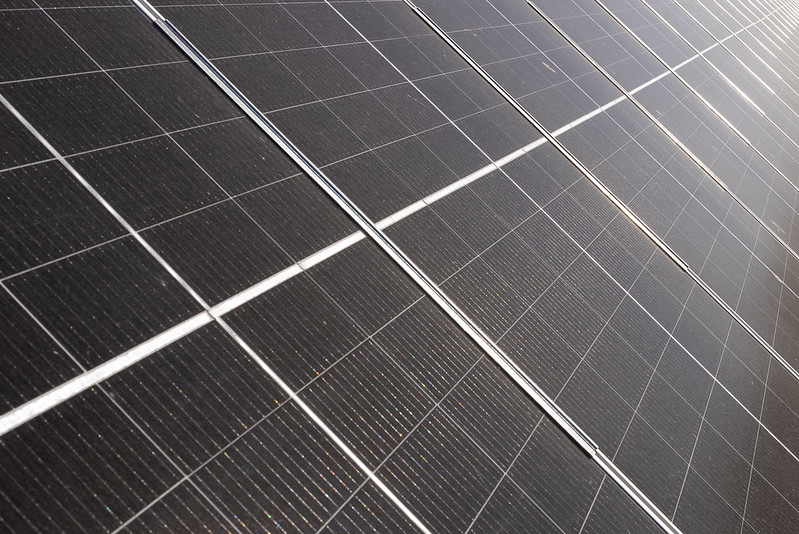
A solar peaker plant

January 1, 2025 By EarthWise Leave a Comment

Developing a solar power peaker plant

Peaker plants are power plants that the grid makes use of during times of particularly high electricity demand.  The power they supply is typically high in cost and usually high in greenhouse gas emissions.  When operating the electricity grid, power sources are generally called upon in order of marginal cost.  Only when demand is very high do grid operators make use of the highest-cost assets that tend to be fossil-fueled power plants that can start and ramp up quickly. 

For years, there has been the idea that solar-powered peaker plants could eventually replace the polluting fossil-fueled ones.  Recently, the renewable energy developer, owner, and operator Arevon Energy began commercial operations of the Vikings Solar-plus-Storage Project in Imperial County, California.  It is the first utility-scale solar peaker plant in the United States.

The plant utilizes a 157-megawatt solar array combined with 150 MW and 600 MWh of battery energy storage.  It can shift low-cost daytime solar energy to higher-cost peak demand periods.  The result is a lowered cost of electricity for nearly one million customers of San Diego Community Power.

The project contradicts the often-held notion that renewable energy is inherently unreliable.  It can provide carbon-free electricity at specific times of critical need.  Typical hybrid solar + storage plants provide electricity during daylight hours and store only excess generation in their battery systems.  The Vikings project is specifically designed to shift the entirety of its generation from solar hours to the peak demand period.

**********

Web Links

Arevon fires up the first solar + storage peaker plant in the U.S.

Photo, posted October 15, 2024, courtesy of Jay Inslee via Flickr.

Earth Wise is a production of WAMC Northeast Public Radio

Primary Sidebar

Recent Episodes

  • An uninsurable future
  • Clean energy and jobs
  • Insect declines in remote regions
  • Fossil fuel producing nations ignoring climate goals
  • Trouble for clownfishes

WAMC Northeast Public Radio

WAMC/Northeast Public Radio is a regional public radio network serving parts of seven northeastern states (more...)

Copyright © 2026 ·