• Skip to primary navigation
  • Skip to main content
  • Skip to primary sidebar

Earth Wise

A look at our changing environment.

  • Home
  • About Earth Wise
  • Where to Listen
  • All Articles
  • Show Search
Hide Search
You are here: Home / Archives for high-altitude

high-altitude

Climate-smart coffee

August 30, 2024 By EarthWise Leave a Comment

Growing climate-smart coffee

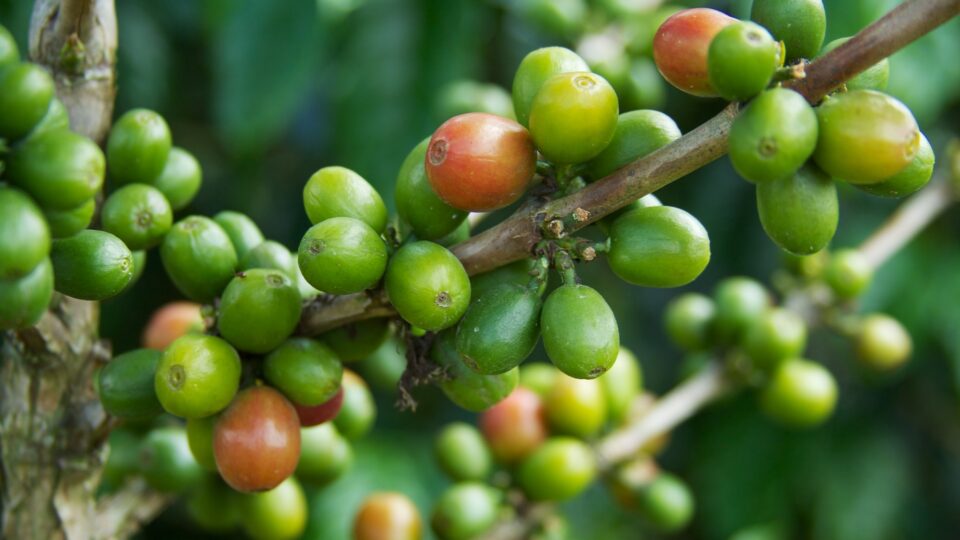
Do you crave that morning cup of coffee?  You’re not alone, and not by a long shot.  In fact, more than 2.2 billion cups of coffee are consumed globally every day. 

The existing coffee market is dominated by two species: Coffea arabica and Coffea canephora (the latter commonly called robusta).  Historically, coffee drinkers have preferred Arabica beans for their specific flavor and aroma. 

But climate change is threatening many crops around the world, and maybe none more so than coffee.  In fact, an alarming 50% of suitable coffee-growing land is projected to be lost by 2050.  As a result, scientists see two alternatives to supplement Arabica: either adapt coffee farming practices to new environments, or focus on coffee species that are more resilient.

According to a new study led by researchers from the University of Florida, Robusta coffee might be a good candidate to augment Arabica.   The researchers evaluated Robusta and Arabica for multiple traits in three high-altitude locations in Brazil over five years.

The study, which was recently published in the journal Crop Science, found that Robusta is highly adaptable and grows in high-altitude regions, which means it combines good production and flavor scores.  According to the researchers, Robusta can combine the following three elements for coffee cultivars: Sustainability (produce more with fewer inputs), quality (good flavor to meet consumer demand), and plasticity (capacity to adapt to new production systems).

Following these favorable findings with Robusta in Brazil, the scientists will test whether the species can grow in Florida.

**********

Web Links

Robust and smart: Inference on phenotypic plasticity of Coffea canephora reveals adaptation to alternative environments

UF scientists study how to bring you ‘climate-smart coffee’

Photo, posted May 23, 2013, courtesy of McKay Savage via Flickr.

Earth Wise is a production of WAMC Northeast Public Radio
Polar Bears and Tires | Earth Wise

January 12, 2023 By EarthWise Leave a Comment

Researchers turn to polar bear paws to find better traction

There is lots of interest in traction.  People want to find better ways to move across wet and frozen surfaces safely.   This applies to both the shoes on our feet and the tires on our cars. 

Researchers at the University of Akron along with colleagues at Syracuse University and at Bridgestone, the tire company, have been studying how many arctic animals can walk and run across the ice without slipping and falling.  Their research focused on the paws of polar bears.

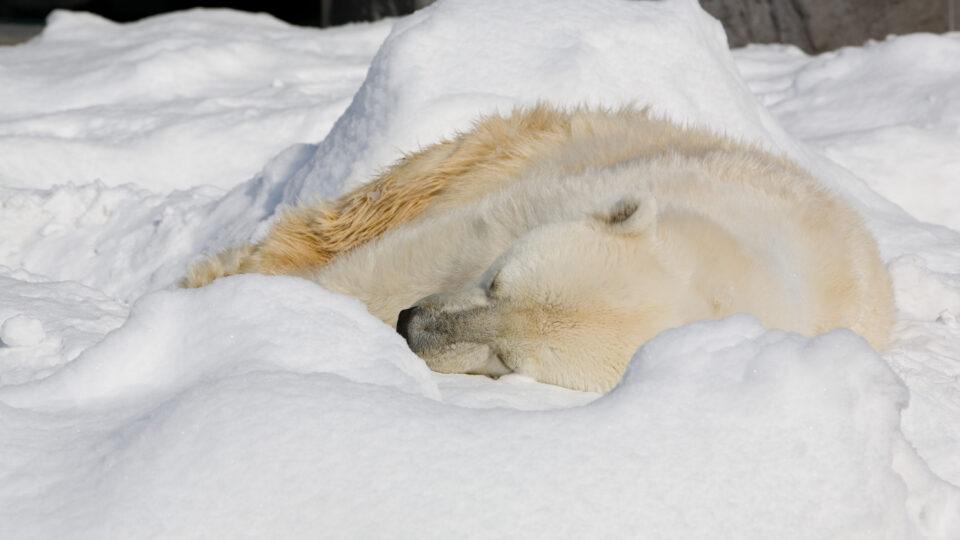
Previous studies discovered that polar bears have papillae – little bumps on the pads of their feet – that provide improved traction on snow.  The new research also looked at the paws of other species of bear – brown bears and black bears – and found that these others also have papillae on their paw pads, but that those of polar bears are as much as 50% taller.  These taller bumps give the pads a 30-50% increase in frictional shear stress.

The research may lead to various applications. For example, snow tires typically have deeper treads, but the polar bear study may lead to some new designs that would improve traction.  People who do high-altitude climbing are interested in the research as are companies that deliver goods in bad weather.  Anyone who has to be out and about in bad weather would like to get a better grip.

There are various other animals with traction-improving adaptations that are probably worth studying.  These include dogs, wolves, foxes, and mountain goats.  The same researchers at Akron have also studied other animals with unique abilities to deal with challenging surfaces including geckos, spiders, and mussels.  The natural world is filled with examples of creatures who can easily function in environments that we humans find very challenging.

**********

Web Links

UA researchers’ focus on tire traction leads to investigation of polar bear paws

Photo, posted March 2, 2008, courtesy of Sam Weng via Flickr.

Earth Wise is a production of WAMC Northeast Public Radio.

Primary Sidebar

Recent Episodes

  • An uninsurable future
  • Clean energy and jobs
  • Insect declines in remote regions
  • Fossil fuel producing nations ignoring climate goals
  • Trouble for clownfishes

WAMC Northeast Public Radio

WAMC/Northeast Public Radio is a regional public radio network serving parts of seven northeastern states (more...)

Copyright © 2025 ·