• Skip to primary navigation
  • Skip to main content
  • Skip to primary sidebar

Earth Wise

A look at our changing environment.

  • Home
  • About Earth Wise
  • Where to Listen
  • All Articles
  • Show Search
Hide Search
You are here: Home / Archives for health risks

health risks

Celebrity chefs and forever chemicals

October 22, 2025 By EarthWise Leave a Comment

Celebrity chefs push back against banning PFAS from cookware

Per- and Polyfluoroalkyl Substances – better known as PFAS – are a type of human-made chemicals that are found in a wide range of consumer and industrial products.  They don’t break down in the environment or in the human body, so they are often called forever chemicals.  They can contaminate drinking water sources and can get into the food supply.  PFAS chemicals have been linked to low birth weight, birth defects and developmental delays in infants, and an increased risk of some prostate, kidney, and testicular cancers.  PFAS can be found in the blood of almost every person in the United States.

PFAS chemicals are used in some food packaging, dental floss, and nonstick cookware.  Some states have taken action against the use of the chemicals.  Minnesota has a law that prohibits PFAS in cookware and 10 other types of products.  Several other states including New York, Colorado, Connecticut, Maryland, and Maine have passed laws banning specific uses of PFAS.

California has passed a bill that would phase out the use of PFAS for a range of products including nonstick cookware and celebrity chefs are joining forces to defend the use of the chemicals in pots and pans.  These include Rachael Ray, Marcus Samuelsson, and David Chang.  All of them endorse cookware products.

The chefs say that nonstick cookware using PFAS coatings are safe when used responsibly and that eliminating the use of the coatings would be a serious loss to restaurants and home cooks.  Opponents say that PFAS can end up in food when nonstick cookware overheats, is scratched or otherwise degrades.  In any case, manufacturing products containing PFAS causes significant pollution.

**********

Web Links

California Wants to Ban ‘Forever Chemicals’ in Pans. These Chefs Say Don’t Do It.

Photo, posted January 31, 2018, courtesy of Quiet Hut via Flickr.

Earth Wise is a production of WAMC Northeast Public Radio

Lead pipes in Chicago

September 29, 2025 By EarthWise Leave a Comment

Lead pipes were once widely used in plumbing because of the metal’s low melting point and durability.  However, lead exposure can cause developmental problems, cardiovascular issues, and organ damage.  The federal government banned new lead pipes in 1986, but millions of lead service lines remain in service to this day.

Chicago has the highest number of lead water service lines in the nation.  An estimated 412,000 out of 491,000 service lines are at least partly made of lead or contaminated with it.  Chicago has a plan to replace all its lead service lines, put in place in response to a Biden-era EPA mandate, but the work is not expected to be complete until 2076. 

The lengthy timeline will expose many more children and adults to the risk of toxic drinking water, and rising temperatures from the warming climate may exacerbate the risk by causing more lead to leach off of pipes and into water.  Lead is particularly harmful to children and experts emphasize that there is no safe level of lead exposure.

The biggest problem, of course, is financial.  The $15 billion in national lead service line replacement funds from the bipartisan infrastructure law will expire next year.

In Chicago, majority Black and Latino neighborhoods bear the biggest burden of lead pipes.  Some 90% of these areas have lead service lines.  And lead pipes are also common within homes.  Just replacing the private side of home pipes can cost tens of thousands of dollars, far outside the means of most homeowners.

Chicago’s lead pipes are a serious problem.

**********

Web Links

Chicago Has a Huge Lead Pipe Problem—and We Mapped It

Photo, posted March 19, 2015, courtesy of Conal Gallagher via Flickr.

Earth Wise is a production of WAMC Northeast Public Radio

Waste colonialism

September 24, 2025 By EarthWise 1 Comment

Plastic pollution is a pervasive environmental problem that manifests itself in multiple ways.  Very little plastic is recycled; most of it ends up in landfills or is burned, both solutions having serious shortcomings.  High-income countries – such as many in Europe, the United States, Japan, and Australia – facing increasingly strict regulations in disposing of waste, have long grappled with the problem.

One approach they have often pursued for dealing with plastic waste is to export the waste elsewhere, preferably to countries with weaker waste regulations.  For over 20 years, China was the place to send plastic waste.  In the 1980s-90s, China accepted trash from richer countries to salvage raw materials from it.  This led to serious pollution, health risks, and illegal dumping.  In 2018, China banned the import of plastic waste.

Since then, Western countries have sent their waste to other parts of Asia and Africa. These waste exports are often advertised as contributions to recycling, but mostly, it is just a charade that simply makes the waste someone else’s problem – namely less developed countries, often with inadequate waste management infrastructure. 

This practice of developed nations consuming excessively and exporting their waste to less developed countries is known as waste colonialism.  It is a modern incarnation of historical colonialism, where natural resources and labor were stripped from colonized regions. 

Its inherent injustice aside, the practice does not solve any of the problems created by waste.  It just moves them somewhere else.

**********

Web Links

Waste Colonialism: A Brief History of Dumping Rich Countries’ Trash in the Global South

Photo, posted February 13, 2011, courtesy of Dan DeLuca via Flickr.

Earth Wise is a production of WAMC Northeast Public Radio

Microplastics and birds

March 19, 2025 By EarthWise Leave a Comment

Microplastics are tiny plastic particles, less than 5 millimeters in size, that come from the breakdown of larger plastics, synthetic fibers, microbeads, and tire wear.  Microplastics are found in oceans, rivers, soil, and even the air we breathe. These particles can take hundreds of years to degrade, spreading across ecosystems and accumulating in unexpected places, such as deep-sea sediments and Arctic sea ice.

According to a new study by researchers from the University of Texas at Arlington, microscopic plastic pollutants drifting through the air are lodging in the lungs of birds.  These findings raise  significant concerns about the impact on their respiratory health, but also raise alarms about potential risks to human health.

Birds were chosen for the study because they are found in almost every corner of the world and often share environments with humans. 

In the study, the research team examined 56 different wild birds from 51 distinct species, all sampled from the Tianfu airport in western China.  The researchers found high concentrations of microplastics in bird lungs, with an average of 221 particles per species.  The most common types identified were chlorinated polyethylene, which is used for insulating pipes and wires, and butadiene rubber, which is a synthetic material in tires.

Although there is no established “safe” level of plastic particles in lung tissue, high levels of microplastics have been linked to serious health risks, including heart disease, cancer, respiratory issues, and fertility problems.

The study highlights an urgent need to tackle plastic pollution in the environment because of its far-reaching impact on ecosystems and human health.  

**********

Web Links

Birds breathe in dangerous plastics—and so do we

Photo, posted January 28, 2017, courtesy of Pete Richman via Flickr.

Earth Wise is a production of WAMC Northeast Public Radio
Solar-Powered Desalination

October 4, 2019 By EarthWise Leave a Comment

Turning seawater into drinking water is an energy-intensive process and is therefore pretty expensive.  Worldwide, one third of people don’t have reliable access to safe drinking water and they are the least able to afford expensive ways to get it.   By 2025, half of the world’s population is expected to live in water-stressed areas.

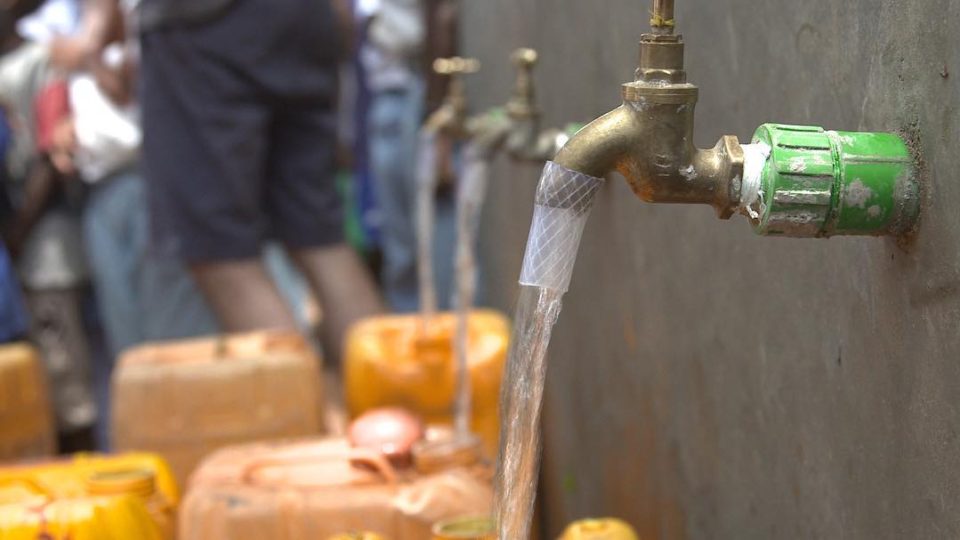
At a newly-constructed facility in Kenya, a nonprofit company called GivePower has built a desalination system that runs on solar power.  The system started operating in the coastal area of Kiunga in July 2018 and can create nearly 20,000 gallons of fresh drinking water each day – enough for 25,000 people.

GivePower started in 2013 as a nonprofit branch of SolarCity, the solar-panel company that ultimately merged with Tesla in 2016.  However, GivePower spun off as a separate enterprise shortly before that.

GivePower mostly focuses on building solar-energy systems to provide electricity across the developing world. 

Desalination technology is not new, but it is notoriously energy-intensive because it requires high-power pumps.  The GivePower system is integrated with a solar microgrid that makes use of Tesla batteries to store energy for when the sun is not shining. 

Local residents pay about a quarter of one cent for every quart of water from the system.  The Kiunga community has faced ongoing drought and before the GivePower system was installed, was forced to drink from salt water wells, which present serious health risks.

The GivePower system cost $500,000 to build and is expected to generate $100,000 a year, to be eventually used to fund similar facilities in other places.

**********

Web Links

A solar-powered system can turn salt water into fresh drinking water for 25,000 people per day. It could help address the world’s looming water crisis.

Photo courtesy of GivePower.

Earth Wise is a production of WAMC Northeast Public Radio.

Our Air Is Killing Us

September 28, 2016 By WAMC WEB

https://earthwiseradio.org/wp-content/uploads/2016/09/EW-09-28-16-Our-Air-Is-Killing-Us.mp3

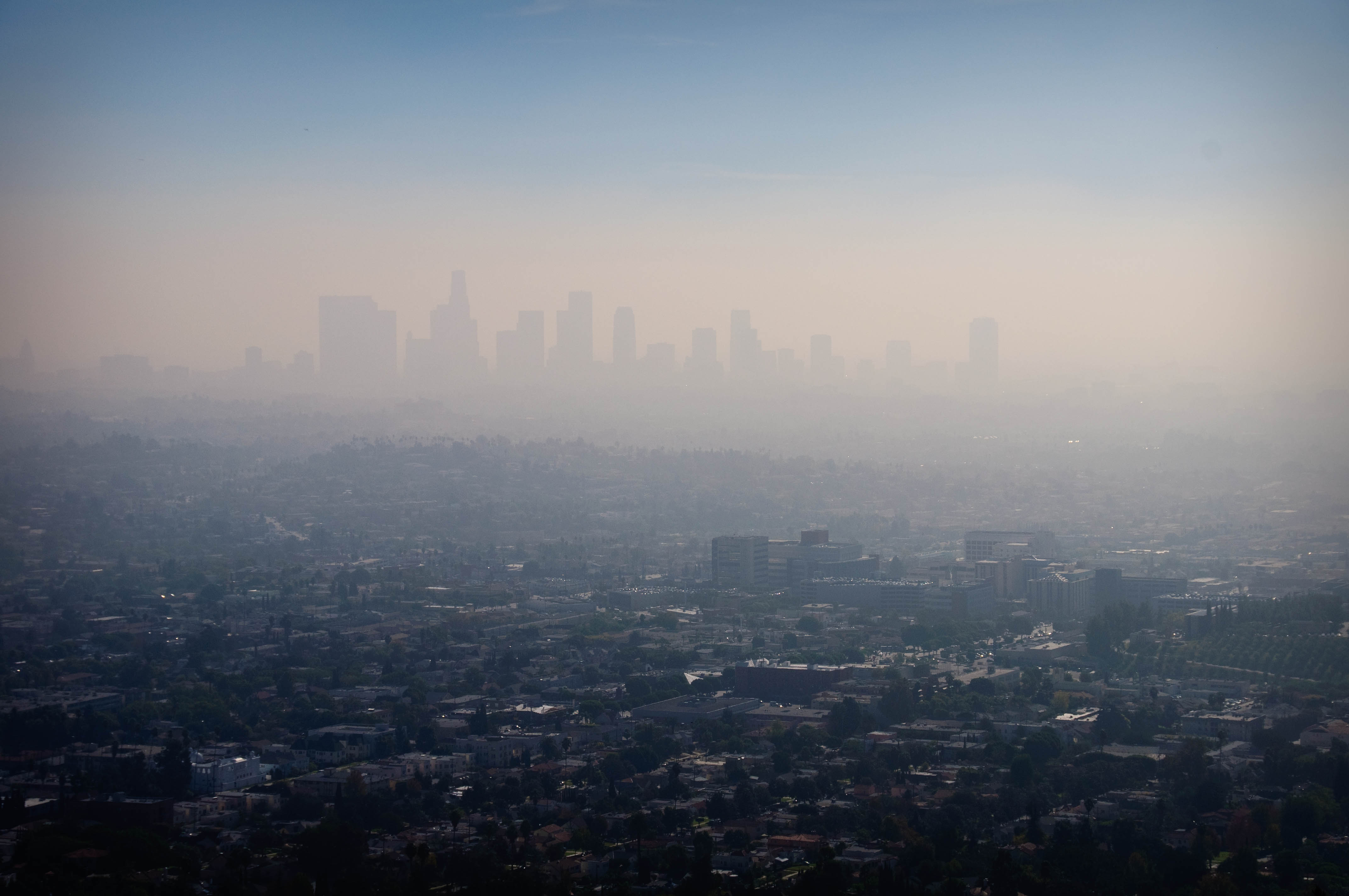
Poor air quality is a serious problem.  Exposure to air pollution is linked to the premature deaths of an estimated 6.5 million people every year.  This makes air pollution the fourth largest threat to human health.  Only high blood pressure, dietary risks, and smoking are a bigger danger. 

[Read more…] about Our Air Is Killing Us

Primary Sidebar

Recent Episodes

  • An uninsurable future
  • Clean energy and jobs
  • Insect declines in remote regions
  • Fossil fuel producing nations ignoring climate goals
  • Trouble for clownfishes

WAMC Northeast Public Radio

WAMC/Northeast Public Radio is a regional public radio network serving parts of seven northeastern states (more...)

Copyright © 2026 ·