• Skip to primary navigation
  • Skip to main content
  • Skip to primary sidebar

Earth Wise

A look at our changing environment.

  • Home
  • About Earth Wise
  • Where to Listen
  • All Articles
  • Show Search
Hide Search
You are here: Home / Archives for health impacts

health impacts

Electric trains are healthier

May 7, 2025 By EarthWise Leave a Comment

Electric trains are better for human health

The majority of commuter trains in the U.S. are powered by diesel fuel.  This is despite the fact that electric trains are quieter, more reliable, and produce fewer greenhouse gases than diesel locomotives.  A new study has found that electric trains are healthier for passengers as well.

Caltrain carries millions of passengers a year along a 47-mile route between San Francisco and San Jose.  It is the busiest commuter rail system in the western U.S.  Over a six-week period beginning in August 2024, Caltrain retired all 29 of its diesel locomotives and replaced them with electric trains.

As the process began, an environmental engineering and environmental health professor at UC Berkeley noticed the rapid change in the air aboard the trains and decided to study its potential health impacts.  With the support of Caltrain, he installed black carbon detectors aboard the trains and tracked the improvements in air quality as old diesel locomotives were being replaced by new electric trains.

Statistical analysis of the reduction in black carbon exposure achieved by the change predicted a reduction in excess cancer deaths by 51 per million people for passengers and 330 per million people for train conductors.  EPA policy states that any exposure that increases the average individual’s cancer risk by more than one per million is considered unacceptable.

In the context of the whole U.S. where millions of people commute by rail every day, the study predicts that hundreds of cases of cancer could be prevented each year.  California has long-term plans to electrify most of its rail systems.  The study indicates that the process shouldn’t be carried over the next 25 years but rather be sped up.

**********

Web Links

Electric trains are quieter, more reliable than diesel. New study finds they’re healthier, too.

Photo, posted September 4, 2024, courtesy of J. Kehoe via Flickr.

Earth Wise is a production of WAMC Northeast Public Radio

Unexplained heat wave hotspots

December 27, 2024 By EarthWise Leave a Comment

2023 and 2024 have been the hottest years since records have been kept.  But above and beyond the upward march of average temperatures around the globe, there has been the phenomenon of distinct regions across the globe experiencing repeated heatwaves that are so extreme that they cannot be accounted for in any models of global warming.

A new study by Columbia University’s Climate School has provided the first worldwide map of such regions, which have emerged on every continent except Antarctica.  Heatwaves in these regions have killed thousands of people, withered crops and forests, and triggered devastating wildfires.

These recent regional-scale record-breaking temperature extremes have raised questions about whether current climate models can provide adequate estimates of the relationship between global mean temperature changes and regional climate risks.

Some of these regional events in recent years include a nine-day heatwave in the U.S. Pacific Northwest and southwestern Canada in June 2021 that broke daily records in some places by 54 degrees Fahrenheit.  Across Germany, France, the UK, the Netherlands, and other countries, the hottest days of the year are warming twice as fast as the summer mean temperatures. 

There is yet little understanding of the phenomenon.  Some theories related to destabilization of the jet stream don’t really explain all the temperature extremes observed.  But regardless of the underlying causes, the health impacts of these heat waves are severe, as are the effects on agriculture, vegetation, and infrastructure.  Society is not built to quickly adapt to them.

**********

Web Links

Unexplained Heat Wave ‘Hotspots’ Are Popping Up Across the Globe

Photo, posted August 16, 2022, courtesy of Alisdare Hickson via Flickr.

Earth Wise is a production of WAMC Northeast Public Radio
Reducing COVID-19 Spread With UV Light | Earth Wise

November 24, 2021 By EarthWise 1 Comment

Using UV light to reduce COVID-19 spread

New research published by the University of Colorado Boulder analyzes the effects of different wavelengths of ultraviolet light on the SARS-CoV-2 virus.   The research found that a specific wavelength of UV light is not only extremely effective at killing the virus that causes COVID-19, but also that this wavelength is safer for use in public spaces.

UV light is naturally emitted by the sun and most forms of it are harmful to living things – including microorganisms and viruses.   The most harmful UV radiation from the sun is filtered out by the atmosphere’s ozone layer.   Human-engineered UV light sources screen out harmful UV rays with a phosphorus coating on the inside of the tube lamps.  Hospitals and some other public spaces already use UV light technology to disinfect surfaces when people are not present.

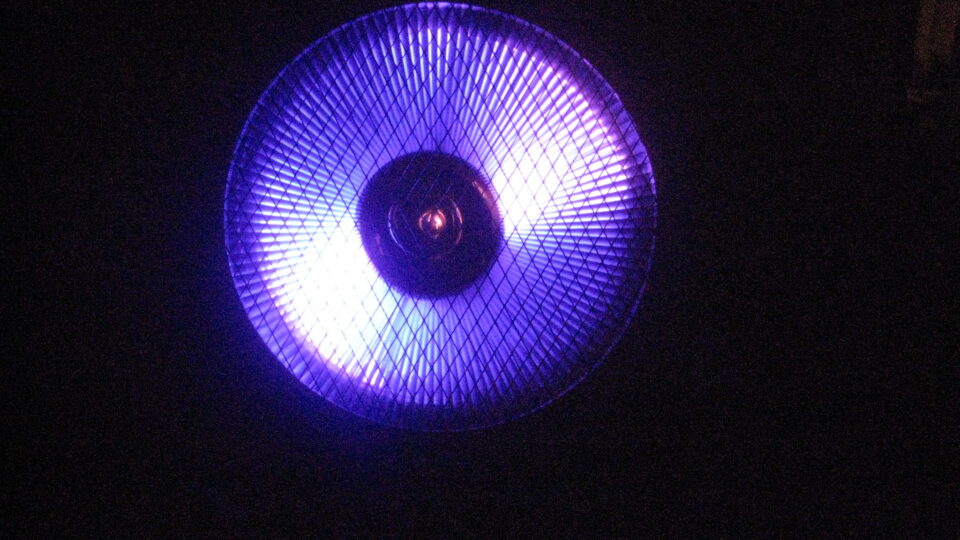
The new research found that a specific wavelength of far-ultraviolet-C, at 222 nanometers, was particularly effective at killing SARS-CoV-2, but that wavelength is blocked by the very top layers of human skin and eyes.  In other words, that light has essentially no detrimental health effects for people while it is very capable of killing off viruses.

The researchers argue that this safe wavelength of Far UV-C light could serve as a key mitigation measure against the COVID-19 pandemic.  They imagine systems that could cycle on and off in indoor spaces to routinely clean the air and surfaces or perhaps create an ongoing, invisible barrier between teachers and students, customers and service workers, and other places where social distancing is not practical.  Installing these specialized UV lights would be much cheaper than upgrading entire HVAC systems in buildings.

**********

Web Links

Specific UV light wavelength could offer low-cost, safe way to curb COVID-19 spread

Photo, posted January 18, 2008, courtesy of Phil Whitehouse via Flickr.

Earth Wise is a production of WAMC Northeast Public Radio.

The Cost Of Air Pollution | Earth Wise

March 12, 2020 By EarthWise Leave a Comment

quantifying the global economic and health impacts of fossil fuel-driven air pollution

The environmental consequences of burning fossil fuels are a dominant topic.  The increasing changes in the climate have far-reaching effects across the globe and are a growing geopolitical crisis.  But the climate effects of fossil fuel emissions are by no means the only problem they cause.  

A new report by the Center for Research on Energy and Clear Air has, for the first time, attempted to quantify the global economic and health impacts of fossil fuel-caused air pollution.  In total, the estimate is that the economic and health costs of air pollution from burning fossil fuels totaled $2.9 trillion in 2018, calculated in the form of work absences, years of life lost, and premature deaths. The cost represents 3.3 percent of global GDP, or about $8 billion per day. 

The study focused on the health impacts of three specific types of pollutants:  nitrogen dioxide, ozone, and fine particulate matter, which has the greater impact.  Collectively, these pollutants cause about 1.8 billion days of missed work due to disease and $2.2 trillion in air pollution costs every year. Together, air pollution from these three pollutants is responsible for 4.5 million premature deaths around the world each year.

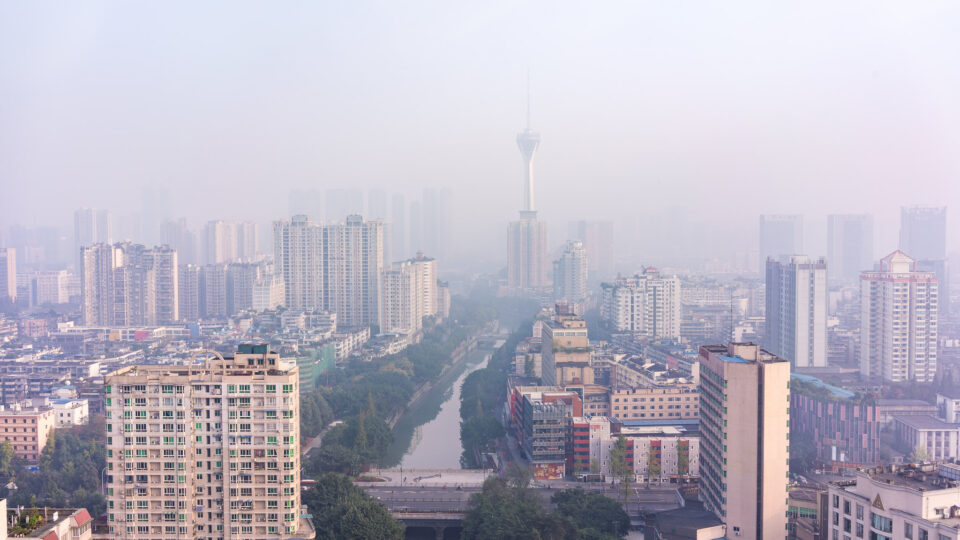
According to the report, the most premature deaths from fossil fuel-related air pollution in 2018 were in mainland China (1.8 million), India (1 million), and the United States (230,000). As a result, those three countries also faced the highest annual costs: $900 billion in China, $600 billion in the U.S., and $150 billion in India. 

**********

Web Links

Toxic Air: The Price of Fossil Fuels (Full Report)

Photo, posted November 17, 2019, courtesy of Kristoffer Trolle via Flickr.

Earth Wise is a production of WAMC Northeast Public Radio.

Primary Sidebar

Recent Episodes

  • An uninsurable future
  • Clean energy and jobs
  • Insect declines in remote regions
  • Fossil fuel producing nations ignoring climate goals
  • Trouble for clownfishes

WAMC Northeast Public Radio

WAMC/Northeast Public Radio is a regional public radio network serving parts of seven northeastern states (more...)

Copyright © 2026 ·