• Skip to primary navigation
  • Skip to main content
  • Skip to primary sidebar

Earth Wise

A look at our changing environment.

  • Home
  • About Earth Wise
  • Where to Listen
  • All Articles
  • Show Search
Hide Search
You are here: Home / Archives for havoc

havoc

More trouble for bees

August 12, 2025 By EarthWise Leave a Comment

Honeybees are a critical resource for American agriculture.  The western honeybee, Apis mellifera, pollinates more than 130 types of nuts, fruits, and vegetables, adding up to $15 billion worth of crops every year.  Honeybee health has been harmed by a combination of factors:  weather extremes, habitat loss, pesticides, and disease.  One of the biggest problems has been a parasite called varroa destructor, which is a Southeast Asian mite that first entered the United States in the 1980s.  The mites spread viruses to the bees.

The past year has been a particularly bad one for the bees.  Nearly 56% of managed honeybee colonies died off in the past year, the worst rate since annual reporting began in 2011. 

Even while American beekeepers seek solutions to the varroa problem, a potentially worse threat is on the horizon.  Another Southeast Asian mite, tropilaelaps, has been making its way across Asia and into Europe. If these mites arrive in North America, the results would be disastrous, wreaking havoc on honeybees and ravaging the nation’s food supply.

Western honeybees are the only honeybee species that is not native to Southeast Asia.  As the cradle of development of the bees, Southeast Asia has given rise to a bounty of parasites and viruses that are dependent upon them.  In turn, bees native to that region have had time to evolve defenses against these pathogens.  Western honeybees have not.

Beekeepers and authorities are taking measures to delay or prevent the arrival of tropilaelaps mites.  The stakes are very high.

**********

Web Links

After Devastating Winter Losses, Another Threat Looms for U.S. Beekeepers

Photo, posted April 14, 2013, courtesy of Paul Rollings via Flickr.

Earth Wise is a production of WAMC Northeast Public Radio
Ice Melt In Greenland

March 12, 2019 By EarthWise 1 Comment

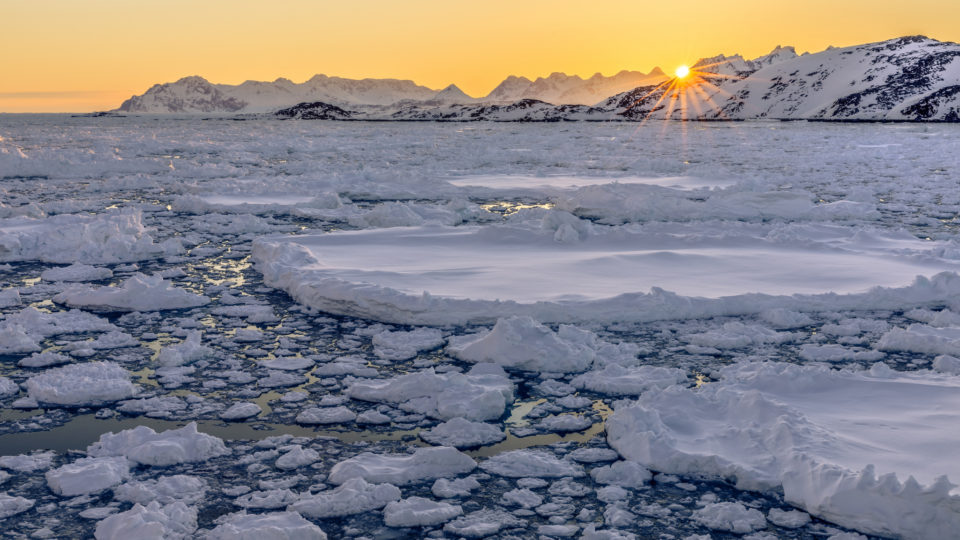
A new study published in the Proceedings of the National Academy of Sciences warns that Greenland’s ice Is melting much faster than previously thought.  The ice loss rapidly accelerated around 2002-2003 and by 2012 the annual loss was nearly four times the rate in 2003.

Most of the new ice melt is in southwest Greenland, a part of the island that wasn’t known to be losing ice that rapidly and is not where most of the large glaciers are in Greenland.  The loss is coming from the land-fast ice sheet itself.

Data from NASA satellites and GPS stations scattered around Greenland’s coast shows that between 2002 and 2016, Greenland lost approximately 280 billion tons of ice per year.  That is enough melt to cover the entire states of Florida and New York hip deep in meltwater, as well as drowning Washington, D.C. and one or two other small states.

Global warming of just 1 degree Celsius is the main driver behind this massive meltdown of ice.  The temperature rise coupled with a negative phase of the North Atlantic Oscillation causes rapid surface melt of the ice sheet during summers.  The Oscillation is a natural, irregular change in atmospheric pressure that brings warm, sunny weather to the western side of Greenland during its negative phase.

The Greenland ice sheet is 2 miles thick in some places and contains enough ice to raise sea levels 23 feet if it all melted.  The melting Greenland ice is already slowing the Gulf Stream, which is wreaking havoc with European weather.  If we don’t get a handle on global temperature rise, things are only going to get worse.

**********

Web Links

Greenland’s ice is melting four times faster than thought—what it means

Photo, posted April 21, 2017, courtesy of Markus Trienke via Flickr.

Earth Wise is a production of WAMC Northeast Public Radio.

The Threat From Nurdles

March 4, 2019 By EarthWise Leave a Comment

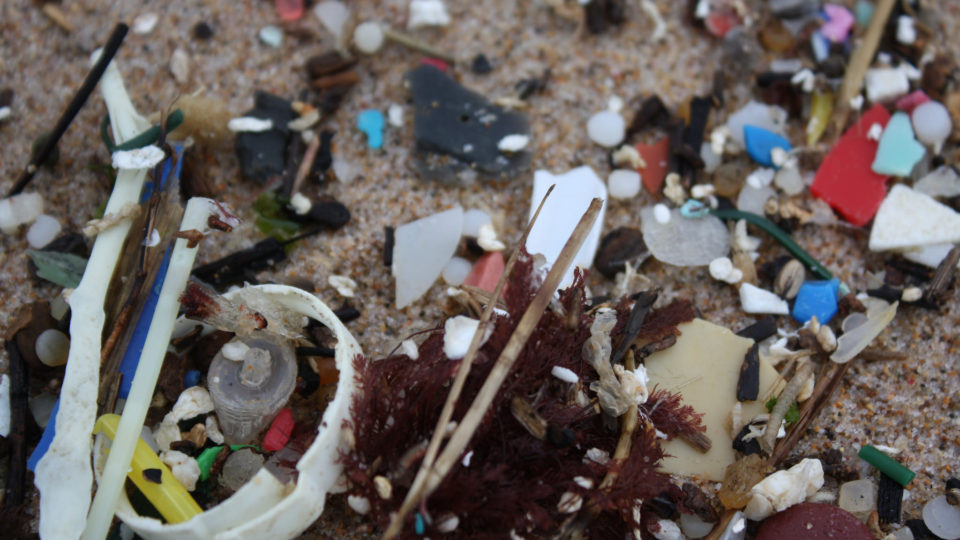
Just when we thought we knew all about the environmental threats caused by plastics, environmentalists have identified yet another problem.  It is called a nurdle.

Nurdles are tiny pellets of plastic resin no bigger than a pencil eraser that manufacturers transform into packaging, plastic straws, water bottles and all the other things that are wreaking havoc on the environment.

It turns out that nurdles themselves are a problem because billions of them are lost from production and supply chains during handling, shipping and production every year, spilling or washing into waterways.  There is limited information on the extent of this kind of plastic pollution and global researchers are still struggling to make an accurate assessment.  A study last year estimated that 3 million to 36 million pellets escape every year from just one small industrial area in Sweden.

Eunomia, a British environmental consultancy, contends that nurdles are the second-largest source of microplastic pollution and estimated that the U.K. could be unwittingly losing billions of pellets into the environment every year.

New research is revealing the ubiquity of plastic pellets, from the bellies of fish caught in the South Pacific, to the digestive tracks of short-tailed albatross in the north and on the beaches of the Mediterranean.

A shareholder advocacy group called As You Sow has filed resolutions with Chevron, DowDupont, Exxon Mobil, and Phillips 66 asking them to disclose how many nurdles escape their production process each year and how they plan to address the issue.  Several of the companies have responded with statements saying they are working to develop solutions that keep plastic out of our environment.

**********

Web Links

There’s a Tiny Plastic Enemy Threatening the Planet’s Oceans

Photo, posted January 15, 2014, courtesy of Hillary Daniels via Flickr.

Earth Wise is a production of WAMC Northeast Public Radio.

Primary Sidebar

Recent Episodes

  • An uninsurable future
  • Clean energy and jobs
  • Insect declines in remote regions
  • Fossil fuel producing nations ignoring climate goals
  • Trouble for clownfishes

WAMC Northeast Public Radio

WAMC/Northeast Public Radio is a regional public radio network serving parts of seven northeastern states (more...)

Copyright © 2026 ·