• Skip to primary navigation
  • Skip to main content
  • Skip to primary sidebar

Earth Wise

A look at our changing environment.

  • Home
  • About Earth Wise
  • Where to Listen
  • All Articles
  • Show Search
Hide Search
You are here: Home / Archives for graze

graze

The green grab for land

March 27, 2025 By EarthWise Leave a Comment

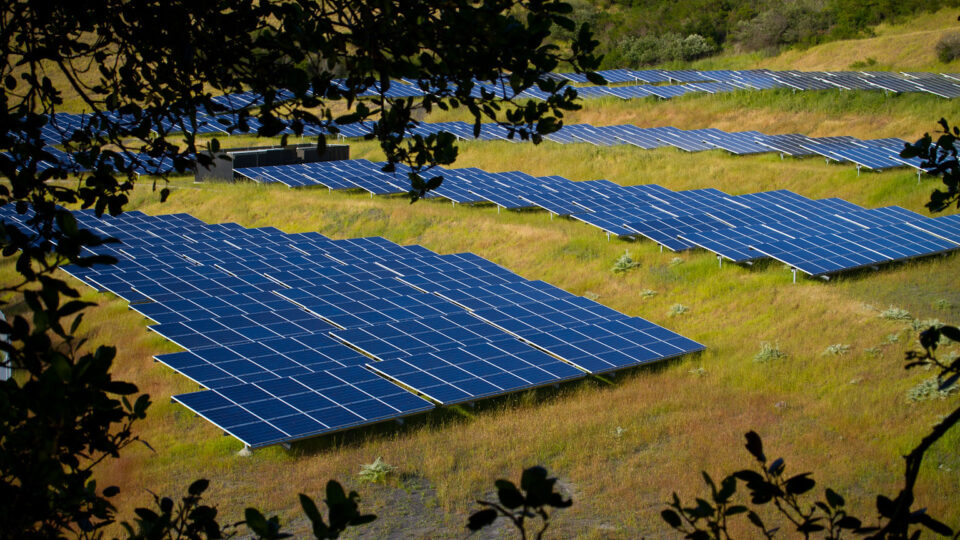
Solar and wind farms are spreading rapidly around the world.  Many economists believe that solar power has crossed the threshold where it is generally cheaper than other ways to make electricity and will become the dominant energy source in the next couple of decades.  As a result, both solar and wind farms are gobbling up more and more land around the world.  Estimates are that they will take up around 30,000 square miles by mid-century.

One concern is whether we are entering an era of trading food for energy.  Land conflicts seem inevitable since solar power operates best in unshaded areas with gentle winds and moderate temperatures, which are the same conditions favored by many crops.

China is installing more solar farms than the rest of the world combined.  Many of these are in the Gobi Desert, where there is no competing need for the land.  But some are in eastern China, in densely populated grain-growing areas.

There are a number of strategies that reduce the impact of solar farms on land use.  One approach is to put them on old industrial or brownfield sites that are otherwise unusable.  Another is floatovoltaics:  putting solar panels on the surface of lakes and reservoirs.  And then there is agrivoltaics, where solar panels are installed above crop fields or where livestock graze between or even beneath solar arrays.  China has more than 500 agrivoltaic projects that incorporate crops, livestock, aquafarming, greenhouses, and even tea plantations.

Green energy has both environmental and economic benefits to offer, but it must conserve nature and not excessively grab land needed for people, wildlife, and ecosystems.

***********

Web Links

‘Green Grab’: Solar and Wind Boom Sparks Conflicts on Land Use

Photo, posted May 25, 2011, courtesy of Michael Mees via Flickr.

Earth Wise is a production of WAMC Northeast Public Radio
Large Mammals And Climate Change | Earth Wise         

April 14, 2022 By EarthWise Leave a Comment

The natural world has an important part to play in mitigating the effects of climate change.  We mostly think about the role of plant life which absorbs carbon in trees, grasses, and other flora.  However, a new study published by Oxford University looks at the role of large wild animals in restoring ecosystems and reducing the effects of climate change.

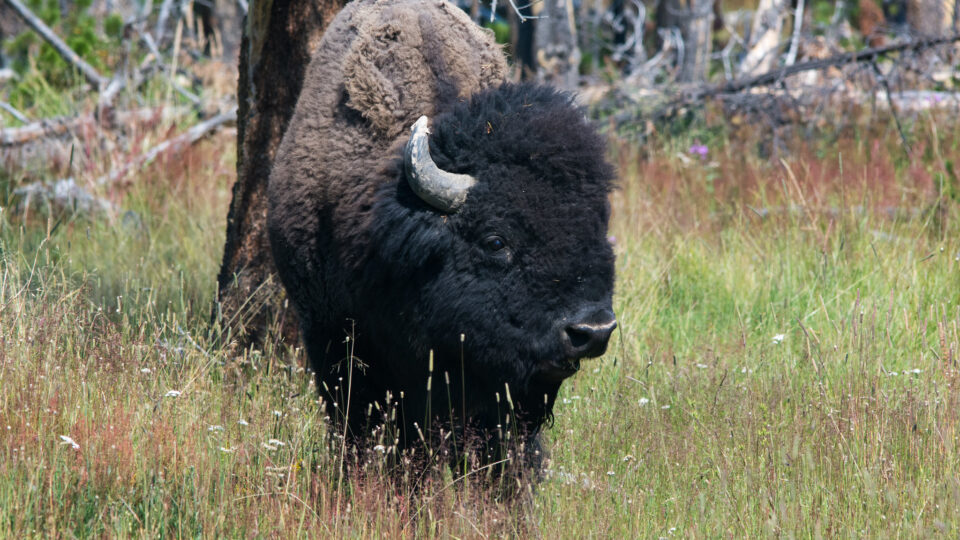
According to the study, there are three important ways in which large animals such as elephants, rhinos, giraffes, whales, bison, and moose can potentially mitigate the effects of climate change:  carbon stocks, albedo, and fire regimes.

When large herbivores graze, they disperse seeds, clear vegetation, and fertilize soil.  All of these things build more complex and resilient ecosystems which helps to maintain and increase carbon stocks in the soil and in plant tissues thereby helping to reduce CO2 in the atmosphere.

Grazing large animals trample vegetation which opens up areas of dense vegetation to create open mixes of grass and shrubs and can reveal snow-covered ground in cold regions.  Such open habitats are lighter in color (higher in albedo) and reflect more solar radiation into the atmosphere, cooling the Earth’s surface rather than heating it up.

Large grazing animals can lessen wildfire risk by browsing on woody vegetation that would otherwise fuel the fires and also by creating paths that act as firebreaks.

In marine ecosystems, whales and other large animals fertilize phytoplankton, which capture some 37 billion tons of CO2 each year.

Overall, large animals are an important part of the natural world’s ability to reduce the effects of the changing climate by helping with localized adaptation to the changes taking place in ecosystems.

**********

Web Links

Large mammals can help climate change mitigation and adaptation

Photo, posted August 20, 2017, courtesy of Jon Niola via Flickr.

Earth Wise is a production of WAMC Northeast Public Radio.

Primary Sidebar

Recent Episodes

  • An uninsurable future
  • Clean energy and jobs
  • Insect declines in remote regions
  • Fossil fuel producing nations ignoring climate goals
  • Trouble for clownfishes

WAMC Northeast Public Radio

WAMC/Northeast Public Radio is a regional public radio network serving parts of seven northeastern states (more...)

Copyright © 2026 ·