• Skip to primary navigation
  • Skip to main content
  • Skip to primary sidebar

Earth Wise

A look at our changing environment.

  • Home
  • About Earth Wise
  • Where to Listen
  • All Articles
  • Show Search
Hide Search
You are here: Home / Archives for global efforts

global efforts

How will we know if the world is 1.5 degrees warmer?

January 12, 2024 By EarthWise Leave a Comment

How is climate warming measured?

The Paris Climate Agreement has a goal of limiting global warming to less than 1.5 degrees Celsius above pre-industrial levels.  How do we know if we are succeeding and, more importantly, how would we know if we have failed?

This may seem like something fairly obvious, but it isn’t.  Global temperatures are definitely creeping upward.  This past year has been the warmest on record.  In fact, the global average temperature was more than 1.4 degrees above pre-industrial levels.  November was 1.75 degrees above pre-industrial levels.  So, does that mean that our climate goals have already failed?  Not really.

On a monthly scale there have already been individual months where warming has exceeded 1.5 degrees in 2016, 2017, 2019, 2020, and 2023.  Would an entire year above the target constitute failure?  Not necessarily.  There really isn’t an agreed-upon answer and that in itself represents something that could undermine global efforts to tackle climate change.

If we don’t know whether we are succeeding or failing, it is more difficult to pursue success.  The United Nations IPCC says the threshold will be surpassed when average warming exceeds 1.5 degrees for 20 years.  But that seems like a building a mountain highway with no guardrails and hoping to be safe.

Scientists are calling for new approaches to defining a universally agreed-upon measure of global warming that could trigger urgent action to avoid further rises.  What we really don’t need are justifications and excuses for continued inaction.  Clearly the climate is not waiting for us to debate the issue.

**********

Web Links

Why We Won’t Know When We’ve Passed the 1.5-Degree Threshold

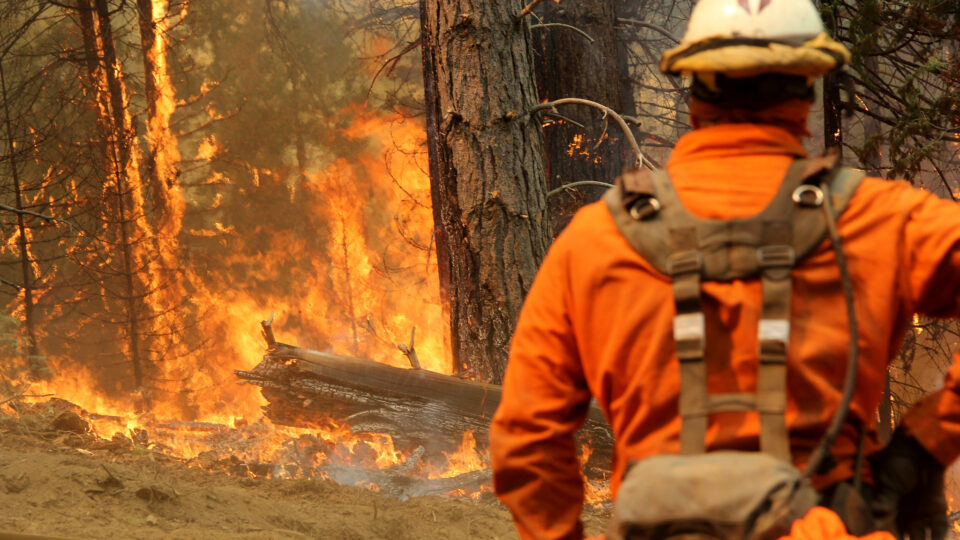
Photo, posted August 2, 2018, courtesy of J Bartlett Team Rubicon/BLM for USFS via Flickr.

Earth Wise is a production of WAMC Northeast Public Radio
Sunscreen For Corals | Earth Wise

August 6, 2021 By EarthWise Leave a Comment

Scientists examine why some corals are better equipped to survive a changing environment

Sunscreen from beachgoers entering ocean waters is one of the greatest threats to coral reefs and there are global efforts to reduce or eliminate the use of many of the most harmful chemicals people use to protect themselves from the sun’s rays.  However, scientists at the Smithsonian Conservation Biology Institute have found that some corals have a natural sunscreen of their own that helps protect them from the effects of climate change.

Hawaiian blue rice corals feature a deep blue pigment that is created by chromoprotein that filters out harmful ultraviolet radiation from the sun.  UV damage has harmful impacts to reproduction in many coral species, but it appears not to have the same effect on blue rice coral.

In a study published in Scientific Reports, Smithsonian researchers studied the devastating effects that bleaching had on brown rice coral in the Hawaiian bleaching events of 2014 and 2015.  During the same events, blue rice coral either recovered quickly or was not affected by the elevated ocean temperature at all.

The blue-pigmented corals had dramatically greater reproductive vigor than the brown-pigmented version.  The key factor appears to be the sun-screening ability of the blue pigment in the particular symbiotic algae that lives inside the coral tissue known as zooxanthellae.  The coral protects the algae and in turn the algae provide the coral with food in the form of sugars produced as a waste product from photosynthesis.  In the case of the blue version, the algae also produce sunscreen for the coral.

By better understanding the role UV-protective pigments play in mitigating the adverse effects of climate change and warming oceans, scientists can learn why some species are better equipped to survive in a changing environment.

**********

Web Links

Smithsonian Conservation Biology Institute Scientists Find Corals’ Natural “Sunscreen” May Help Them Weather Climate Change

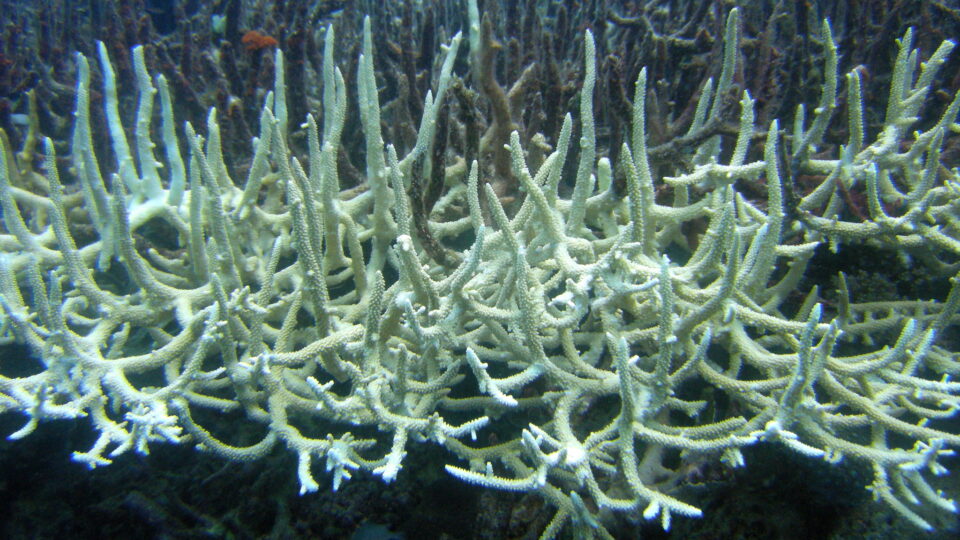
Photo, posted September 28, 2009, courtesy of Matt Kieffer via Flickr.

Earth Wise is a production of WAMC Northeast Public Radio.

Primary Sidebar

Recent Episodes

  • An uninsurable future
  • Clean energy and jobs
  • Insect declines in remote regions
  • Fossil fuel producing nations ignoring climate goals
  • Trouble for clownfishes

WAMC Northeast Public Radio

WAMC/Northeast Public Radio is a regional public radio network serving parts of seven northeastern states (more...)

Copyright © 2026 ·