• Skip to primary navigation
  • Skip to main content
  • Skip to primary sidebar

Earth Wise

A look at our changing environment.

  • Home
  • About Earth Wise
  • Where to Listen
  • All Articles
  • Show Search
Hide Search
You are here: Home / Archives for geological

geological

Hidden hydrogen

July 15, 2025 By EarthWise Leave a Comment

The idea of using hydrogen as a fuel or an energy source has been around for a long time.  Hydrogen is the most common element in the universe, but most of it is locked up in various chemical compounds, such as water.  Hydrogen is a clean fuel; burning it or using it to generate electricity in a fuel cell produces no greenhouse gas emissions.  But more than 99% of the hydrogen that people current produce is obtained by methods that result in greenhouse gas emissions.

A new study by scientists at the University of Oxford, the University of Durham in the UK, and the University of Toronto looks at geological environments in which naturally occurring hydrogen could be hiding.  According to the study, over the last billion years, the Earth’s continental crust is likely to have produced enough hydrogen to satisfy the energy needs of modern society for 170,000 years.

Much of that hydrogen is likely to have been lost or is inaccessible; most of it is not economically feasible to extract.  But even the relatively small amount of hydrogen left could provide thousands of years of energy for us.  We just have to be able to find it.

The researchers have developed what they call an “exploration recipe” which identifies where natural hydrogen might be located as well as where it could be commercially feasible to extract.  These places with hydrogen have so-called reservoir rocks and geologic formations that prevent the gas from leaking into the atmosphere.

A few such places have already been identified such as one in Albania.  There are various candidates to explore, even including an area in Kansas.  The study’s authors have founded a company whose mission is to find these natural sources of hydrogen.

**********

Web Links

Scientists Say Hidden Hydrogen Could Power the World for 170,000 Years

Photo, posted October 4, 2019, courtesy of Tony Sprezzatura via Flickr.

Earth Wise is a production of WAMC Northeast Public Radio
Thawing permafrost:  Is it a ticking timebomb?

July 8, 2024 By EarthWise Leave a Comment

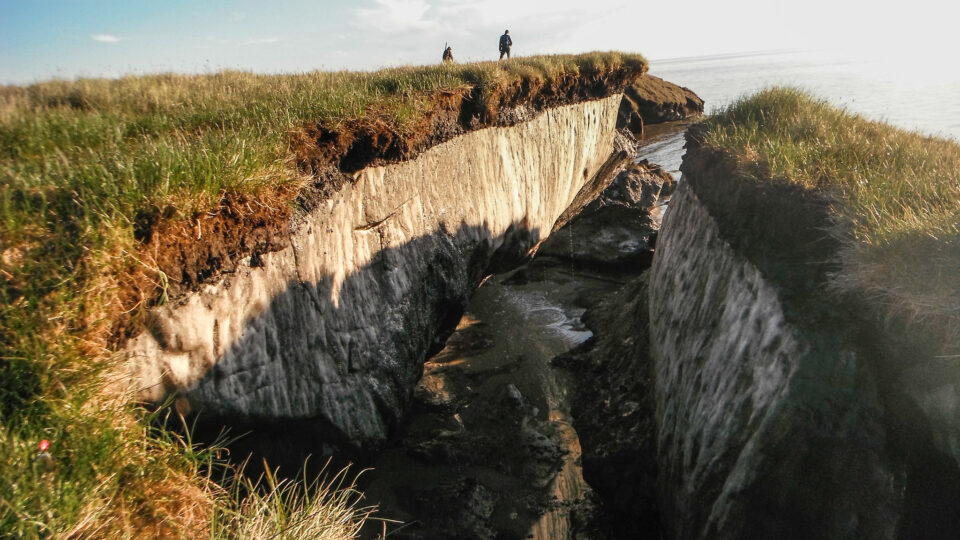
Permafrost covers about a quarter of the landmass in the Northern Hemisphere.  It stores vast quantities of organic carbon in the form of dead plant matter.  As long as it stays frozen, it is no threat to the climate.  But as it thaws, microorganisms start breaking down that plant matter and large amounts of carbon are released into the atmosphere in the form of carbon dioxide and methane.

This process has often been described as a ticking timebomb for the climate.  The theory is that once global warming reaches a certain level, the process will become self-amplifying setting off a catastrophic amount of warming.  If that level was reached, it would be a tipping point in the changing climate.

An international research team from the Alfred Wegener Institute in Germany has extensively researched this hypothesis.  Their conclusion is that within the permafrost, there are multiple geological, hydrological, and physical processes that are self-amplifying and, in some cases, irreversible.  However, these processes act only locally or regionally.  There is no evidence that some particular threshold in global warming could affect all permafrost and accelerate its thawing on a global level.

This research does not mean that Arctic permafrost is nothing to worry about.  In fact, there are ways in which it is more worrisome.  Because the permafrost is very heterogenous – meaning it is very different in different places – there will be numerous small, local tipping points that will be exceeded at different times and at different levels of warming.  All of this will proceed in step with global warming, contributing to the overall worsening situation.  There is no warming level below which permafrost thawing is not a problem.

**********

Web Links

Thawing permafrost: Not a climate tipping element, but nevertheless far-reaching impacts

Photo, posted January 24, 2014, courtesy of Brandt Meixell / USGS via Flickr.

Earth Wise is a production of WAMC Northeast Public Radio
Storing CO2 Underground | Earth Wise

February 19, 2020 By EarthWise Leave a Comment

carbon dioxide and storage

Capturing the carbon dioxide emitted from power plants and factories and safely storing it so it can’t enter the atmosphere has long been an attractive and desirable goal.  Even though the use of renewable energy sources has been expanding rapidly, it will still be a long time before fossil fuel plants go away entirely.

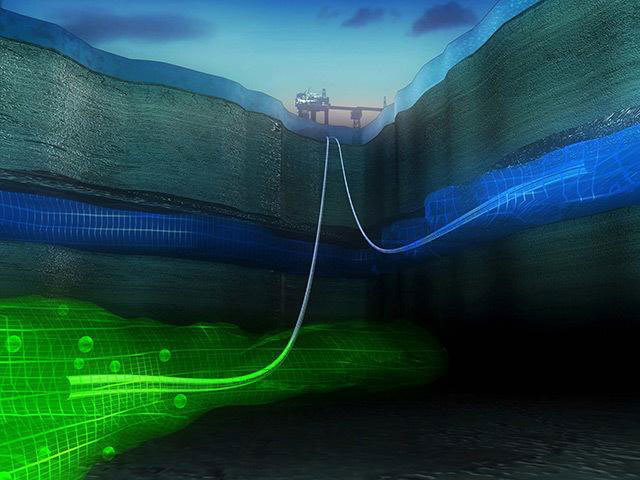
The most widely considered method of carbon capture and storage is underground storage.  The idea is to send the carbon dioxide through a pipeline to a place where underground rock formations can store it safely and permanently.  Typically, it would be pumped deep underground – often more than half a mile down – and the site would be monitored to make sure the CO2 doesn’t leak back up to the atmosphere or into the water table.

A new study looked at how much carbon dioxide the suitable geological formations on Earth can store.  The conclusion of the study is that drilling about 12,000 carbon storage wells globally could provide enough capacity to store 6 to 7 billion tons of CO2 a year by 2050.  That is about 13% of global emissions.

Drilling 12,000 wells is equivalent to the amount of oil and gas drilling that has taken place just in the Gulf of Mexico over the last 70 years.  The study identified locations worldwide that could handle the pressures associated with storing injected carbon dioxide.

So far, less than two dozen projects exist that capture and store carbon dioxide from fossil fuel plants.  In total, these plants can capture about 36 million tons a year, which is far less than what is needed.  But the new study at least shows that finding places to put captured carbon is not a problem.

**********

Web Links

Ample Geological Capacity Exists to Store Large Quantities of Captured CO2

Photo courtesy of Equinor.

Earth Wise is a production of WAMC Northeast Public Radio.

Primary Sidebar

Recent Episodes

  • An uninsurable future
  • Clean energy and jobs
  • Insect declines in remote regions
  • Fossil fuel producing nations ignoring climate goals
  • Trouble for clownfishes

WAMC Northeast Public Radio

WAMC/Northeast Public Radio is a regional public radio network serving parts of seven northeastern states (more...)

Copyright © 2026 ·