• Skip to primary navigation
  • Skip to main content
  • Skip to primary sidebar

Earth Wise

A look at our changing environment.

  • Home
  • About Earth Wise
  • Where to Listen
  • All Articles
  • Show Search
Hide Search
You are here: Home / Archives for genetic diversity

genetic diversity

Return of the frogs

September 22, 2025 By EarthWise Leave a Comment

Mountain yellow-legged frog may make a comeback

The mountain yellow-legged frog is a species that lives in the mountains of Southern California.  It is listed as an endangered species for protection by the federal government.   Surveys 20 years ago determined that the frog’s population was declining and on a trajectory toward extinction.  The frogs are severely impacted by water pollution and are vulnerable to the effects of wildfires, floods, disease, and drought.

A collaboration headed by the Scripps Institution of Oceanography at UC San Diego along with the San Diego Zoo Wildlife Alliance, UCLA, and the Big Bear Alpine Zoo has been raising mountain yellow-legged frogs in captivity as part of a long-running recovery program with partners at multiple federal and California state agencies.

In August, more than 350 of the frogs were reintroduced into the wild in Southern California’s San Bernardino Mountains, one of the largest releases of the captive-raised frogs to date.  This represented the first species reintroduction by the Scripps Institution and an important milestone in its growing conservation work.

The frogs were transported in coolers to the mountains where a team then hiked the frogs to three sites along a lake within a protected reserve.  The frogs were microchipped with passive transponder tags that will allow researchers to identify individuals during future surveys.  This will enhance long-term monitoring and inform ongoing conservation efforts.

The goal of these efforts is to help to delist or at least downlist the endangered status of the frogs by enhancing the genetic diversity of both captive and wild populations, optimizing reintroduction efforts, and increasing wild frog populations.

**********

Web Links

Hundreds of Mountain Yellow-legged Frogs Leap Back Into the Wild

Photo, posted April 27, 2011, courtesy of Rick Kuyper / USFWS via Flickr.

Earth Wise is a production of WAMC Northeast Public Radio

A starfish to the rescue

June 3, 2025 By EarthWise Leave a Comment

Researchers are trying to reintroduce sunflower sea stars along the Pacific Coast

Beginning in 2013, a mysterious disease associated with a marine heatwave decimated the population of sunflower sea stars.  Those huge, colorful 24-armed starfish thrived along the Pacific Coast between Alaska and Baja California.  But in fairly short order, nearly six billion of the creatures perished, amounting to 94% of the global population.  California lost 99% of its sea stars to the wasting disease.

The result was an ecological disaster.  Sunflower sea stars are carnivorous and purple urchins are the mainstay of their diet.  Without sea stars to balance the food web, the urchin population exploded.  Urchins devour kelp and over the past decade, 96% of the region’s kelp forests vanished.  Kelp forests serve as shelter and food for a vast array of marine life and kelp sequesters carbon as much as 20 times more than terrestrial forests.

Researchers in California and Alaska are breeding sunflower sea stars in captivity to try to produce enough of the creatures to support reintroduction.  The first successful spawning of sea stars took place last year at the Birch Aquarium at San Diego’s Scripps Institution of Oceanography.  But all of these are siblings, which is not a desirable breeding stock for a new population.  So, they are now working with the Alaska SeaLife Center, which has the largest collection of the animals in the world.  The center will provide animals to introduce genetic diversity to the growing population in captivity.

The hope is to be able to reintroduce sea stars to the Pacific region within three to five years.

**********

Web Links

A rare, giant starfish could hold the key to restoring kelp forests on the California coast

Photo, posted November 11, 2007, courtesy of Patrick Briggs via Flickr.

Earth Wise is a production of WAMC Northeast Public Radio

A sustainable and climate-friendly food

November 22, 2024 By EarthWise Leave a Comment

Researchers predict that climate change will negatively impact the yield and nutritional quality of most staple food crops, including rice, corn, and soybeans, due to factors like extreme weather events, rising temperatures, and altered precipitation patterns, potentially leading to reduced food security globally.   

As a result, many experts contend that alternative food sources – like insect farming and seaweed aquaculture – are part of the solution.  Additionally, expanding production of climate resilient food crops will also have an important role to play in global food security.

According to a new international study led by researchers from University of Vienna in Austria, chickpeas – also known as garbanzo beans – are a drought-resistant legume plant with a high protein content that can help combat food insecurity amid climate change.

In the study, which was recently published in the journal Plant Biotechnology, the researchers investigated the natural variations of different chickpea genotypes and their resistance to drought stress and achieved promising results.  The research team managed to grow many different chickpea varieties under drought stress in a field experiment outside of Vienna. The results demonstrate that chickpeas are a great alternative legume plant that can complement grain farming systems in urban areas.

The study highlights how the decline of plant genetic diversity poses a major threat to plant productivity and harvests.  In fact, while there are approximately 7,000 edible crops, two-thirds of global food production is based on just nine crop species. 

According to the research team, highly nutritious and drought-resistant legumes such as chickpeas are a “food of the future.”

**********

Web Links

Chickpeas – sustainable and climate-friendly foods of the future

Photo, posted March 21, 2020, courtesy of Ajay Suresh via Flickr.

Earth Wise is a production of WAMC Northeast Public Radio
Finding Homes For Rhinos | Earth Wise

October 6, 2023 By EarthWise Leave a Comment

White rhino conservation

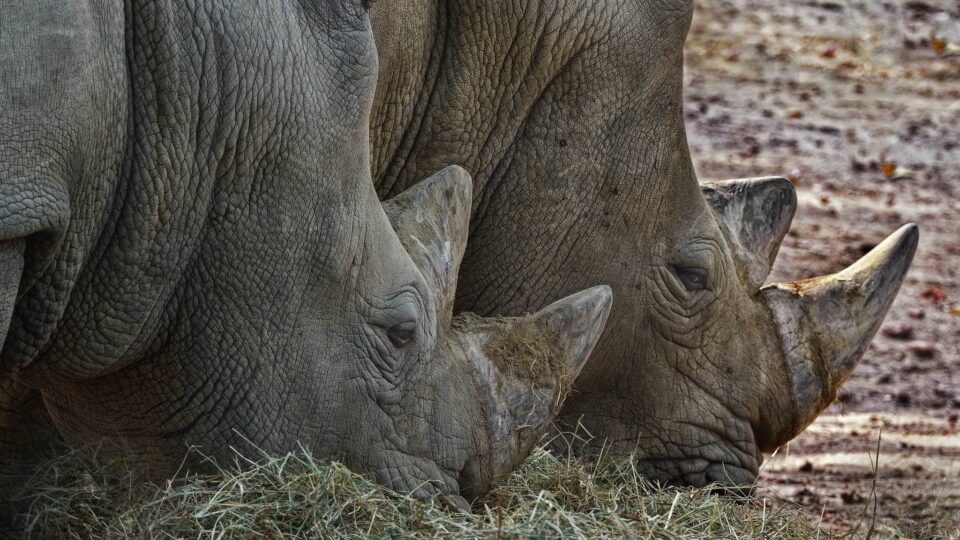
Northern White Rhinos are virtually extinct; only two female individuals survive in Kenya.  Southern White Rhinos also nearly vanished early in the 20th century, mostly because of excessive hunting.   A surviving group of fewer than 100 animals was identified in South Africa, and ongoing conservation efforts led to the existing population of southern white rhinos, which now numbers more than 16,000.

Among the most successful conservation efforts took place at a 30-square-mile farm, Platinum Rhino, that was set up in 2009 about 100 miles southwest of Johannesburg.  The owner of the farm did a great job of maintaining genetic diversity of the herd and protecting it from poachers.  Eventually, it was costing $175,000 a month just for security against illegal hunters seeking rhino horns.

Faced with unsustainable expenses, the farm put the herd of 2,000 rhinos up for auction in April with a starting price of $10 million.  No bidders came forward. 

Fortunately, in September, the conservation group African Parks announced that it had reached a deal to take over the herd.  African Parks partners with 12 countries in Africa to manage 77,000 square miles of protected areas.

The plan is to start moving the rhinos into a series of new sites in the wild starting next year.  Moving the 5,000-pound animals to new locations will be complicated and expensive, costing anywhere from $1,500 to move a single rhino by land within South Africa to $50,000 for far afield air transport.  African Parks is now raising funds to relocate the animals.

**********

Web Links

Now Available: 2,000 Rhinos, Free to Good Homes With Plenty of Space

Photo, posted September 4, 2023, courtesy of Eric Huybrechts via Flickr.

Earth Wise is a production of WAMC Northeast Public Radio

Cryopreserving Corals | Earth Wise

October 3, 2023 By EarthWise Leave a Comment

Cryopreserving corals

Recent climate models estimate that if the effects of climate change are not mitigated soon enough, 95% of the world’s corals could die by the mid 2030s.  Given the current rate of greenhouse gas emissions, this is an increasingly likely outcome.  Coral reefs are estimated to have a $10 trillion economic value apart from their essential role in marine ecosystems.

Researchers at the University of Hawaii at Manoa have demonstrated a successful technique for cryopreserving entire coral fragments; in other words, preserving coral using cold temperatures and successfully reviving them.

Existing coral cryopreservation techniques rely on freezing sperm and larvae, which can only be collected during spawning events, which occur only a few days each year for coral species.  This makes it logistically very challenging for researchers and conservationists.

The Hawaiian researchers focused on a process called isochoric vitrification, which is a method of freezing with liquid nitrogen that prevents the formation of ice crystals.  They tested the technique with thumbnail-sized fragments of coral, freezing them in small aluminum chambers which restrict the growth of ice crystals that would otherwise damage delicate polyp tissues.  Once the chambers were warmed, the fragments were transferred to seawater and allowed to recover.  They found that the revived corals behaved the same as those that were never cooled.

The process holds great promise to conserve the biodiversity and genetic diversity of coral.  If the process can be scaled up, it may be possible to preserve as many species of coral as possible by 2030, when it may no longer be viable for them to survive in the warming and acidifying oceans.

**********

Web Links

Cryopreservation breakthrough could save coral reefs

Photo, posted June 2, 2023, courtesy of USFWS – Pacific Region via Flickr.

Earth Wise is a production of WAMC Northeast Public Radio
Corals Saving Corals | Earth Wise

December 29, 2022 By EarthWise Leave a Comment

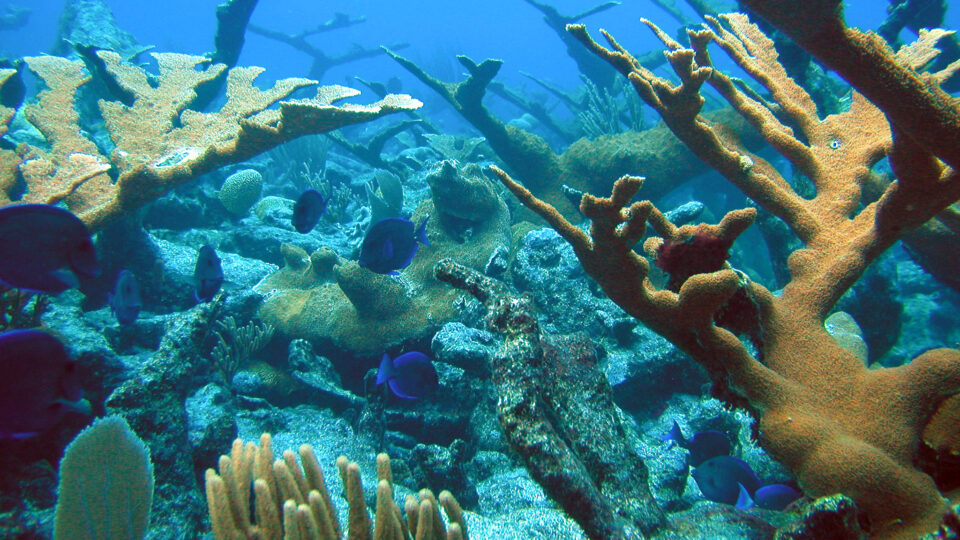
A new study by researchers at the University of California, Davis, has found that under the right circumstances, disease-resistant corals can rescue corals that are more vulnerable to disease.

The researchers monitored a disease outbreak at a coral nursery in the Cayman Islands.  They tracked the presence of disease in 650 coral fragments in various arrangements over a period of five months.  They found that some corals are more resistant to disease just by being around other corals that are particularly resistant.  In general, when there are only corals of the same genetic makeup, they are more vulnerable to disease than corals that grow among a mixture of genotypes.  But beyond that, some vulnerable corals become more resistant to disease just by being around other corals that are particularly resistant.  Proximity to the resistant genotypes helped to protect the susceptible corals from the effects of disease.

These findings provide new evidence that genetic diversity can help reduce disease transmission among corals and furthermore, it is important to consider how corals are arranged in coral nurseries or in reef restoration projects.

The ability of resistant coral to help protect vulnerable individuals appears to be similar to how vaccinations work among humans.  Vaccinated individuals resist a disease, which effectively erects a barrier that weakens a disease’s ability to move through a population.

The researchers hope that the findings of this study will be integrated into coral nursery and reef restoration projects.  By intentionally arranging corals with mixtures of genotypes, it will help rebuild coral resilience and help those corals that are vulnerable to disease to thrive.

**********

Web Links

Corals Saving Corals

Photo, posted December 30, 2014, courtesy of NOAA’s National Ocean Service via Flickr.

Earth Wise is a production of WAMC Northeast Public Radio
Making Cotton More Sustainable | Earth Wise

August 16, 2022 By EarthWise Leave a Comment

Producing cotton more sustainably

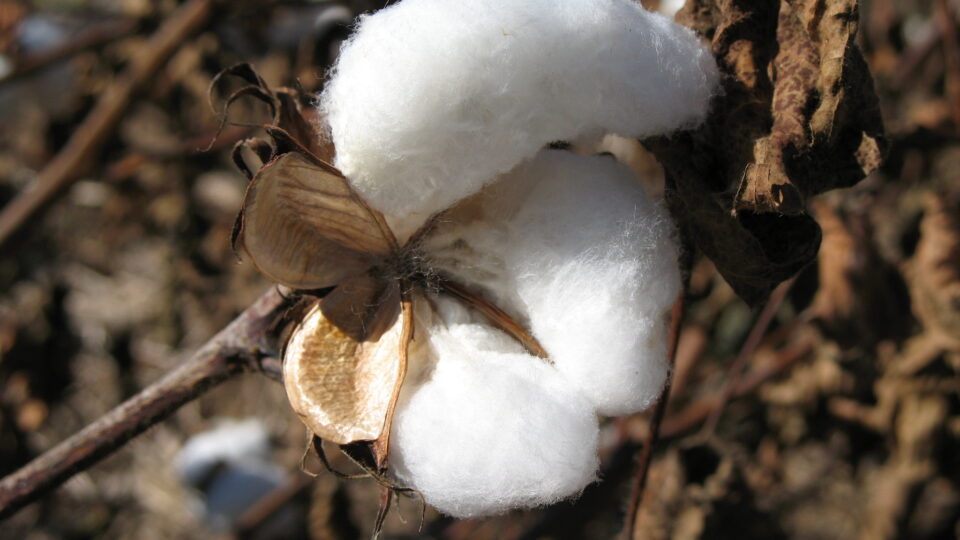
In the United States, cotton is a $7 billion annual crop grown in 17 states.  Cotton plants in the largest producing countries in the world – India, China, and the U.S. – are genetically very similar and, like other crops that lack diversity, can be at risk.

Cultivated cotton around the world has been bred to look and act very similar.  It is high yielding and easy to harvest using machines.  But it is also wildly unprepared to fight disease, drought, or insect-borne pathogens.

Researchers are looking beyond breeding for ways to combat the low genetic diversity of cultivated cotton.  There are new approaches that combine breeding with elements of genetic modification.  Most cotton in the U.S. has already been genetically modified to resist caterpillar pests.  But as new problems emerge, new solutions will be needed that may require complicated changes to the cotton genome.  Getting regulatory approval for a genetically modified crop is a long and expensive process.

However, ordinary genetic modification is not the only possibility.  Modern genetic sequencing technology can allow researchers to examine various wild cotton varieties and identify the genetic markers for desirable traits.  Once valuable genes in wild species have been identified, traditional plant breeding techniques could be used to produce cultivated cotton varieties that are more resistant to disease and drought.

Climate change is raising average global temperatures and some important cotton-producing regions such as the U.S. Southwest are becoming drier.  Researchers are hoping to produce cultivated cotton that can tolerate drought at the seedling stage.  The ultimate goal is to create more sustainable and genetically diverse cotton that can thrive in a changing world.

**********

Web Links

Cotton Breeders Are Using Genetic Insights To Make This Global Crop More Sustainable

Photo, posted November 9, 2008, courtesy of BP Takoma via Flickr.

Earth Wise is a production of WAMC Northeast Public Radio.

Primary Sidebar

Recent Episodes

  • An uninsurable future
  • Clean energy and jobs
  • Insect declines in remote regions
  • Fossil fuel producing nations ignoring climate goals
  • Trouble for clownfishes

WAMC Northeast Public Radio

WAMC/Northeast Public Radio is a regional public radio network serving parts of seven northeastern states (more...)

Copyright © 2026 ·