• Skip to primary navigation
  • Skip to main content
  • Skip to primary sidebar

Earth Wise

A look at our changing environment.

  • Home
  • About Earth Wise
  • Where to Listen
  • All Articles
  • Show Search
Hide Search
You are here: Home / Archives for gases

gases

Tracking emissions by satellite

June 20, 2025 By EarthWise Leave a Comment

Carbon dioxide and nitrogen oxides are two of the most problematic human-generated air pollutants that negatively impact air quality, the climate, and human health.  Satellites are an important tool for monitoring emissions of these pollutants, but they have limitations.  For the most part, satellites have limited spatial resolution, meaning that they can’t reliably narrow down the source of emissions sufficiently to pin down a specific location such as a power plant. 

Until now, there have been no instruments that can detect both carbon dioxide and nitrogen oxide simultaneously with high spatial resolution.  Often just nitrogen oxide measurements are made, and carbon dioxide levels estimated based on the fact that both are emitted together with typical ratios.

A German research team from the Max Planck Institute and the Heidelberg Institute have developed a technology for the EnMAP environmental satellite to detect both gases with an unprecedented spatial resolution of 30 meters.  Data from the satellite makes it possible to track multiple sources of emission plumes over several tens of kilometers.

The EnMAP system was originally designed for remote sensing of land surfaces.  The new research demonstrates that reliable measurements of trace gases are possible even with an instrument not specifically designed for atmospheric observations.  When using it, it’s possible to determine the distribution of carbon dioxide and nitrogen oxide in emission plumes from individual power plants.  The ability to measure both gases individually means that conclusions can be drawn about the technology, efficiency, and operating mode of the systems being measured.

**********

Web Links

German satellite measures CO2 and NO2 simultaneously from power plant emissions for the first time

Photo, posted September 19, 2020, courtesy of Sandor Somkuti via Flickr.

Earth Wise is a production of WAMC Northeast Public Radio
Wildfires And Air Quality | Earth Wise

October 26, 2023 By EarthWise Leave a Comment

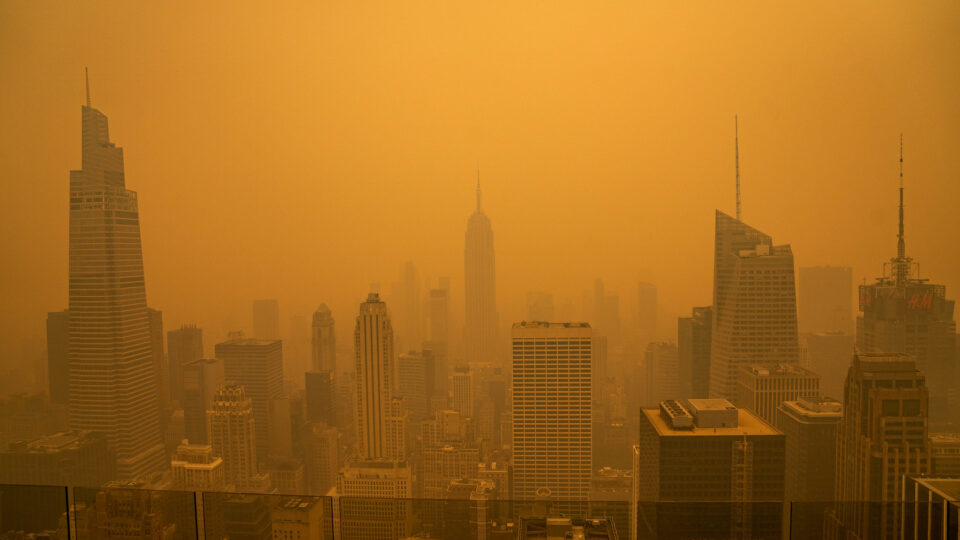
People in the Northeast have been dealing with unhealthy air quality in recent times because of smoke from hundreds of wildfires in Canada.  Canada has experienced a much higher than average incidence of blazes this year with nearly 500 fires burning uncontrolled at times.

It turns out that states far away from Canada aren’t necessarily free from the impact of the fires.  Early in October, smoke from a wildfire burning in Quebec made its way south all the way down to Florida and created unhealthy air quality and reduced visibility across much of the state.  Smoke from the same fire had created hazy air in Boston, New York City, and parts of Connecticut before heading south.

It took a rather unusual set of atmospheric conditions to make this happen.  The smoke drifted from Canada into the western Atlantic.  From there, it got trapped behind a cold front and was then pushed south along the east coast until it finally moved inland across Florida. 

Wildfires produce a variety of particles and gases from the burning of vegetation such as organic carbon, black carbon, nitrogen oxides, carbon monoxide and hazardous air pollutants.  The mixture of particles and gases in wildfire smoke is associated with respiratory symptoms like shortness of breath and reduced lung function, as well as dangerous cardiovascular effects.

Smoke from increasingly frequent and increasingly large fires has started to undo decades of gains in air quality brought about by air pollution policies.  According to researchers, wildfires in the United States in recent years have undone about 25% of past progress in cleaning up air pollution in states from coast to coast.

**********

Web Links

Wildfire Smoke From Canada Creates Unhealthy Air Quality in Florida

Photo, posted June 8, 2023, courtesy of Anthony Quintano via Flickr.

Earth Wise is a production of WAMC Northeast Public Radio
The World’s Hottest Day | Earth Wise

July 27, 2023 By EarthWise Leave a Comment

Early in July – for four days in a row – the average global temperature was the highest ever recorded.  As many places around the world endured dangerous heatwaves, the average global temperature on the fourth of July reached 62.92 degrees Fahrenheit, the highest ever recorded by human-made instruments.  On July 6th, the global temperature climbed even further to 63.01 degrees.

The average global temperature on an annual basis was about 56.7 degrees from the 1880s through the 1910s.  Temperatures rose a bit after that but ended up about 57.2 degrees until the 1980s.  After that, temperatures have risen fairly steadily as heat-trapping gases have accumulated in the atmosphere driving the current average above 58 degrees.

Global temperatures have only been directly measured since the mid-20th century.  There are proxy measurements from sources like tree rings, ice core samples, glacier measurements, and more that indicate that the recent readings may be the warmest days the earth has seen in millennia.

Average global temperature is determined using temperature readings at thousands of locations on both land and sea across the entire planet.  Those readings are compared with average temperatures at those locations for the date and the difference (known as the temperature anomaly) used to calculate a global average.

With the recent arrival of the El Niño in the Pacific Ocean, it is likely that the warming already being driven by greenhouse gas accumulation will intensify further. 

In a summer already marked by extreme heatwaves in many locations, having the entire planet 4 or 5 degrees hotter than normal is a very big deal and most certainly not a record to celebrate.

**********

Web Links

Earth reaches hottest day ever recorded 4 days in a row

Photo, posted October 29, 2008, courtesy of Darek via Flickr.

Earth Wise is a production of WAMC Northeast Public Radio

Hydrogen-Powered Transport In Britain | Earth Wise

November 27, 2020 By EarthWise Leave a Comment

hydrogen powered train coming to the UK

The first hydrogen-powered train in the UK had its first mainline runs at the end of September.  The train, known as HydroFLEX, was developed under a project headed by the University of Birmingham under the UK government’s Department for Transport. 

Hydrogen-powered trains do not emit harmful gases but rather use hydrogen and oxygen to produce electricity, water, and heat.  The technology in the HydroFLEX train will be available by 2023 to retrofit existing diesel-powered trains and thereby de-carbonize the rail network and make train travel greener and more efficient.

The UK has ambitious plans for the use of hydrogen technology.  The Department of Transport plans to publish a master plan in January that will outline how green hydrogen could power buses, trucks, rail, maritime, and aviation transport across the UK.

The HydroFLEX trial is taking place in Tees Valley in northeastern England and the plan is for that area to become a Hydrogen Transport Hub that will include the world’s largest versatile hydrogen refueling facility.   The plans for Tees Valley involve academia, industry, and government participants.  The next stages of the HydroFLEX project are well underway with the University of Birmingham developing a hydrogen and battery-powered module that can be fitted underneath a train to allow for more space for passengers in train cars.

The UK government’s Hydrogen for Transport Program is also funding a green hydrogen refueling station and 19 hydrogen-powered garbage trucks in Glasgow, Scotland.

The UK plans to switch to a net zero economy and their current program increasingly embraces hydrogen technology to provide more sustainable, greener forms of transportation.

***********

Web Links

UK embraces hydrogen-fueled future as transport hub and train announced

Photo, posted May 15, 2019, courtesy of Jeremy Segrott via Flickr.

Earth Wise is a production of WAMC Northeast Public Radio.

Melting Permafrost | Earth Wise

February 26, 2020 By EarthWise Leave a Comment

Thawing Permafrost Is Transforming the Arctic

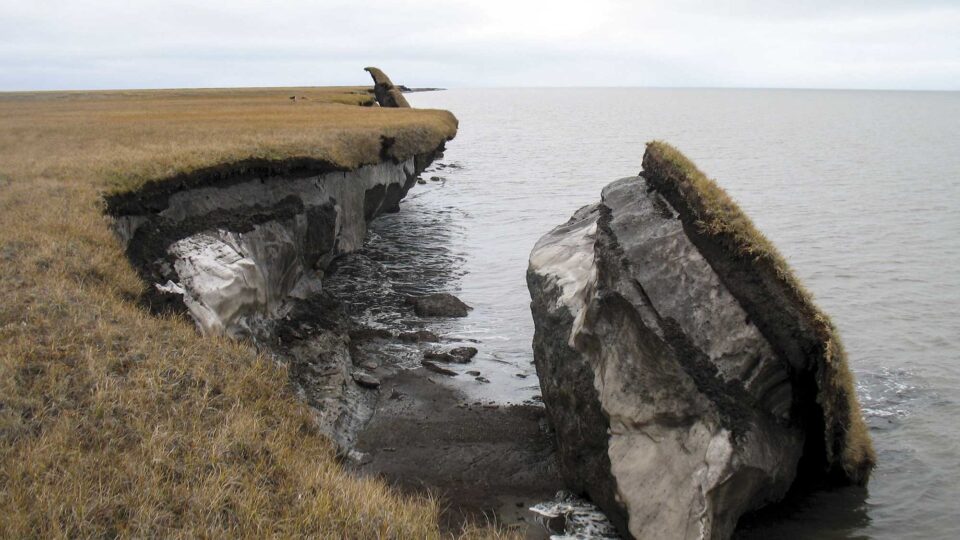
The Arctic is warming faster than any region on Earth and mostly we’ve been hearing about the rapid disappearance of Arctic sea ice.  But the land in the Arctic is also undergoing major changes, especially to the permafrost that has been there for millennia.

Permafrost occurs in areas where the temperature of the ground remains below freezing for two years or more.  About a quarter of the Northern Hemisphere’s landscape meets this criterion.  Most of the world’s permafrost is found in northern Russia, Canada, Alaska, Iceland, and Scandinavia.

Permafrost regions previously carpeted in cranberries, blueberries, shrubs, sedges, and lichen are now being transformed into nothing but mud, silt, and peat.  So-called regressive thaw slumps – essentially landslides – are creating large craters in the landscape.  (The Batagaika Crater in the Yana River Basin of Siberia is a kilometer long and 100 meters deep).

Apart from the violence being done to the Arctic landscape, the greatest concern is that the permafrost has locked in huge stores of greenhouse gases, including methane, carbon dioxide, and nitrous oxide.  It is estimated that the permafrost contains twice as much carbon as is currently contained in the atmosphere.  As the permafrost thaws, these gases will be released.  With them will be pathogens from bygone millennia whose impact cannot be predicted.  Climatologists estimate that 40% of the permafrost could be gone by the end of the century.

As the permafrost thaws, the region’s ecosystems are changing, making it increasingly difficult for subsistence indigenous people and Arctic animals to find food.  Landslides are causing stream flows to change, lakes to suddenly drain, seashores to collapse, and water chemistry to be altered.

The warming Arctic is about much more than disappearing sea ice.

**********

Web Links

How Thawing Permafrost Is Beginning to Transform the Arctic

Photo, posted February 9, 2017, courtesy of the U.S. Geological Survey via Flickr.

Earth Wise is a production of WAMC Northeast Public Radio.

New Membranes For Carbon Capture

October 2, 2019 By EarthWise Leave a Comment

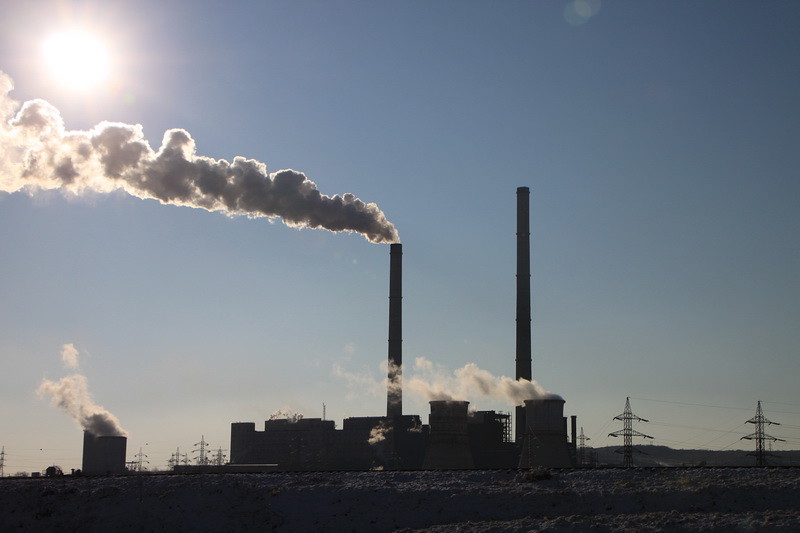
Drastically reducing the amount of carbon dioxide being emitted into the atmosphere is an essential goal in the effort to mitigate the effects of climate change.  While the ultimate solution is to avoid combustion of fossil fuels by the use of clean alternative energy sources, that transition will take time – possibly more time than we have.  As a result, there is a great deal of effort underway to develop techniques for capturing the carbon emitted by fossil fuel combustion and either recycling it or storing it.

There are multiple ways to capture carbon emissions, but the ultimate goal is to find a technique that is both inexpensive and scalable.  One promising technique involves the use of high-performance membranes, which are filters that can specifically pick out CO2 from a mix of gases, such as those coming out of a factory smokestack.

Scientists at a Swiss laboratory have now developed a new class of high-performance membranes that exceeds the targeted performance for carbon capture by a significant margin.  The membranes are based on single-layer graphene with a selective layer thinner than 20 nanometers – only about 40 atoms thick. The membranes are highly tunable in terms of chemistry, meaning that they can be designed to capture specific molecules.

The membranes are highly permeable – meaning that they don’t impede gas flow too much – but highly selective.  The CO2/N2 separation factor is 22.5, which means that 22.5 times more nitrogen can get through the membrane than carbon dioxide.

The work is just at the laboratory stage at this point, but it is a very promising step towards developing a practical scheme for keeping carbon dioxide from escaping from power-plant and factory smokestacks.

**********

Web Links

Next-gen membranes for carbon capture

Photo, posted December 28, 2010, courtesy of Emilian Robert Vicol via Flickr.

Earth Wise is a production of WAMC Northeast Public Radio.

Trees And Methane

August 14, 2019 By EarthWise Leave a Comment

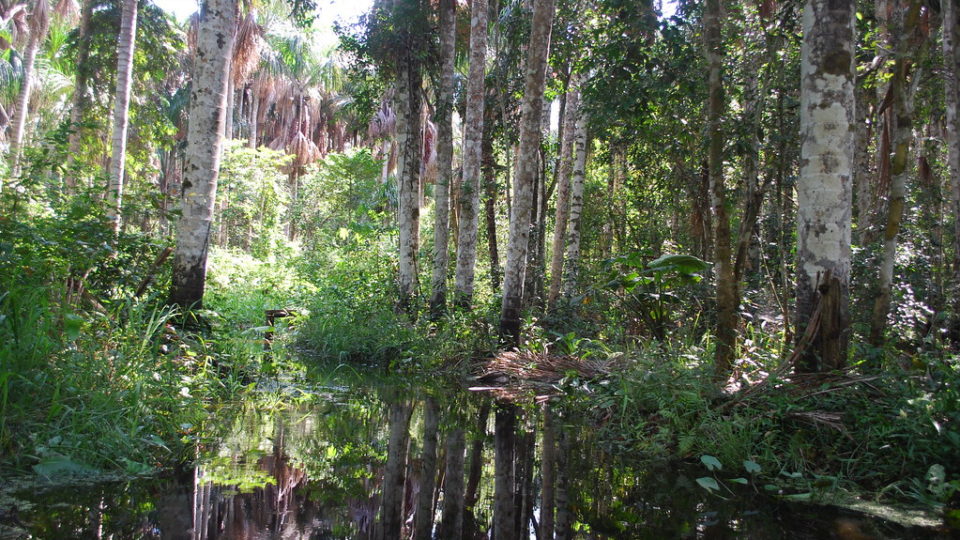
The Amazon is a source of many mysteries.  One that was as troubling as it was mysterious was the large amounts of methane emissions coming from the rainforest that were observed by satellites but that nobody could find on the ground.  In total, there were 20 million tons of methane whose origin was unknown.

An expedition by a British postdoctoral researcher who spent two months strapping gas-measuring equipment to thousands of trees has solved the mystery.  It turns out that trees, especially in the extensive flooded forests, were stimulating methane production in the waterlogged soils and pumping it into the atmosphere.

This research has uncovered a previously-ignored major source of the second most important greenhouse gas in the world.  Apparently, most of the world’s estimated 3 trillion trees emit methane at least some of the time.

This in no way implies that trees are bad for the climate and therefore should be cut down.  The reality is that the carbon storage capability of trees far outweighs their methane emissions.  But since corporations these days are planting trees to offset their carbon emissions, it is essential to know if their numbers add up.  Carbon accounting has to include the complex chemistry of trees and methane.

Wetland tree trunks can act as passive conduits for methane generated by micro-organisms in waterlogged soils.  The solid-looking trunks contain spaces and channels through which gases travel up and down.  But in wetland systems, trees also create the conditions, and provide the raw materials, for methane generation by micro-organisms.  Trees are essentially bioreactors.  Some trees even actively generate methane from photochemical reactions in their foliage.

Understanding the interactions of ecosystems and the atmosphere is a complicated business.

**********

Web Links

Scientists Zero in on Trees as a Surprisingly Large Source of Methane

Photo, posted December 13, 2008, courtesy of Ivan Mlinaric via Flickr.

Earth Wise is a production of WAMC Northeast Public Radio.

Smog And Solar Power

January 22, 2019 By EarthWise Leave a Comment

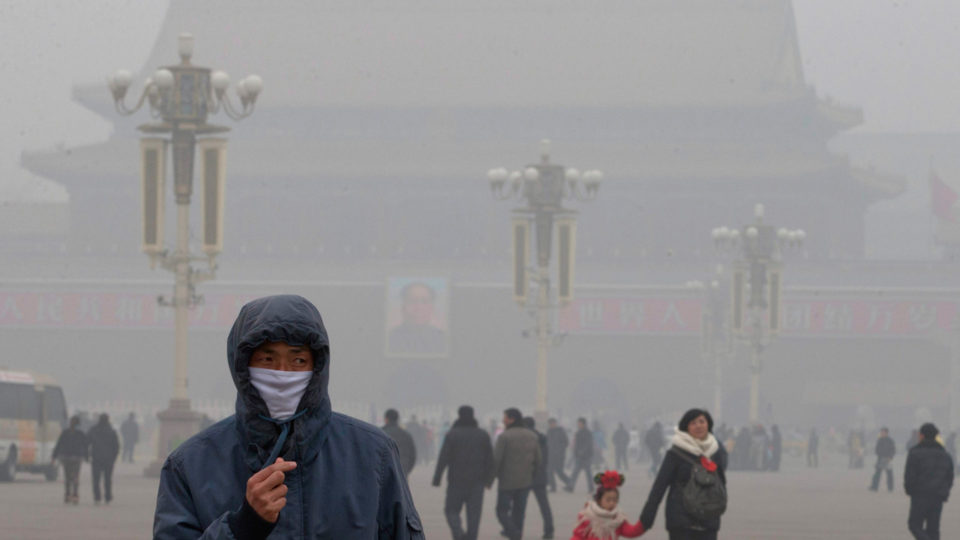
China has been struggling with some of the worst air pollution in the world.  Beijing frequently sits under a brown blanket made of exhaust gases from industry, cars and coal fires, which dump harmful particulate matter, soot, sulfur dioxide and nitrogen oxides into the air.

The human health consequences are severe.   According to the World Health Organization,air pollution contributes to about 1.6 million premature deaths in China each year.  World-wide, air pollution is implicated in over 7 million deaths annually.

Faced with this air pollution crisis, China has undertaken a wide variety of measures to improve its air and curb carbon dioxide emissions alongthe way.  Among other things, China has invested heavily in the deployment of solar power and has plans for ever greater expansion of solar power in the future.

A study by researchers at ETH in Zurich looked at the impact of China’s air pollution on the production of solar energy.  The smog in China’s cities reduces the amount of solar radiation that reaches the ground and therefore significantly reduces the power output of solar energy systems. According to the study, solar radiation would increase by an average of 11% nationwide as a result of strict air pollution control measures.  In some places, cleaning up the air would result in 26% more energy production.

China’s electric power industry is the world’s largest electricity producer, having passed the United States in 2011.  Two-thirds of the electricity in China still comes from coal, which, apart from the serious climate and health consequences associated with its use, continues to make it more difficult to switch to clean solar power.  Much work remains to be done.

**********

Web Links

Fighting smog supports solar power

Photo, posted February 7, 2014, courtesy of Flickr. 

Earth Wise is a production of WAMC Northeast Public Radio.

Houseplants And Clean Air

October 6, 2016 By WAMC WEB

https://earthwiseradio.org/wp-content/uploads/2016/10/EW-10-06-16-Houseplants-and-Clean-Air.mp3

Many of us like to have houseplants.  They add a bit of nature to our homes and they look nice.   It turns out that they have health advantages as well.

[Read more…] about Houseplants And Clean Air

Primary Sidebar

Recent Episodes

  • An uninsurable future
  • Clean energy and jobs
  • Insect declines in remote regions
  • Fossil fuel producing nations ignoring climate goals
  • Trouble for clownfishes

WAMC Northeast Public Radio

WAMC/Northeast Public Radio is a regional public radio network serving parts of seven northeastern states (more...)

Copyright © 2026 ·