• Skip to primary navigation
  • Skip to main content
  • Skip to primary sidebar

Earth Wise

A look at our changing environment.

  • Home
  • About Earth Wise
  • Where to Listen
  • All Articles
  • Show Search
Hide Search
You are here: Home / Archives for gains

gains

Wildfires And Air Quality | Earth Wise

October 26, 2023 By EarthWise Leave a Comment

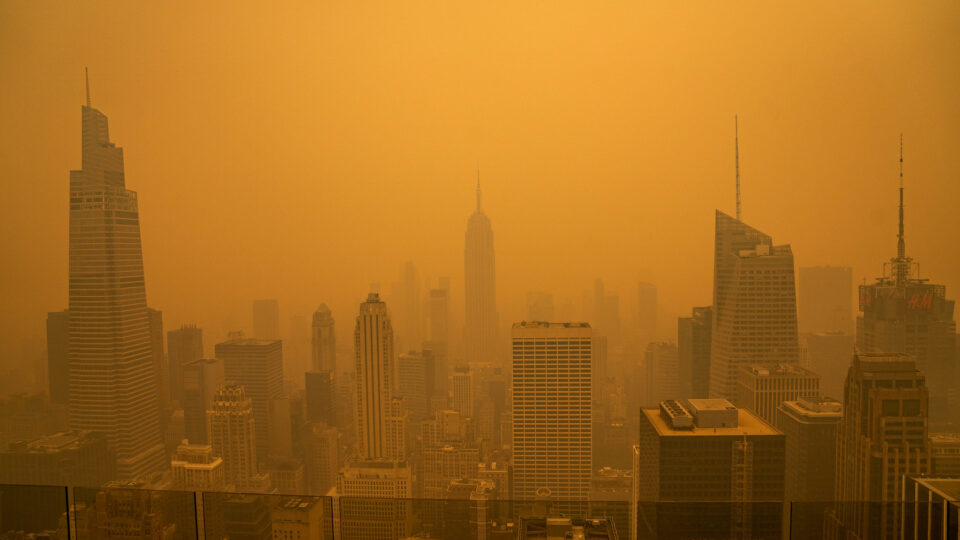
People in the Northeast have been dealing with unhealthy air quality in recent times because of smoke from hundreds of wildfires in Canada.  Canada has experienced a much higher than average incidence of blazes this year with nearly 500 fires burning uncontrolled at times.

It turns out that states far away from Canada aren’t necessarily free from the impact of the fires.  Early in October, smoke from a wildfire burning in Quebec made its way south all the way down to Florida and created unhealthy air quality and reduced visibility across much of the state.  Smoke from the same fire had created hazy air in Boston, New York City, and parts of Connecticut before heading south.

It took a rather unusual set of atmospheric conditions to make this happen.  The smoke drifted from Canada into the western Atlantic.  From there, it got trapped behind a cold front and was then pushed south along the east coast until it finally moved inland across Florida. 

Wildfires produce a variety of particles and gases from the burning of vegetation such as organic carbon, black carbon, nitrogen oxides, carbon monoxide and hazardous air pollutants.  The mixture of particles and gases in wildfire smoke is associated with respiratory symptoms like shortness of breath and reduced lung function, as well as dangerous cardiovascular effects.

Smoke from increasingly frequent and increasingly large fires has started to undo decades of gains in air quality brought about by air pollution policies.  According to researchers, wildfires in the United States in recent years have undone about 25% of past progress in cleaning up air pollution in states from coast to coast.

**********

Web Links

Wildfire Smoke From Canada Creates Unhealthy Air Quality in Florida

Photo, posted June 8, 2023, courtesy of Anthony Quintano via Flickr.

Earth Wise is a production of WAMC Northeast Public Radio
Clean Energy From North Africa | Earth Wise

April 7, 2023 By EarthWise Leave a Comment

Europe turning to North Africa for its clean energy needs

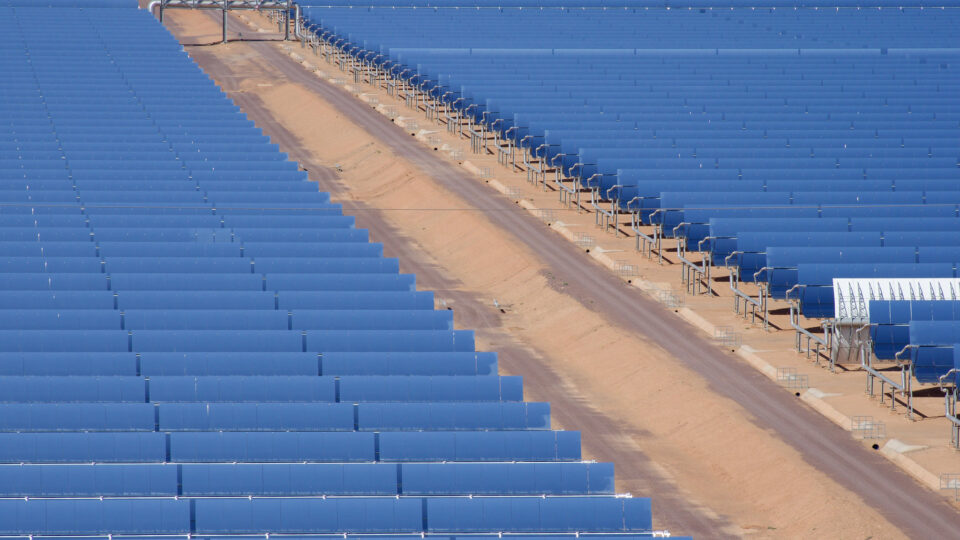
Europe is hungry for clean energy.  The war in Ukraine has amplified Europe’s desire to end its reliance on Russian natural gas.  Increasingly, Europe is pushing to install giant solar energy farms in sunny North Africa and transport the energy through underwater cables.

Solar panels in sunny North Africa generate up to three times more energy than those in Europe.  As a result, solar farms and wind farms as well are proliferating south of the Mediterranean Sea.  Morocco’s Noor and Egypt’s Benban solar farms are among the largest in the world.  Many of these farms were initially built to boost domestic power supplies and reduce dependence on coal.  But now these farms are increasingly supplying green energy to industrial neighbors in Europe.

Morocco has signed deals with the European Union to expand power exports.  Egypt is considering proposals for cables to link to Greece.  Another planned cable would link new solar farms in Tunisia to Italy’s grid.  These projects would certainly bring money and jobs to North African countries, but it isn’t all good news.

There are growing concerns about the environmental impacts of Europe outsourcing its energy needs.  Desert ecosystems could be greatly compromised.  And much of this development is likely to happen with only minimal community consultation or ecological assessment.  Half of Africa’s population does not have access to reliable power grids. Electricity becoming a major export is not likely to improve this situation.

Europe has long obtained many resources from the developing world.  Now it is tapping into the sunshine and wind in other lands.  It remains to be seen if North Africa’s countries will achieve the large potential gains those resources can offer them.

**********

Web Links

In Scramble for Clean Energy, Europe Is Turning to North Africa

Photo, posted October 17, 2019, courtesy of Richard Allaway via Flickr.

Earth Wise is a production of WAMC Northeast Public Radio
Decreasing Forest Area Per Capita | Earth Wise

September 7, 2022 By EarthWise Leave a Comment

Over the past 60 years, global forest area has decreased by 315,000 square miles, an area about twice the size of California. Combined with global population growth over that period, this has resulted in more than a 60% decline in global forest area per capita.

The continuous loss as well as degradation of forest affects the integrity of forest ecosystems and reduces their ability to generate and provide essential services and sustain biodiversity.  It impacts the lives of at least 1.6 billion people worldwide – primarily in developing countries – who depend upon forests in multiple ways.

According to the new study published in the journal Environmental Research Letters, forest losses have been occurring primarily in lower-income countries in the tropics while forest gains have occurred in higher-income countries in the mid-latitudes or extratropics. 

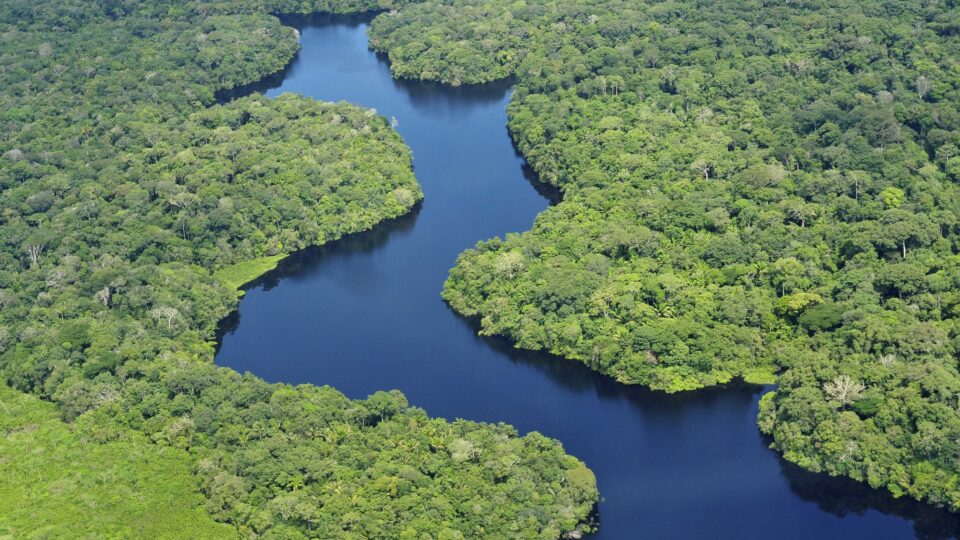
More than half of the world’s forest losses were in Brazil, home to the Amazon rainforest.  In the past 60 years, that country has had a net loss of 170,000 square miles of forest.  While most high-income countries had net forest gains, Canada actually had a net loss of about 11,000 square miles of forest.

Economic growth has a stronger association with net forest gain than with net forest loss.  Therefore, the study highlights the need to strengthen the support given to lower income countries, especially in the tropics, to help improve their capacity to minimize or curtail their forest losses.  To help address this ongoing displacement of forest losses to lower income countries, higher-income nations need to reduce their dependence on imported tropic forest products.

**********

Web Links

New study finds global forest area per capita has decreased by over 60%

Photo, posted April 19, 2011, courtesy of ©2011CIAT/NeilPalmer via Flickr.

Earth Wise is a production of WAMC Northeast Public Radio.

Primary Sidebar

Recent Episodes

  • An uninsurable future
  • Clean energy and jobs
  • Insect declines in remote regions
  • Fossil fuel producing nations ignoring climate goals
  • Trouble for clownfishes

WAMC Northeast Public Radio

WAMC/Northeast Public Radio is a regional public radio network serving parts of seven northeastern states (more...)

Copyright © 2026 ·