• Skip to primary navigation
  • Skip to main content
  • Skip to primary sidebar

Earth Wise

A look at our changing environment.

  • Home
  • About Earth Wise
  • Where to Listen
  • All Articles
  • Show Search
Hide Search
You are here: Home / Archives for fur

fur

Raccoons in Europe

July 25, 2025 By EarthWise Leave a Comment

Raccoons are popular and prevalent in Europe

Tens of thousands of raccoons live in Kassel, a city of 200,000 people in central Germany known for its art scene.  Overall, there are an estimated 1.5 million raccoons in Germany.  The omnivorous mammals are native to North America, but they were brought to Germany in the 1930s for fur farming.  Fur farming ultimately ceased but escaping animals and intentional releases ultimately led to a large wild population of raccoons in the years afterward.

Raccoons have gradually made their way across Europe with animals spotted in France, Denmark, Poland, Italy, Austria, and elsewhere.

The people of Kassel have embraced raccoons.  In fact, the place is often called the raccoon city.  Several sports teams are named after the animals.  Many people feed them, and they are pretty much everywhere.  On the other hand, residents have to lock up their trash receptacles and they have to check under their cars before driving places.

Since 2016, the EU has classified racoons as an invasive species because of the threat they pose to native wildlife.  There are no equivalent species like them in Europe.  So, they are a threat to ground-nesting birds, bats in caves, amphibians, and more.  They are able to eat almost anything. 

What to do about raccoons in Europe is unclear.  Despite their popularity in Germany, 200,000 raccoons were culled last year.  But raccoon supporters argue that minks, which are native to Europe, and especially cats, are responsible for much of the pressure on species racoons are accused of consuming.  Meanwhile, Kassel citizens continue to enjoy their raccoons.

**********

Web Links

Rampaging raccoons: how the American mammals took over a German city – and are heading across Europe

Photo, posted December 20, 2016, courtesy of Big Cypress National Preserve via Flickr.

Earth Wise is a production of WAMC Northeast Public Radio
Koalas Are Endangered | Earth Wise             

March 22, 2022 By EarthWise Leave a Comment

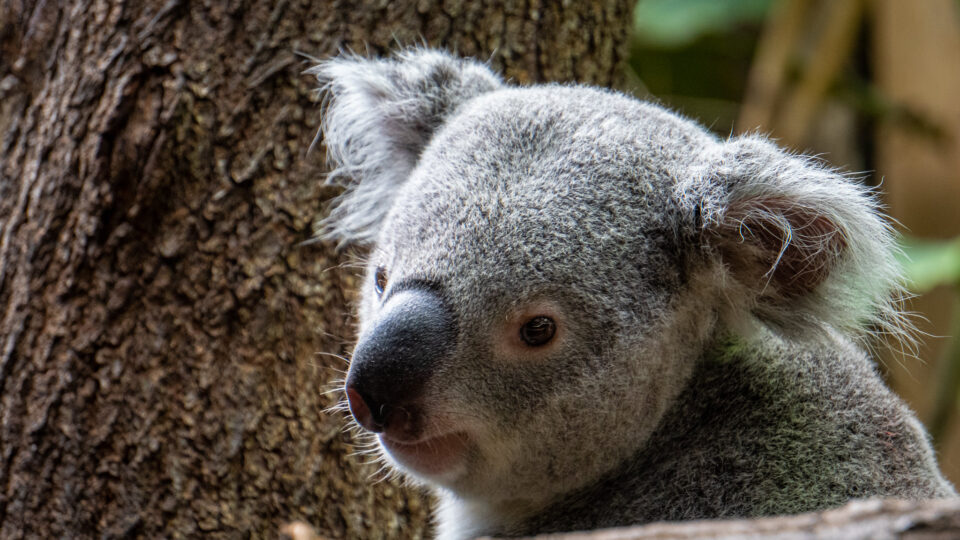
Koalas are endangered

The koala is one of the world’s most iconic animal species and is widely considered to be the symbol of Australia.   Koalas are not bears; they are marsupials. 

Being iconic symbols is not sufficient to prevent koalas from going extinct.  In the 1920s, hundreds of thousands of koalas were shot for the fur trade, greatly reducing their population.

More recently, drought, bush fires, disease, and habitat loss have drastically reduced the numbers of koalas.  Since 2018, there has been a 30% decline in koala populations across Australia.  It is difficult to get an accurate count of the animals because they don’t move around much, and they live high up in tree canopies where they are hard to spot.

 Estimates are that the koala population has dropped from between 45,000-82,000 in 2018 to between 32,000-58,000 in 2021.  The koala is now extinct in 47 Australian electorates and in many others, there are only handfuls of animals remaining.   The population decline was accelerated by devastating wildfires in late 2019 into early 2020.  Some estimates are that koalas could be extinct by 2050.  Conservation organizations around the world have been demanding greater protection for koalas for years.

Given this dire situation, the Australian government recently declared the koala an endangered species, reclassifying it from being a vulnerable species.  The government plans to adopt a recovery plan that will include new laws protecting koalas and their natural woodland environments.  The details of the plan remain to revealed.

According to the Australian Koala Foundation, however, the new status of the koala means very little in and of itself.  If the clearing of the koala habitat continues, the species has little chance of surviving in the wild.

**********

Web Links

‘In rapid decline’: Australia has lost 30% of its koalas in just 3 years, foundation says

Australia Declares Koalas an Endangered Species

Photo, posted September 18, 2019, courtesy of Guido Konrad via Flickr.

Earth Wise is a production of WAMC Northeast Public Radio.

Carnivores Eating Human Food | Earth Wise

December 1, 2020 By EarthWise Leave a Comment

Carnivores increasingly relying on humans for food

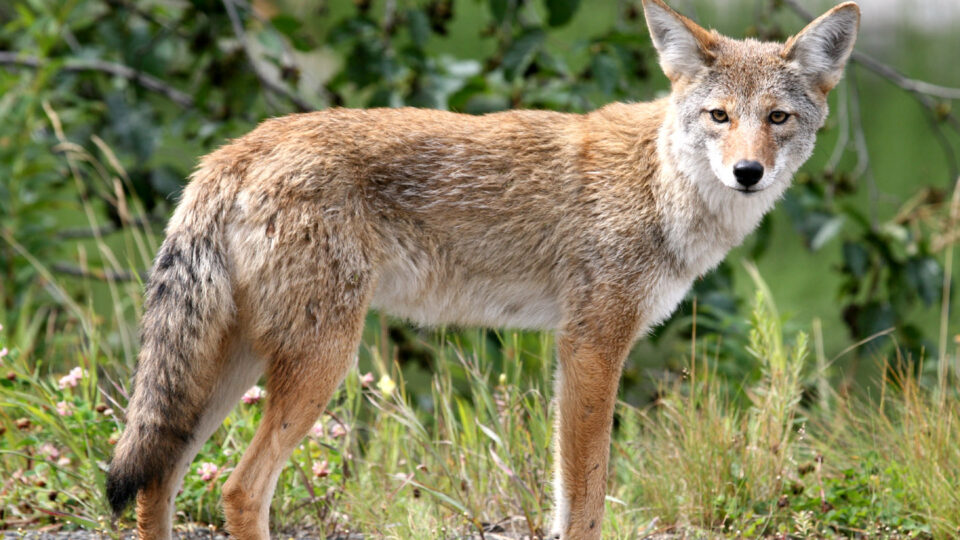
A recent study by ecologists at the University of Wisconsin-Madison has found that carnivores living near people often get more than half of their diets from human food sources rather than from their traditional prey.  This represents a major lifestyle disruption that puts North America’s carnivore-dominated ecosystems at risk.

The researchers studied the diets of seven predator species across the Great Lakes region using bone and fur samples taken from animals from areas as remote as national parks to metropolitan areas including Albany, New York.  What they found – unsurprisingly – is that the closer carnivores lived to cities and farms, the more human food they ate.  Dietary contributions of human food varied with species, but on average was more than 25% in most human-altered habitats.

The researchers studied the diets of carnivores like bobcats, coyotes, red and gray foxes, fishers, and American martens by chemical analysis of samples from Minnesota, Wisconsin, upstate New York, and the Upper Peninsula of Michigan.  The diets of the animals could be analyzed on the basis of the carbon content of bone and fur samples.  Human food, heavy in corn and sugar, lends these samples a distinctive carbon isotope signature.  In contrast, prey species confer their own carbon signatures.  The ratio of these isotope fingerprints provides information on the proportion of an animal’s diet that came from human sources.

Relying upon human food increases how much carnivores overlap one another in their competition for food.  Compared to when these predators vie for distinct prey, there can be more conflicts between animals.  Changing how a species gets their food can have far-ranging effects on ecosystems.

**********

Web Links

Carnivores living near people feast on human food, threatening ecosystems

Photo, posted August 18, 2007, courtesy of Jitze Couperus via Flickr.

Earth Wise is a production of WAMC Northeast Public Radio.

Primary Sidebar

Recent Episodes

  • An uninsurable future
  • Clean energy and jobs
  • Insect declines in remote regions
  • Fossil fuel producing nations ignoring climate goals
  • Trouble for clownfishes

WAMC Northeast Public Radio

WAMC/Northeast Public Radio is a regional public radio network serving parts of seven northeastern states (more...)

Copyright © 2026 ·