• Skip to primary navigation
  • Skip to main content
  • Skip to primary sidebar

Earth Wise

A look at our changing environment.

  • Home
  • About Earth Wise
  • Where to Listen
  • All Articles
  • Show Search
Hide Search
You are here: Home / Archives for friendly

friendly

Pollinator-friendly solar power

February 16, 2024 By EarthWise Leave a Comment

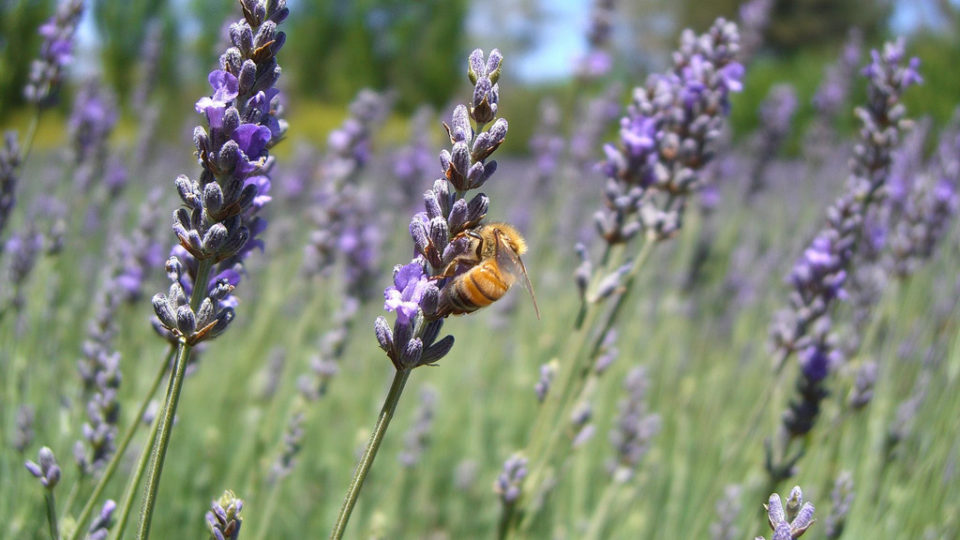
Global insect biodiversity has been in decline as a result of habitat loss, pesticide use, and climate change.  Restoring insect habitat is a way to reverse that trend.  Expanded use of solar energy is a critical part of mitigating climate change.  In order to meet the grid decarbonization goals the U.S. has set, approximately 10 million acres of land will be needed for large-scale solar development.  According to a new study by Argonne National Laboratory and the National Renewable Energy Laboratory, these two efforts are complementary.

Disturbed lands such as former agricultural fields are ideal locations to install solar panels.  These lands can also be established as excellent habitats for insect pollinators and other wildlife that provide important ecosystem services.

A five-year study looked at two solar sites in southern Minnesota that were built on retired agricultural land.  The sites were planted with native grasses and flowering plants in early 2018.  Over a five-year period, the researchers conducted hundreds of observational surveys for flowering vegetation and insect communities, evaluating changes in plant and insect abundance and diversity.

The team observed increases for all habitat and biodiversity metrics.  The total insect abundance tripled, while native bees showed a 20-fold increase in numbers. 

The research highlights the relatively rapid insect community responses to habitat restoration at solar energy sites.  If properly sited, the solar sites can offset the losses of natural areas created by solar farms and actually make prime farmland more productive through the pollination services provided by habitat-friendly solar energy.

**********

Web Links

Insect populations flourish in the restored habitats of solar energy facilities

Photo, posted February 28, 2014, courtesy of Tom Koerner/USFWS via Flickr.

Earth Wise is a production of WAMC Northeast Public Radio

How Environmentally Friendly Are We? | Earth Wise

January 27, 2020 By EarthWise 1 Comment

Many of us are very concerned about the environment and want to try to do the right things as we go about our daily lives.  New research from the University of Gothenburg shows that we tend to overestimate just how much we are actually doing.

A study of over 4,000 people in United States, England, India, and Sweden revealed that most people are convinced that they act more environmentally friendly than the average person.  Their actions might include buying eco-labelled products, saving household energy, recycling, driving a hybrid or electric car, and reducing purchases of plastic bags.  Participants in the survey rated themselves as more environmentally active than other people, including both unknown people as well as their own friends.

The results are in keeping with a general tendency people have to overestimate their own abilities.  Studies over the years have shown that most people consider themselves, for example, to be more honest, more creative, and better drivers than others.  This sort of over-optimism apparently also applies to environmentally friendly behaviors.

The data from the survey revealed that the participants were more likely to overestimate their engagement in activities they perform often and draw the faulty conclusion that the things they do often, they in fact do more often than others.

A consequence of thinking that you are more environmentally friendly than other people is that it can reduce the motivation to act environmentally friendly in the future.  In fact, when we think we are more environmentally friendly than others, we actually end up becoming less environmentally friendly.

Logically speaking, the majority of people cannot be more environmentally friendly than the average person.  We are not living in Lake Wobegone where all children are above average.

**********

Web Links

The majority consider themselves more environmentally friendly than others

Photo, posted March 6, 2014, courtesy of Karlis Dambrans via Flickr.

Earth Wise is a production of WAMC Northeast Public Radio.

Bee Friendly Amsterdam

February 11, 2019 By EarthWise Leave a Comment

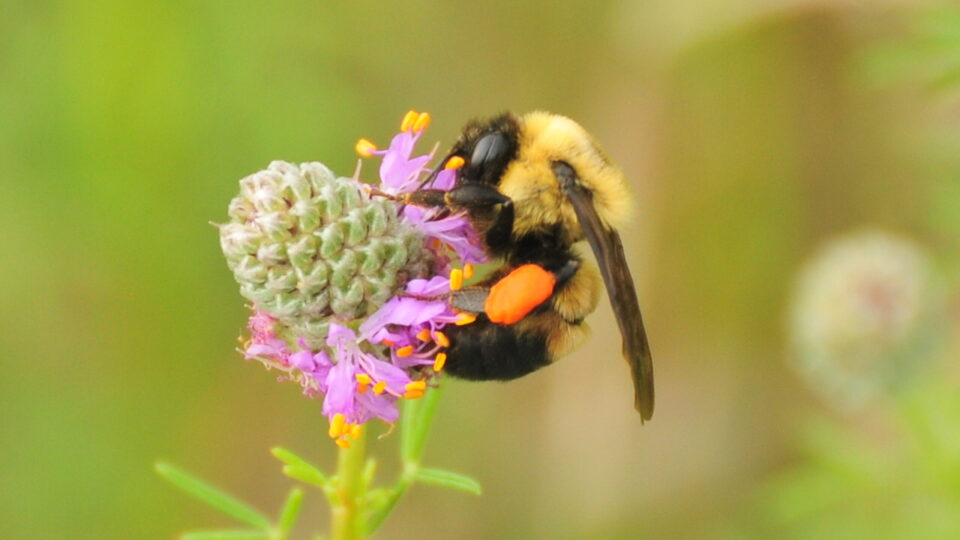
Scientists around the world have been sounding the alarm for years about the decline of bees and other pollinators that are crucial to the growth of crops.   One place where this trend has been bucked is in Amsterdam.  The diversity of wild bee and honeybee species in the Dutch capital has actually increased by 45% since 2000.

The city attributes this success to creating bee-friendly environments including the installation of so-called insect hotels.  There has also been a ban on the use of chemical pesticides on public land.

Four years ago, Amsterdam set a goal to convert half of all public green spaces to native plants including species that produce flowers and fruits that provide nourishment for bees.  Developers in Amsterdam are encouraged to install green roofs on new buildings which reduce reliance on heating and cooling systems and also create habitat for wildlife.

Residents can request to have a 16-inch strip of pavement adjacent to their homes removed in order to plant shrubs, flowers or climbing vines.  When a new highway was built in the area in 2015, local activists planted wildflowers along the sides of the road that otherwise would have been left with only gravel or grass.  This practice has spread to other major routes and along dikes and railways and is referred to as the Honey Highway.

All of these efforts seem to be having a positive effect.  An initial survey was conducted in 2000 to establish a baseline.  A 2015 survey of pollinators found 21 bee species not previously documented in the city.  The rest of the Netherlands has not done as well, and the Dutch government has recently introduced a pollinator strategy to revive bees, butterflies and other insects crucial to the country’s food crop.

**********

Web Links

Bees are dying at an alarming rate. Amsterdam may have the answer.

Photo, posted December 28, 2006, courtesy of Flickr.

Earth Wise is a production of WAMC Northeast Public Radio.

Primary Sidebar

Recent Episodes

  • An uninsurable future
  • Clean energy and jobs
  • Insect declines in remote regions
  • Fossil fuel producing nations ignoring climate goals
  • Trouble for clownfishes

WAMC Northeast Public Radio

WAMC/Northeast Public Radio is a regional public radio network serving parts of seven northeastern states (more...)

Copyright © 2025 ·