
• Skip to primary navigation
  • Skip to main content
  • Skip to primary sidebar

Earth Wise

A look at our changing environment.

  • Home
  • About Earth Wise
  • Where to Listen
  • All Articles
  • Show Search
Hide Search
You are here: Home / Archives for fossils

fossils

Plants Paying For Biofuels | Earth Wise

May 7, 2020 By EarthWise Leave a Comment

Plants can make biofuels cheaper

Biofuels are an important element in broader strategies to replace petroleum in transportation fuels like gasoline, diesel, and jet fuel.  The idea is that biofuels recycle carbon by getting it from growing plants rather than from fossil sources.  The biggest problem with biofuels is that they cost more than conventional petroleum fuels, so there is economic incentive to keep burning the fossil fuels.

One strategy to make biofuels cost competitive is to have the plants provide additional economic benefits beyond being a feedstock for fuel.  This in principle can be done by engineering plants to produce valuable chemical compounds, or bioproducts, as they grow.  Bioproducts include such things as flavoring agents and fragrances as well as biodegradable plastic.  These bioproducts can be extracted from the plants and then the remaining plant material can be converted to fuel. 

Researchers at Lawrence Berkeley National Laboratory recently published a study to determine what quantities of bioproducts plants need to produce to result in cost-effective biofuel production.

The study looked at a compound called limonene, which is used for flavoring and fragrance.  They calculated that if this compound was accumulated at 0.6% of the biomass dry weight, it would offer net economic benefits to biorefineries.  This corresponds to recovering 130 pounds of limonene from 10 tons of sorghum on an acre of land.

Such quantities are completely practical but, on the other hand, none of these substances are needed in huge quantities. Just six refineries could supply the world with limonene.  So, fuel crops would need to be engineered to produce a broad range of bioproducts to enable a viable cost-effective biofuel industry.

**********

Web Links

Making Biofuels Cheaper by Putting Plants to Work

Photo, posted September 28, 2019, courtesy of Michele Dorsey Walfred via Flickr.

Earth Wise is a production of WAMC Northeast Public Radio.
Sustainable Plastics

January 28, 2019 By EarthWise Leave a Comment

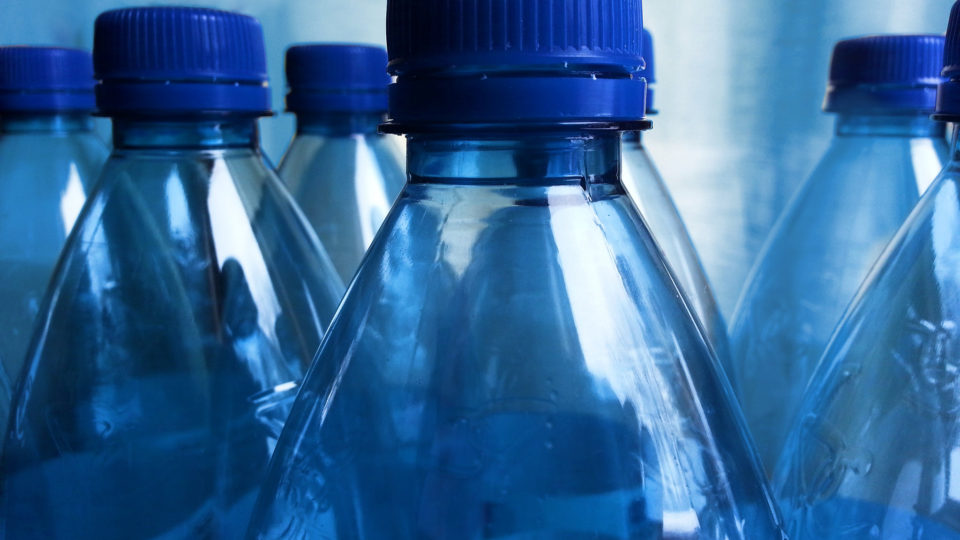
According to the United Nations, plastic accounts for up to 90% of all the pollutants in the ocean. Conventional plastics take hundreds of years to decay, so all the plastic that gets into the oceans piles up and endangers marine life and pollutes the environment. Unfortunately, there are few comparable, environmentally friendly alternatives.  

An often-proposed solution is bioplastics, which are not made from petroleum and degrade quickly.  The downside of bioplastics is that growing the plants or bacteria used to make the plastic requires fertile soil and fresh water, which are scarce commodities in many places.

One such place is Israel.  So, researchers there at Tel Aviv University have developed a process to make a bioplastic polymer that doesn’t require land or fresh water.  The new polymer is derived from microorganisms that feed on seaweed.  It is biodegradable, produces zero toxic waste and recycles into organic waste.

The polymer is called polyhydroxyalkanoate, or PHA for short.  The raw material is multicellular seaweed, cultivated in the ocean.  These algae are eaten by single-celled microorganisms, which also grow in salty seawater and produce a polymer that can be used to make bioplastic.  PHA is already produced in commercial quantities, but it is currently made from plants that require agricultural land and fresh water.  The new process would enable countries with limited fresh water, such as Israel, China and India, to switch from petroleum-based plastics to biodegradable plastics.

Plastics from fossil sources are one of the world’s biggest pollution problems.  The new study shows that it is possible to produce bioplastic completely based on marine resources in an environmentally-friendly process. 

**********

Web Links

Sustainable ‘plastics’ are on the horizon

Photo, posted March 14, 2015, courtesy of Flickr.

Earth Wise is a production of WAMC Northeast Public Radio.

Examining Sea Level Rise

January 17, 2019 By EarthWise Leave a Comment

It’s no secret that sea levels along the East Coast of the United States are rising.  But what’s less known is that the water isn’t rising at the same rate everywhere.  As the climate continues to change, some cities may remain dry while others struggle to keep water out. 

During the 20th century, sea levels rose about 18 inches near Cape Hatteras in North Carolina and along the Chesapeake Bay in Virginia.  During that same time period, New York City and Miami experienced a 12 inch sea level rise, while the waters near Portland, Maine only rose 6 inches.  According to a study recently published in the journal Nature, there’s an explanation for this. 

The variation is a result of a phenomenon called “post-glacial rebound.”  During the last ice age, huge sheets of ice once covered land areas in the Northern Hemisphere, including parts of the Northeast U.S.  The weight of the ice weighted down the land like a boulder on a trampoline.  At the same time, peripheral lands such as the U.S. mid-Atlantic coast rose up.  As the ice melted, the previously weighted-down regions rebounded while the peripheral lands began to sink.  While these ice sheets disappeared some 7,000 years ago, this see-sawing of post-glacial rebound continues to this day. 

Researchers combined data from GPS satellites, tide gauges, and fossils in sediment with complex geophysical models to produce this comprehensive view of sea level change since 1900.  While post-glacial rebound accounts for most of the sea level variation along the East Coast, researchers noted that when that factor is stripped away, “sea level trends increased steadily from Maine all the way down to Florida.”

**********

Web Links

Why is sea level rising faster in some places along the US East Coast than others?

Photo, posted August 24, 2014, courtesy of Bill Dickinson via Flickr.

Earth Wise is a production of WAMC Northeast Public Radio.

Primary Sidebar

Recent Episodes

  • An uninsurable future
  • Clean energy and jobs
  • Insect declines in remote regions
  • Fossil fuel producing nations ignoring climate goals
  • Trouble for clownfishes

WAMC Northeast Public Radio

WAMC/Northeast Public Radio is a regional public radio network serving parts of seven northeastern states (more...)

Copyright © 2026 ·