• Skip to primary navigation
  • Skip to main content
  • Skip to primary sidebar

Earth Wise

A look at our changing environment.

  • Home
  • About Earth Wise
  • Where to Listen
  • All Articles
  • Show Search
Hide Search
You are here: Home / Archives for forecasting

forecasting

Predicting major earthquakes

October 10, 2024 By EarthWise Leave a Comment

Researchers are exploring how to predict major earthquakes

Natural disasters continue to be major threats for people, just as they always have been.  But modern technology has greatly improved our ability to prepare for and, in many cases, escape from the worst effects of these events.  A good example is hurricane forecasting.  Nowadays, there is plenty of warning when a major hurricane is headed toward a populous area.  It is still up to people to get away from the danger zone, but at least there is the opportunity to do so.

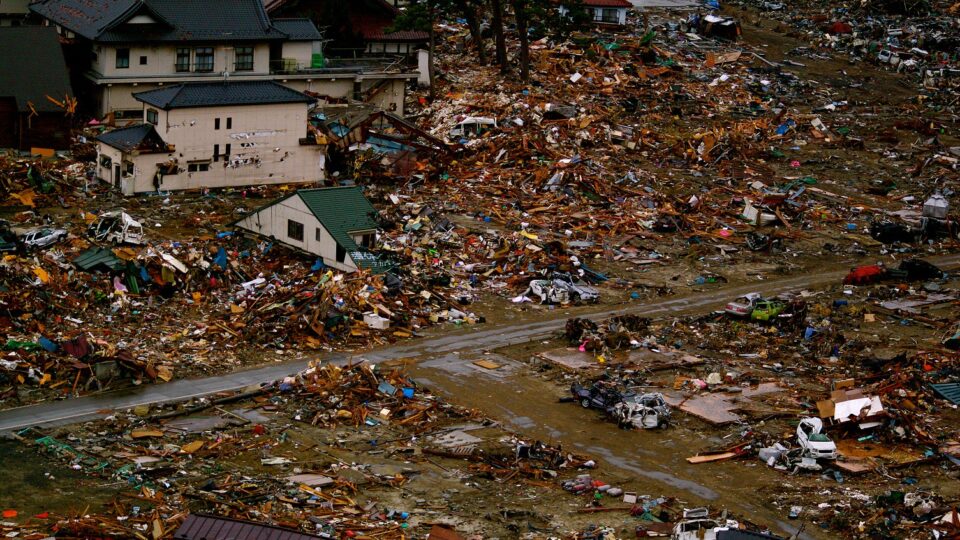
Major earthquakes are a different story.  There is generally little or no warning when one will strike.  But scientists at the University of Alaska Fairbanks and the Ludwig Maximilian University in Munich, Germany have developed a technique that may provide days or even months of warning about an impending major earthquake.

The detection method is based on machine learning and is described in a paper in the journal Nature Communications.  The researchers wrote a computer algorithm that looks for abnormal seismic activity.  Advanced statistical techniques found that approximately three months of abnormal low-magnitude regional seismicity occurred in the regions where two major earthquakes took place.  One was the magnitude 7.1 Anchorage earthquake in 2018 and the other was a similar-sized quake in Ridgecrest, California in 2019.

Considerably more testing – particularly in real-time rather than looking at historical data – is needed.  But accurate earthquake forecasting has the potential to save lives and reduce economic losses.  However, there are ethical and practical questions to answer.  False alarms could lead to unnecessary panic, economic disruption, and loss of public trust.  On the other hand, missed predictions can have catastrophic consequences.

**********

Web Links

UAF scientist’s method could give months’ warning of major earthquakes

Photo, posted January 22, 2012, courtesy of the Climate and Ecosystems Change Adaptation Research University Network via Flickr.

Earth Wise is a production of WAMC Northeast Public Radio
California Flooding | Earth Wise

February 2, 2023 By EarthWise Leave a Comment

Devastating flooding kicks off the new year in California

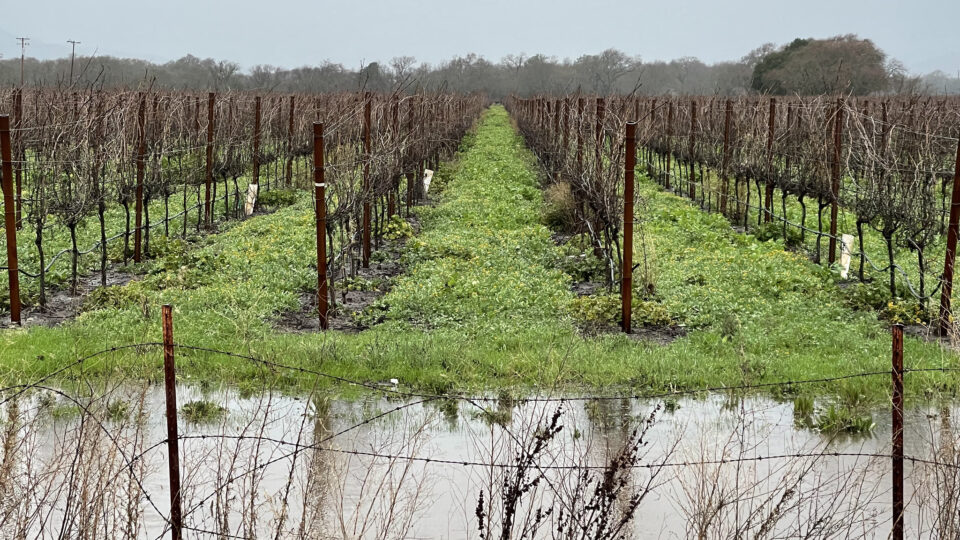
Starting in December, a series of “atmospheric rivers” brought record storms to California producing as much rain in three weeks in some areas as they normally have in an entire year.  The historic levels of rain (and snow in the mountains) have swollen rivers, flooded roads and homes, forced evacuations, knocked out electric power for millions of people, and resulted in more than 20 deaths.

Atmospheric rivers are air currents that carry large amounts of water vapor through the sky.  They are not unusual for California but recurrent waves of them like those that have happened recently are very infrequent.  Studies by the U.S. Geological Survey have shown that such a phenomenon recurs in California every 250 years.  There were a series of storms causing disastrous floods in California in 1861-62.

The atmospheric rivers are born in the warm waters of the tropical Pacific.  During La Nina phases, the atmospheric rivers typically make landfall on the northern West Coast. During El Nino phases, atmospheric rivers are more likely to end up in Southern and Central California. During transitions between the phases, as is happening now, the storms can cover large parts of the state.

Modern forecasting is pretty good at predicting the forthcoming occurrence of these storms and has led to some helpful actions, such as reservoir operators preventing dams from overflowing or bursting.  But there is a gap between science and decision-making.  It is pretty clear what needs to be done when tornados or hurricanes are on the way.  It is less clear what actions are appropriate when there are going to be repeated heavy rainstorms.

These storms will have an effect on California’s megadrought, but just how much of an effect remains to be seen.

**********

Web Links

Flooding in California: What Went Wrong, and What Comes Next

Photo, posted January 5, 2023, courtesy of Sarah Stierch via Flickr.

Earth Wise is a production of WAMC Northeast Public Radio

Coastlines and Climate Change | Earth Wise

August 16, 2021 By EarthWise Leave a Comment

Scientists predict how climate change will affect coastlines

Climate change poses a fundamental threat to life on earth and has already left observable effects on the planet.  For example, glaciers have shrunk, oceans have warmed, heatwaves have become more intense, and plant and animal ranges have shifted. 

As a result of the changing climate, coastal communities around the world are confronting the increasing threats posed by a combination of extreme storms and the predicted acceleration of sea level rise. 

Scientists from the University of Plymouth in England have developed a simple algorithm-based model to predict how coastlines could be affected by climate change.  This model allows coastal communities to identify the actions they need to take in order to adapt to their changing environment.

The Forecasting Coastal Evolution (or ForCE)  model has the potential to be a game-changer because it allows adaptations in the shoreline to be predicted over timescales of anything from days to decades. As a result, the model is capable of predicting both the short-term impact of extreme storms as well as predicting the longer-term impact of rising seas.   

The ForCE model relies on past and present beach measurements and data showing the physical properties of the coast.  It also considers other key factors like tidal, surge, and global sea-level rise data to assess how beaches might be impacted by climate change.  Beach sediments form the frontline defense against coastal erosion and flooding, and are key in preventing damage to valuable coastal infrastructure.

According to the study, which was recently published in the journal Coastal Evolution, the ForCE model predictions have shown to be more than 80% accurate in current tests in South West England.

**********

Web Links

New model accurately predicts how coasts will be impacted by storms and sea-level rise

Photo, posted April 17, 2016, courtesy of Nicolas Henderson via Flickr.

Earth Wise is a production of WAMC Northeast Public Radio.

Reduced Air Travel And Weather Forecasts | Earth Wise

December 16, 2020 By EarthWise Leave a Comment

The pandemic is affecting weather forecasting

There have been countless stories about the major and minor changes in the world caused by the Covid-19 pandemic.  A few of those changes, such as reductions in pollution and traffic, have been positive.  Most have been decidedly negative.

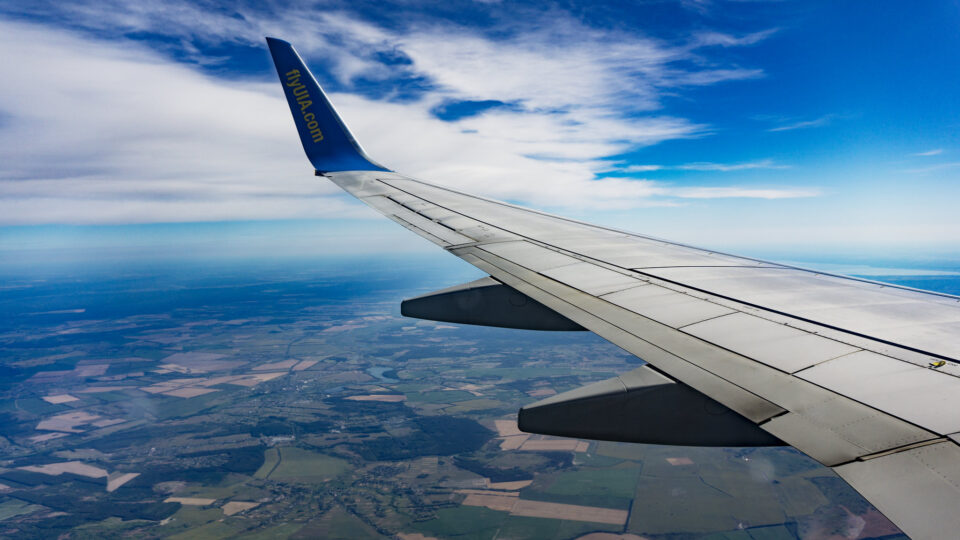
One of the stranger things that has happened is that the pandemic has affected the quality of weather forecasting by sharply reducing the amount of atmospheric data routinely collected by commercial airliners.

It turns out that atmospheric observations from passenger and cargo flights are among the most important data used in weather forecasting models.  These observations are made by instruments aboard thousands of airliners, mostly based in North America and Europe.  The observation program has been in place for decades.  The data is transmitted in real time to forecasting organizations around the world, including the National Weather Service.  About 40 airlines participate in the program, which has equipment aboard about 3,500 aircraft.  Here in the US, Delta, United, American, and Southwest Airlines participate, as do UPS and FedEx.

During the first few months of the pandemic, air traffic declined by 75% or more worldwide.  As a result, atmospheric observations dropped by the same percentage.  A government research study showed that when weather forecasting models receive less data on temperature, wind, and humidity from aircraft, the accuracy of forecasts was reduced.

The amount of data from aircraft has increased in recent months as air travel has picked up to roughly 50% of pre-pandemic levels.  So, the observation program is on the mend.  Nonetheless, impaired weather forecasting is just another unexpected result of the global pandemic.

**********

Web Links

Slump in Air Travel Hindered Weather Forecasting, Study Shows

Photo, posted July 15, 2017, courtesy of Daria Nepriakhina via Flickr. Photo by Photo by Daria / epicantus.

Earth Wise is a production of WAMC Northeast Public Radio.

Primary Sidebar

Recent Episodes

  • An uninsurable future
  • Clean energy and jobs
  • Insect declines in remote regions
  • Fossil fuel producing nations ignoring climate goals
  • Trouble for clownfishes

WAMC Northeast Public Radio

WAMC/Northeast Public Radio is a regional public radio network serving parts of seven northeastern states (more...)

Copyright © 2026 ·