• Skip to primary navigation
  • Skip to main content
  • Skip to primary sidebar

Earth Wise

A look at our changing environment.

  • Home
  • About Earth Wise
  • Where to Listen
  • All Articles
  • Show Search
Hide Search
You are here: Home / Archives for fluctuations

fluctuations

The warmest year on record

February 14, 2025 By EarthWise Leave a Comment

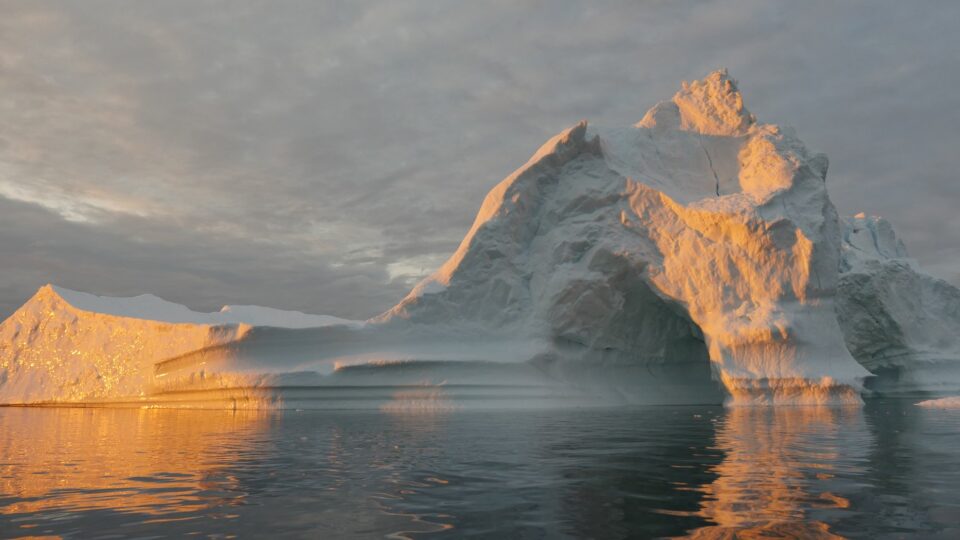
2024 was the warmest year on record

It came as no surprise that 2024 ended up as the warmest year on records. It was the hottest year since record keeping began in 1880.  The global average temperature was 1.28 degrees Celsius (or 2.3 degrees Fahrenheit) above the 20th-century baseline period of 1951-1980.  It was actually 1.47 degrees above the 1850-1900 average.

The Paris Climate Agreement has a goal to keep the global average temperature increase below 1.5 degrees Celsius over the long term.  Long term is specified because for more than half of 2024, average temperatures were more than 1.5 degrees above the baseline.

The temperature of an individual year can be influenced by various natural climate fluctuations, such as the presence of an El Niño or a La Niña condition in the Pacific, or volcanic eruptions.  A strong El Niño began in 2023 and continued throughout much of 2024.  That El Niño has abated, so it is no longer a factor in the global climate condition.

The global temperature is determined using surface air temperature data collected from thousands of meteorological stations as well as sea surface temperature data collected by ships and buoy-based instruments. 

When the climate changes, it is observed first in the global mean temperature.  Then there are changes seen on a continental scale and then at the regional scale.  Finally, changes are observable at the local level.  These changes are becoming more and more common as people’s everyday weather experiences become different from any they had encountered before.

**********

Web Links

2024 Was the Warmest Year on Record

Photo, posted August 26, 2015, courtesy of Saskia Madlener / NASA via Flickr.

Earth Wise is a production of WAMC Northeast Public Radio

Saving the Great Salt Lake

January 27, 2025 By EarthWise Leave a Comment

For many years, scientists have warned that the Great Salt Lake in Utah is headed toward a catastrophic decline.  While the size of the Great Salt Lake fluctuates naturally with seasonal and long-term weather patterns, the lake has been experiencing significant and steady declines for decades.  In fact, the Great Salt Lake has lost more than 15 billion cubic yards of water over the past three decades, and it’s getting shallower at the rate of four inches a year. 

This reduction is primarily due to excessive water diversions from rivers and streams that feed into the lake for agricultural, industrial, and municipal use. These diversions, combined with prolonged drought and rising temperatures due to climate change, have significantly reduced the lake’s water level. 

According to a new study led by researchers from Oregon State University, 62% of the river water bound for the Great Salt Lake is diverted for human use, with agricultural activities responsible for nearly three-quarters of that percentage.  The analysis, which was recently published in the journal Environmental Challenges, found that reducing irrigation is necessary to save the lake. 

In order to stabilize and begin refilling the lake, the research team proposes cutting human water consumption in the Great Salt Lake’s watershed by 35%.  The researchers emphasize that farmers and ranchers facing income losses from using less water would require taxpayer-funded compensation.

The Great Salt Lake is a biodiversity hotspot, sustaining more than 10 million migratory birds.  The lake also directly supports 9,000 jobs and fuels $2.5 billion in economic activity annually. 

**********

Web Links

Reducing irrigation for livestock feed crops is needed to save Great Salt Lake, study argues

Photo, posted January 14, 2024, courtesy of Olaf Zerbock via Flickr.

Earth Wise is a production of WAMC Northeast Public Radio
Emissions and the Great Salt Lake

September 4, 2024 By EarthWise Leave a Comment

Emissions and the Great Salt Lake

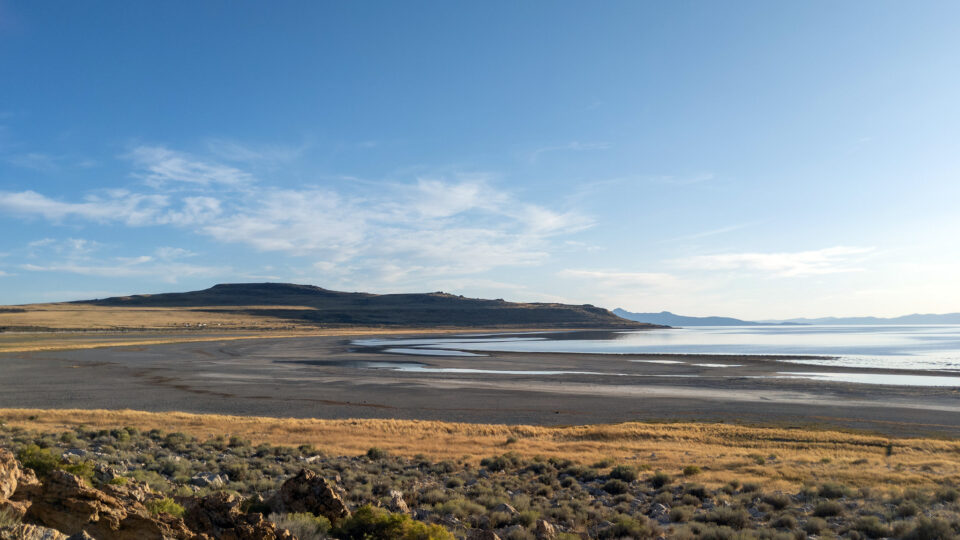
The Great Salt Lake in Utah has been described as a puddle of its former self.  The lake’s size fluctuates naturally with seasonal and long-term weather patterns, but the lake has been experiencing decline for decades as Utahans take water out of the rivers and streams that once fed the lake.  Over recent decades, the lake has lost 73% of its water and 60% of its surface area.

For years, scientists and environmental leaders have warned that the Great Salt Lake is headed toward a catastrophic decline.  Recent research has found that the lake’s desiccating shores are becoming a significant source of greenhouse gas emissions.  Scientists have calculated that the dried-out portions of the lakebed released about 4.1 million tons of carbon dioxide and other greenhouse gases in 2020.

The recent study, published in the journal One Earth, suggests that the Great Salt Lake – which is largest saltwater lake in the Western Hemisphere – as well as other shrinking saline lakes around the world could become major contributors of climate-warming emissions.

The shrinking back of the water has exposed a dusty lakebed that is laced with arsenic, mercury, lead, and other toxic substances.  Some are naturally occurring, and others are the residue of mining activity in the region.  These substances threaten to increase rates of respiratory conditions, heart and lung disease, and cancers.

As the lake shrinks, it is becoming saltier and uninhabitable to native flies and brine shrimp and may increasingly become unable to support the 10 million migratory birds and wildlife that frequent it.

The new research about greenhouse gas emissions just adds to a dire list of environmental consequences brought on by the lake’s steep decline.

**********

Web Links

Shrinking Great Salt Lake Becoming Source of Heat-Trapping Gas

Photo, posted January 20, 2020, courtesy of Matthew Dillon via Flickr.

Earth Wise is a production of WAMC Northeast Public Radio
Coping With Climate Change | Earth Wise

October 11, 2022 By EarthWise Leave a Comment

Animals will cope with climate change differently

Extreme weather events including prolonged drought and heavy rainfall are becoming more common and more severe as global temperatures rise.  As the climate continues to change in the coming decades, how will animals respond? 

Researchers from the University of Southern Denmark have examined how different mammals react to climate change. They analyzed data on population fluctuations from 157 mammal species around the world.  They compared these fluctuations with weather and climate data from the same time period.  The research team had 10 or more years of data for each species studied. 

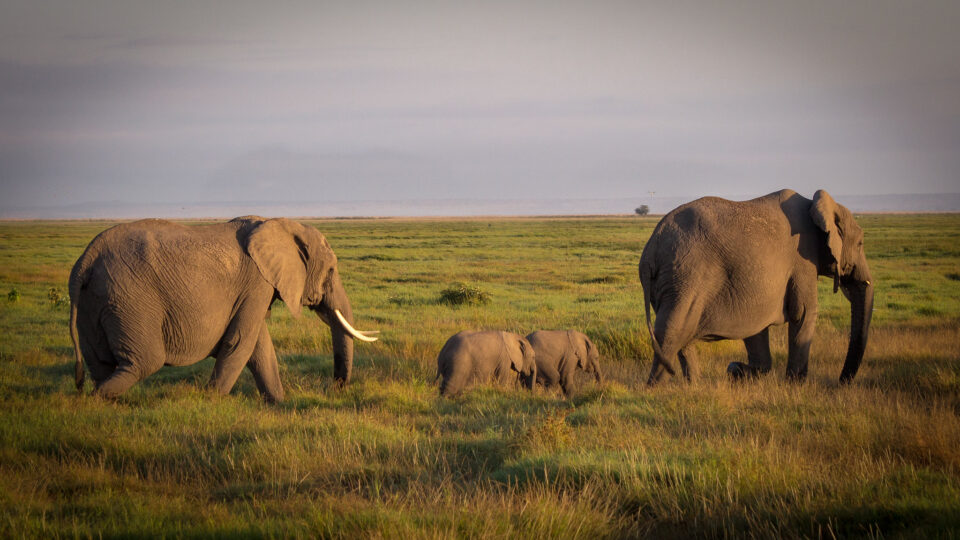
The researchers found that mammals that live for a long time and/or produce less offspring –  like llamas, elephants, bears, and bison – are more climate resilient than small mammals with short lives — like mice, possums, lemmings, and rare marsupials. 

For example, large, long-lived mammals can invest their energy into one offspring, or simply wait for better times if conditions become challenging.  On the other hand, small, short-lived mammals like rodents have more extreme population changes in the short term. In the event of a prolonged drought, large portions of their food base may rapidly disappear, and they are left to starve because they have limited fat reserves.

However, the research team notes that the ability of a species to withstand climate change must not be the only factor when assessing a species’ vulnerability.  In fact, in many cases, habitat destruction, poaching, pollution, and invasive species pose a larger threat to animal species than climate change. 

While the study only examined 157 species, the findings enable researchers to also predict how animals they know less about will react to climate change.

********** 

Web Links

Which animals can best withstand climate change?

Photo, posted July 8, 2018, courtesy of Ray via Flickr.

Earth Wise is a production of WAMC Northeast Public Radio
Climate Change And The Polar Vortex

February 20, 2019 By EarthWise Leave a Comment

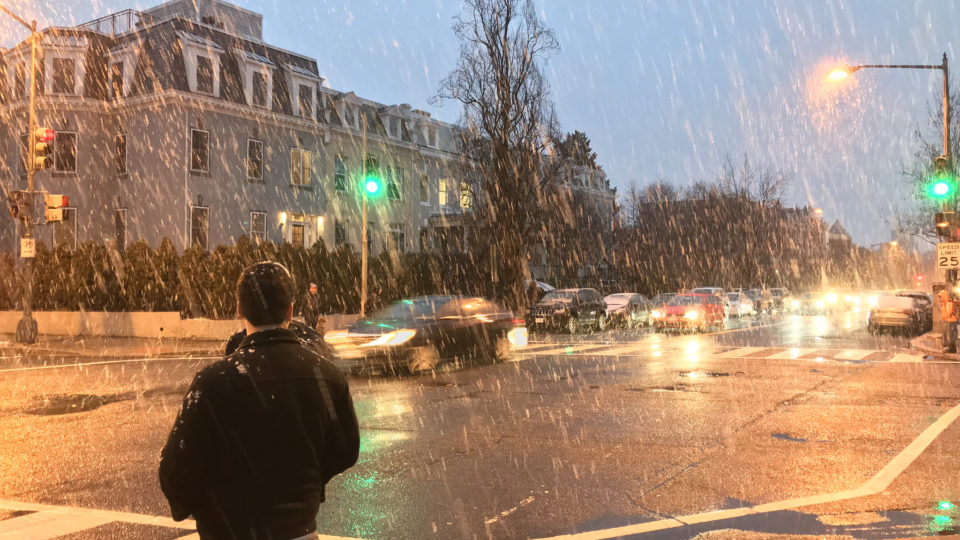
This winter has seen some brutally-cold weather in many places, some of it record-breaking.  Predictably, some climate-change deniers point to this as evidence that the climate is not warming at all.  They are quite wrong.

For starters, it is essential to understand the difference between climate and weather.  Climate is the average weather patterns in a region over extended periods of time.  Weather is the short-term fluctuations in temperature, precipitation, barometric pressure, wind, and so forth.  There can be extremes in weather of many types in a given climate region including very cold weather in a warming climate.

The recent cold weather events in the U.S. stem from the flow of Arctic air into southern regions.  Such flows are impacted dramatically by the behavior of the jet stream.  These high-altitude east-to-west winds are driven by temperature differences between cold arctic air and warm tropical air and play a huge role in our weather. 

The Arctic has seen extremely unusual warming due to the changing climate, weakening and fracturing the polar vortex, which is a persistent low-pressure area near the pole.   The changing air flow from the Arctic causes the jet stream to take wild swings.  When it swings further south, it causes cold air to reach farther south.  These swings tend to hang around for a while, leading to extended periods of cold weather in the winter and, actually, extended periods of warm weather or even droughts in the summer.  Studies have predicted that extreme, deadly weather events could increase by as much as fifty percent by 2100.

As more Arctic air flows into southern regions, North America can expect to see harsher winters.  The warming climate doesn’t always lead to warmer weather.

**********

Web Links

Why cold weather doesn’t mean climate change is fake

Photo, posted January 30, 2019, courtesy of Kyle via Flickr.

Earth Wise is a production of WAMC Northeast Public Radio.

Primary Sidebar

Recent Episodes

  • An uninsurable future
  • Clean energy and jobs
  • Insect declines in remote regions
  • Fossil fuel producing nations ignoring climate goals
  • Trouble for clownfishes

WAMC Northeast Public Radio

WAMC/Northeast Public Radio is a regional public radio network serving parts of seven northeastern states (more...)

Copyright © 2026 ·