• Skip to primary navigation
  • Skip to main content
  • Skip to primary sidebar

Earth Wise

A look at our changing environment.

  • Home
  • About Earth Wise
  • Where to Listen
  • All Articles
  • Show Search
Hide Search
You are here: Home / Archives for finding

finding

Finding peatlands

May 15, 2025 By EarthWise Leave a Comment

Peatlands are a special kind of wetland that have enormous potential for helping to mitigate climate change.  They are great at capturing carbon because their constantly soggy soils deprive decomposer organisms of the oxygen they need to break down dead plants.  Living plants absorb carbon dioxide from the atmosphere and incorporate the carbon into their tissues.  When plants die, decomposers like bacteria digest the plant matter and release the carbon dioxide back into the atmosphere.

Researchers from the University of California Santa Cruz found that the average per-area carbon densities in peatlands in Colombia are four to ten times higher than those in the Amazon rainforest.  This agrees with other studies around the world.  On a global scale, peatlands cover only 3% of land areas but store more carbon than all the world’s trees.  Peatlands are unsung heroes helping to reduce the impact of fossil fuel emissions.

Peatlands can only store carbon if they remain constantly wet.  When they are drained for agriculture or other development, decomposer organisms get back to work digesting organic matter and releasing carbon dioxide back into the atmosphere.

A major challenge in protecting peatland is finding them.  They are often hard to distinguish from other types of wetlands. 

The Santa Cruz researchers have been identifying and locating peatlands in Colombia, where decades of civil war had made many parts of the country inaccessible for research.  Finding and protecting peatlands there and in many other places around the world is an important task in the battle against climate change.

**********

Web Links

Colombia’s peatlands could be a crucial tool to fight climate change. But first we have to find them.

Photo, posted January 2, 2018, courtesy of Roni Ziade / U.S. Forest Service via Flickr.

Earth Wise is a production of WAMC Northeast Public Radio
Controlling Malaria Without Chemicals

August 28, 2019 By EarthWise Leave a Comment

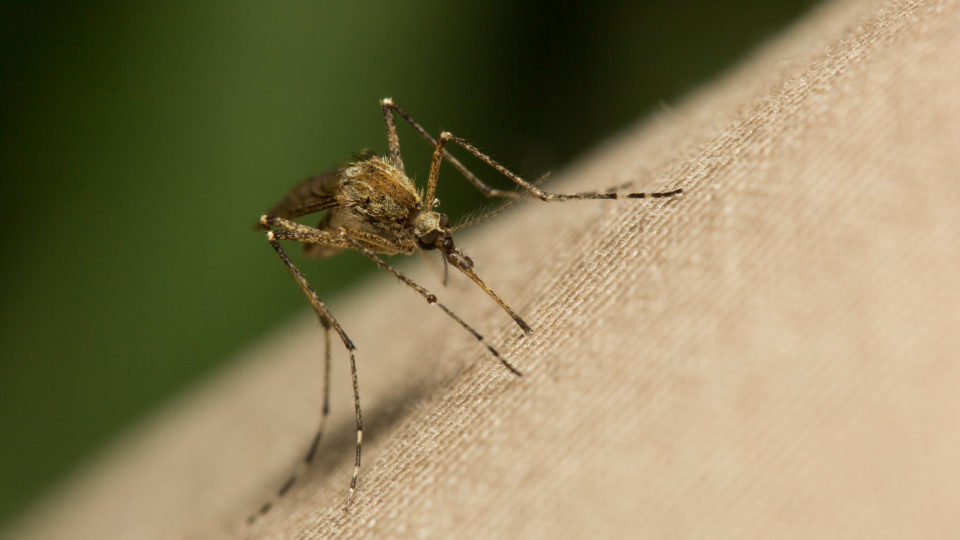
Nearly half of the world’s population lives in areas vulnerable to malaria.  The disease kills roughly 450,000 people each year, most of them children and pregnant women.  Malaria is spread by Anopheles mosquitoes and, over time, the mosquitoes have been developing resistance to the chemical insecticides that are used to control them.  In addition, there is great concern about the toxic side effects of the chemicals used on the mosquitoes.

About 30 years ago, scientists identified a type of bacteria that kills Anopheles, but the mechanism was not understood.  As a result, the bacteria could not be replicated or used as an alternative to chemical insecticides.

But now, an international research team, headed by researchers at UC Riverside, has identified the neurotoxin produced by the bacteria and has determined how it kills Anopheles.  The work is described in a paper published in Nature Communications.

It took the team 10 years to achieve a breakthrough in understanding the bacteria.  Modern gene sequencing techniques were the key.

While many neurotoxins target vertebrates and are highly toxic to humans, the neurotoxin that kills Anopheles mosquitoes does not affect humans, vertebrates, fish, or even other insects.  Known as PMP1, the substance is not even toxic to mice when given by direct injection.

The team has applied for a patent on this discovery and hopes to find partners to help them develop the bacteria-based insecticide.

There is a high likelihood that PMP1 actually evolved to kill the Anopheles mosquito.  This finding opens the door to new avenues of research into other environmentally friendly insecticides that would be targeted at other disease-spreading pests.

**********

Web Links

Controlling deadly malaria without chemicals

Photo, posted June 9, 2018, courtesy of Mario Yardanov via Flickr.

Earth Wise is a production of WAMC Northeast Public Radio.

Primary Sidebar

Recent Episodes

  • An uninsurable future
  • Clean energy and jobs
  • Insect declines in remote regions
  • Fossil fuel producing nations ignoring climate goals
  • Trouble for clownfishes

WAMC Northeast Public Radio

WAMC/Northeast Public Radio is a regional public radio network serving parts of seven northeastern states (more...)

Copyright © 2025 ·